

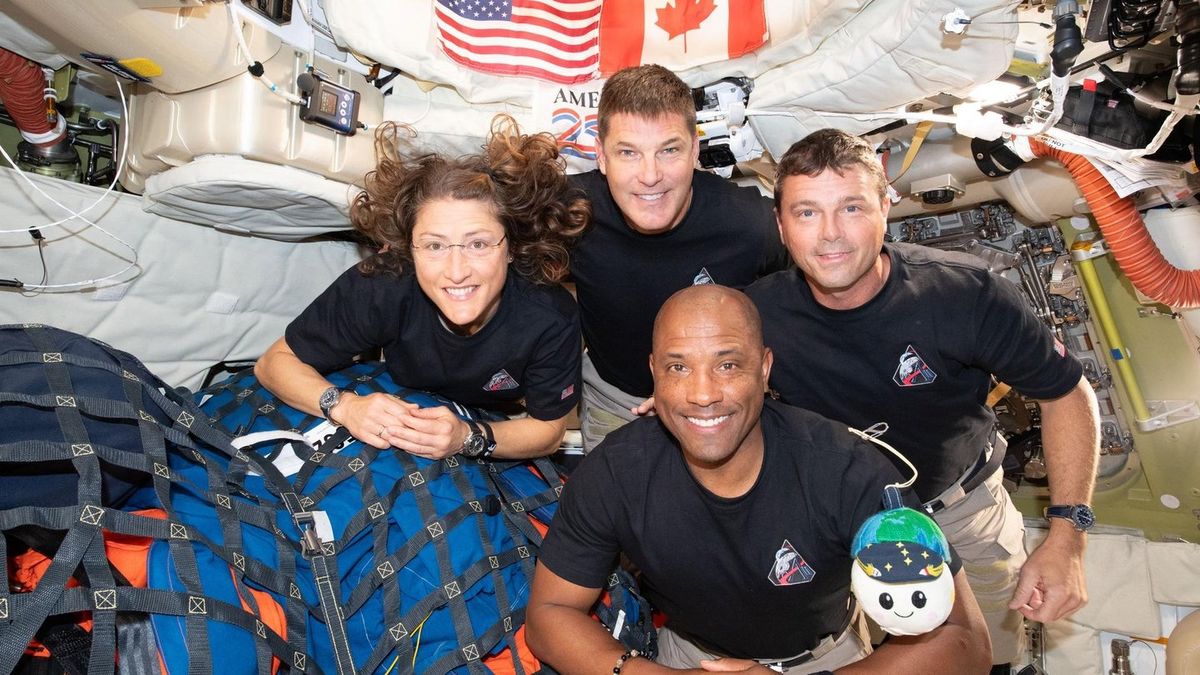
After more than a week on a landmark lunar journey, NASA’s Artemis II astronauts are now closing in on Earth and are due to splash down on Friday evening.
As they hit the atmosphere later today, they’ll be “riding a fireball” at roughly 25,000mph, depending on Orion’s heat shield to withstand temperatures said to reach about half the surface temperature of the sun during the most intense part of re-entry.
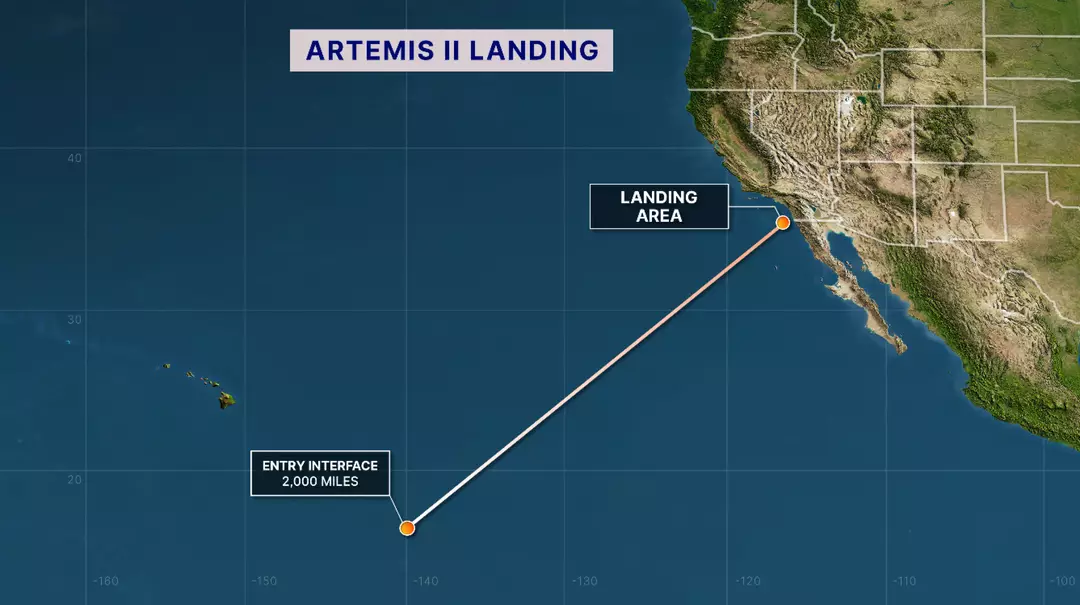
If the final descent sequence goes to plan, the capsule carrying the four-person crew should splash down shortly after 8pm EST in the Pacific Ocean off San Diego. From there, they’ll power down their spacecraft and await recovery forces.
Even after the spacecraft is safely in the water, the mission won’t be over for the crew. After around 10 days in zero gravity, returning to normal life on Earth can come with a list of short-term effects as the body readjusts.
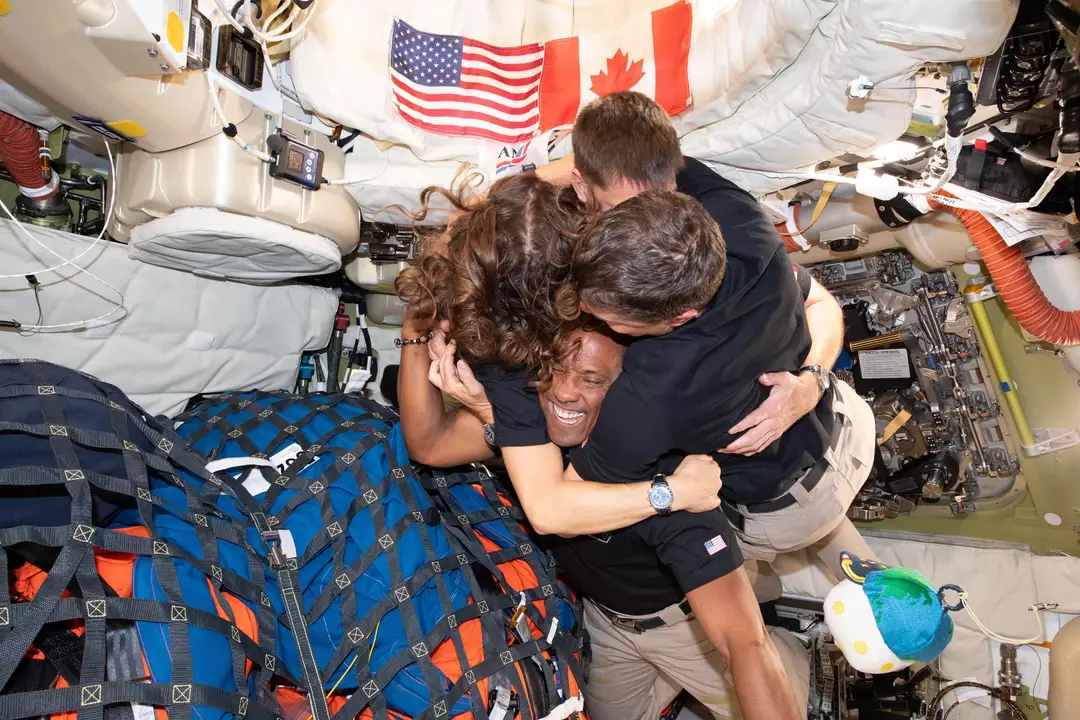
Helping Reid Wiseman, Victor Glover, Christina Koch and Jeremy Hansen out of the Orion spacecraft will be handled by NASA alongside the Department of War.
NASA-contracted engineer Jason Endley said: “Then that’s where my job comes in, of recovering the crew module alongside all the other NASA and Amentum employees we have on the ship.”
Once Orion is in the water, four helicopters are expected to move into position — two focused on recovery support and two assigned to capturing images, according to Florida Today.
One helicopter will lower a stabilizing collar designed to keep the capsule properly oriented as it bobs on the surface — a key step in preparing for extraction.
When everything is set, a basket will be lowered to lift each astronaut out one at a time. The crew will then be taken to the nearby naval ship, the USS John P. Murtha, for immediate medical checks before being transported back to Houston.
Although Artemis II is a comparatively short mission — especially next to extended stays like Suni Williams and Butch Wilmore’s 608 days away from Earth across 2024 and 2025 — time in microgravity can still leave a noticeable mark on the human body.
Kevin Fong, founder of the Centre for Altitude, Space and Extreme Environment Medicine at University College London, said: “In some experiments with rats, they’ve seen up to a third of muscle from particular muscle groups being lost within seven to 10 days of flight – that’s a huge, huge loss.”
To help reduce muscle loss, Artemis II has built regular workouts into the crew’s daily timeline using a compact training device known as a flywheel.
Space is limited inside Orion — just 316 cubic feet, described by NPR as roughly the size of a small bedroom — so exercise equipment has to be efficient and multipurpose. The flywheel functions a bit like an all-in-one rowing and resistance system.
Jeremy Hansen explained before launch: “We can change the dynamics of this device so that we can do weightlifting with it. So we can do squats. We can do dead lifts. We can do curls. We can do high pulls.”
But muscles aren’t the only issue. Balance can also be affected after time in orbit, because the inner-ear system used for navigation on Earth adapts to microgravity and then needs time to recalibrate once gravity returns.
NASA astronaut Jasmin Moghbeli, who returned to Earth in 2024 after 200 days in space, said: “With eyes closed, it was almost impossible to walk in a straight line.”
ESA astronaut Andreas Mogensen, who was on the same mission, said: “I felt wobbly for the first two days. My neck was very tired from holding up my head.”
And for some astronauts, the biggest surprise is simply feeling weight again. NASA’s Jeanette Epps, who spent 235 days in space and returned in October 2024, said the toughest adjustment was the heaviness of Earth.
She said: “You have to move and exercise every day, regardless of how exhausted you feel.”