

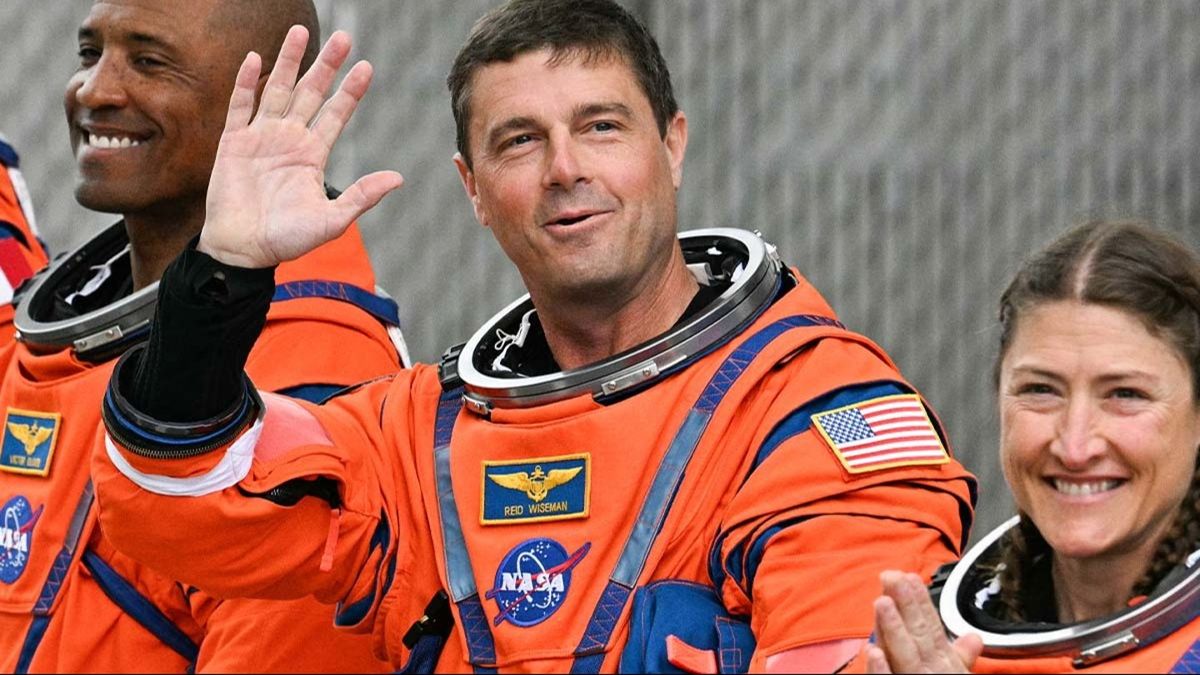
Artemis II commander Reid Wiseman has shared what truly frightens him, and his answer comes down to a single force.
Wiseman and his three crewmates are due to make the high-speed trip back through Earth’s atmosphere later today, returning at roughly 25,000mph as the mission wraps up after a historic journey toward the Moon—around five decades on from the last crewed lunar mission.
After Artemis II lifted off on April 1, Wiseman became the first astronaut to command a lunar mission since Gene Cernan led Apollo 17. Alongside his crewmates, he also joined a small group of humans who have travelled farther from Earth than almost anyone else.
Now, with the crew preparing for splashdown today (April 10), attention turns to what’s often described as the riskiest phase of the flight: re-entry. The Orion capsule will be moving at tremendous speed while encountering extreme heat as it plunges through the atmosphere—conditions that test both spacecraft and crew.
Despite the popular image of astronauts as fearless, Wiseman has previously explained that the job is built on preparation and caution. Three years ago, when NASA confirmed him as Artemis II commander, he spoke about how astronauts actually approach risk.
“None of us are these crazy, hair-on-fire test pilots of the 1950s that you read about,” he told Mashable. “We are calculated. We will not fly this vehicle until NASA engineering and the industry partners are ready for us to fly. We will know everything we can about the systems. We will have trained in every possible failure mode.”
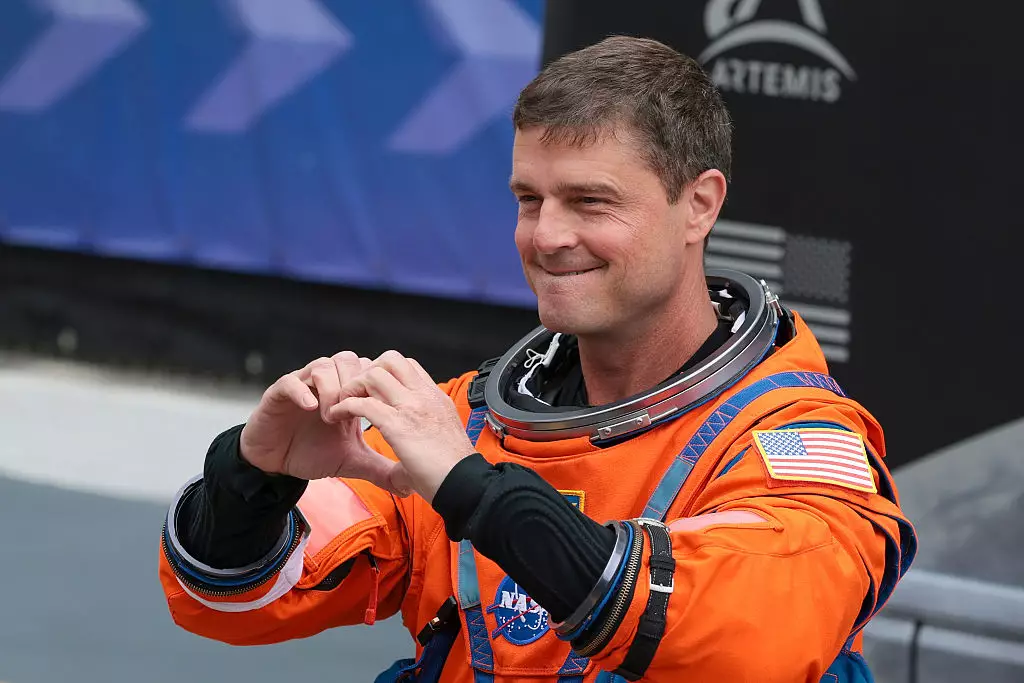
Wiseman isn’t new to spaceflight. Back in 2014, he served as a flight engineer aboard the International Space Station, spending 164 days in orbit and completing two spacewalks—experiences that helped sharpen his sense of what’s genuinely unsettling.
While #spacewalking I realized something: I used to think I was scared of heights but now I know I was just scared of gravity.
— Reid Wiseman (@astro_reid) October 10, 2014
“While #spacewalking I realized something: I used to think I was scared of heights but now I know I was just scared of gravity.”
It’s the kind of line that belongs on a t-shirt.
More reflections from Wiseman and the rest of the crew are likely to follow once the team is safely home and the immediate post-landing procedures are complete.
Orion is scheduled to splash down shortly after 8pm EST in waters off San Diego. Beyond the headline moment of a successful return, Artemis II is expected to bring back critical data about crew health—information that could influence future safety standards and medical planning for deep-space missions.
Recovery operations will involve NASA and the Department of War as teams work to secure the capsule and assist Wiseman, Victor Glover, Christina Koch, and Jeremy Hansen out of the spacecraft.
According to Florida Today, four helicopters will circle the capsule—two focused on recovery support and two dedicated to capturing imagery. One will lower a stabilizing collar to help keep Orion correctly oriented and steady in the water.
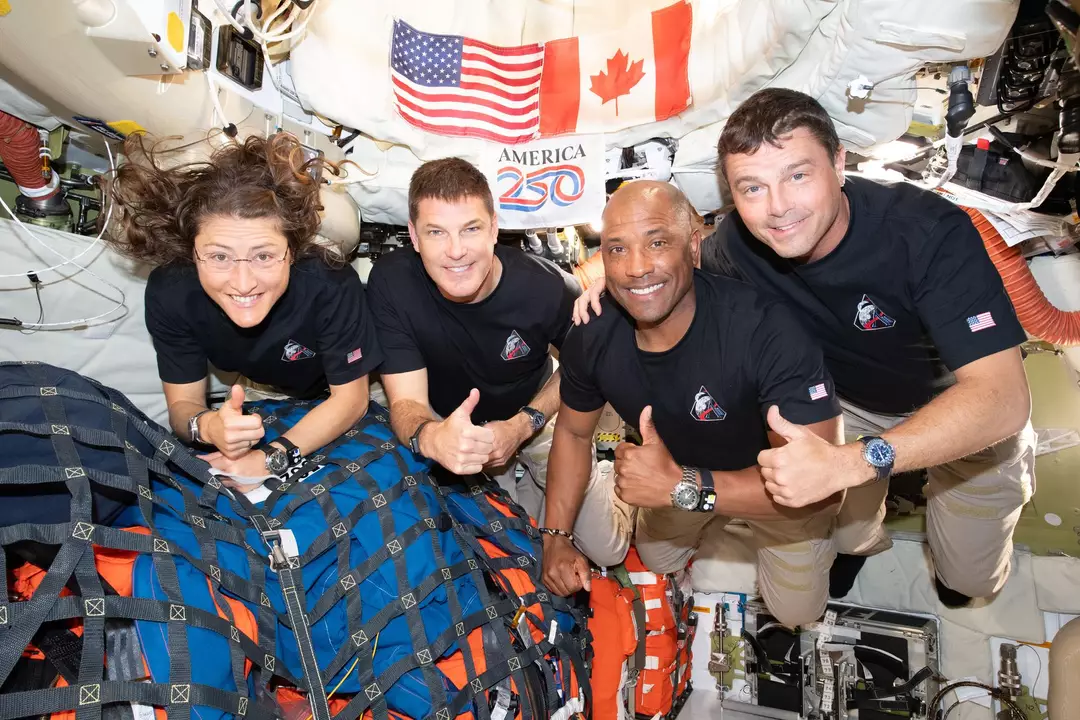
Once the capsule is stable, a basket can be lowered to bring astronauts up one at a time. From there, the crew will be transported to the nearby naval vessel USS John P. Murtha for medical checks before heading back to Houston.
Even relatively short periods in microgravity can take a toll on the body, particularly when it comes to muscle and balance. Medical experts have long documented how quickly strength can decline without gravity constantly loading the body.
Kevin Fong, founder of the Centre for Altitude, Space and Extreme Environment Medicine at University College London, said: “In some experiments with rats, they’ve seen up to a third of muscle from particular muscle groups being lost within seven to 10 days of flight – that’s a huge, huge loss.”
To reduce that risk, the Artemis II crew built workouts into their daily routine using compact exercise equipment suitable for Orion’s limited cabin space.
Before launch, Jeremy Hansen described how their flywheel-based device can be configured to replicate several strength-training movements.
“We can change the dynamics of this device so that we can do weightlifting with it. So we can do squats. We can do dead lifts. We can do curls. We can do high pulls.”
Re-adapting to Earth after weightlessness can also be disorienting. Returning astronauts often report that walking normally and keeping balance takes time, because the inner ear and sensorimotor systems effectively “de-train” in microgravity.
NASA astronaut Jasmin Moghbeli, who returned to Earth in 2024 after 200 days in space, said: “With eyes closed, it was almost impossible to walk in a straight line.”
ESA astronaut Andreas Mogensen, who flew on the same mission, said: “I felt wobbly for the first two days. My neck was very tired from holding up my head.”
Other astronauts have noted that gravity itself can feel surprisingly intense at first—something that takes determination (and consistent movement) to push through during readjustment.
While NASA’s Jeanette Epps, who spent 235 days in space and returned in October 2024, said the main thing that took some getting used to was the heaviness of Earth.
She said: “You have to move and exercise every day, regardless of how exhausted you feel.”