

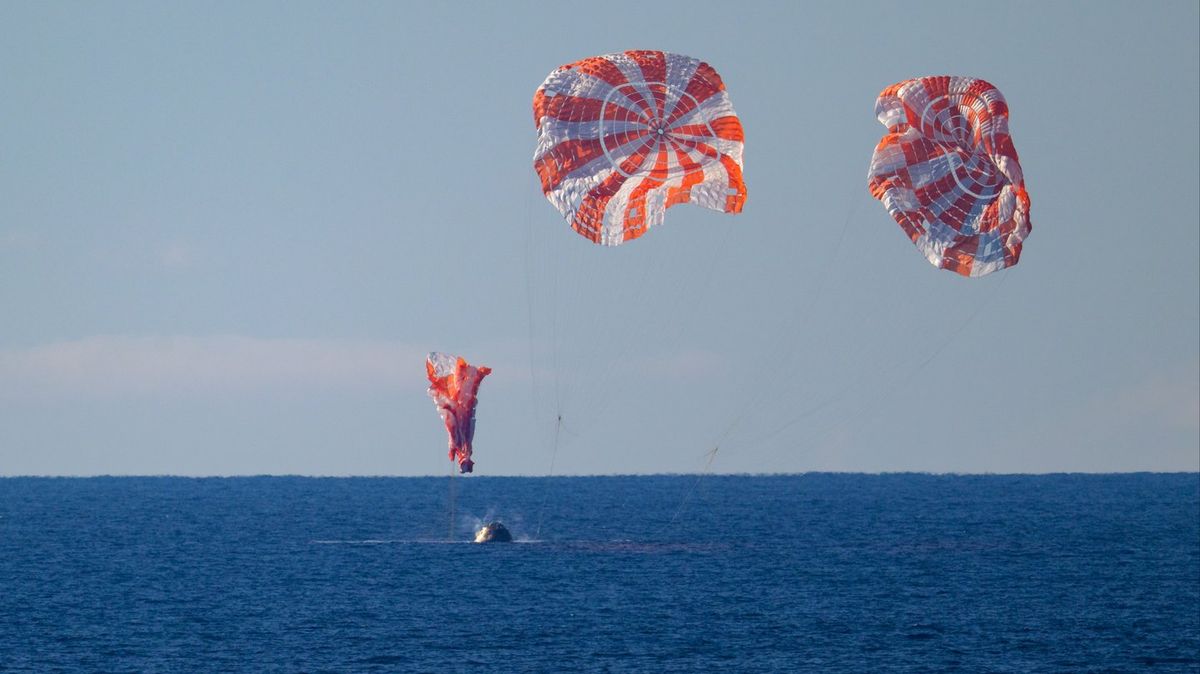
On Friday evening (April 10) the world watched as the Artemis II spacecraft performed a ‘perfect’ splashdown off the coast of San Diego.
From the outside, the landing appeared smooth and simple. In reality, bringing a spacecraft home is among the most high-stakes phases of any mission, where a small miscalculation can have serious consequences.
As Flight Director Rick Henfling said in a press conference: “We all breathed a sigh of relief once the (capsule’s) side hatch opened up.
“… If you didn’t have anxiety bringing this spacecraft home, you probably didn’t have a pulse.”
A safe return depends on a narrow set of requirements. One of the most crucial is the capsule’s entry path: it must meet the atmosphere at precisely the right angle. Too steep and the vehicle can overheat or face extreme forces; too shallow and it can fail to slow properly, risking a dangerous skip back out.
In the final hours before arrival, the crew’s capsule separates from the service module, which is left to burn up in the atmosphere. The capsule then begins its descent through layers of air that quickly ramp up heat and friction.
As re-entry progresses, the vehicle decelerates dramatically. Parachutes are deployed in sequence to stabilize and slow the capsule, taking it from more than 23,000mph down to roughly 20mph before it settles into the ocean.
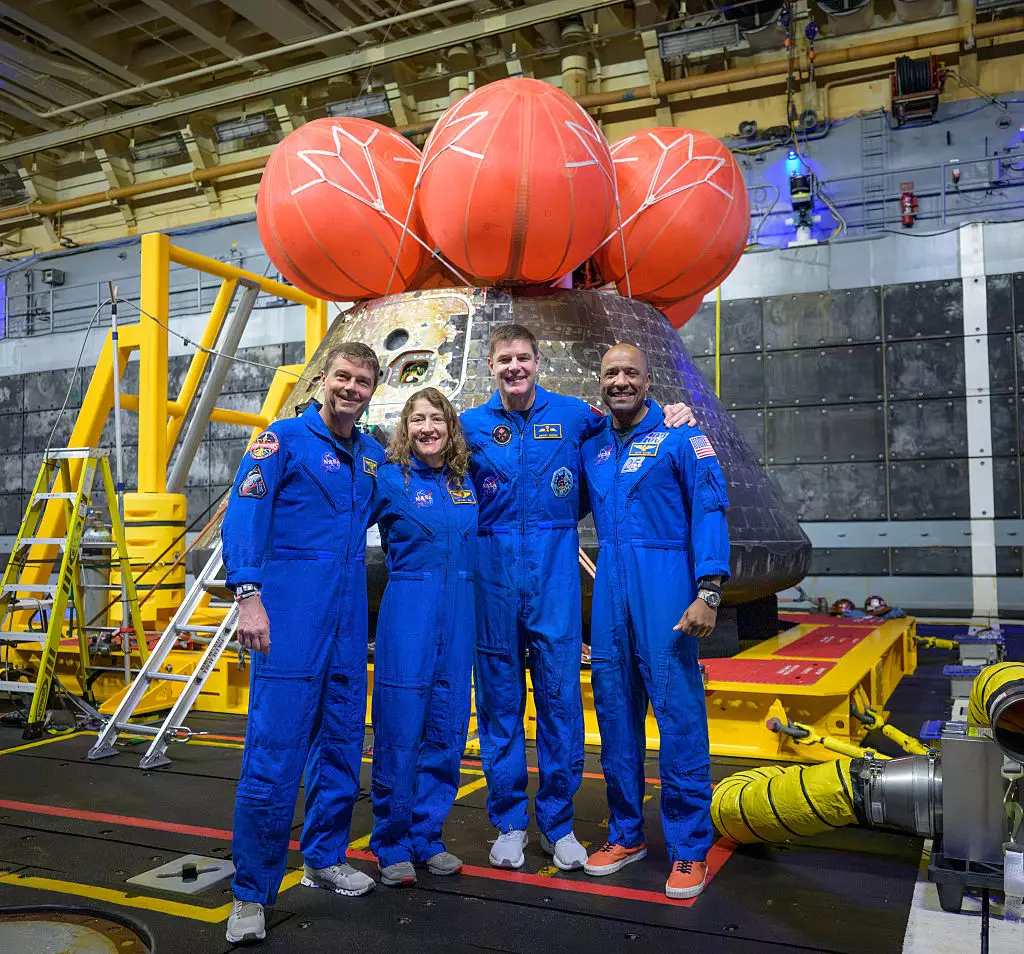
The Orion capsule, dubbed Integrity by the crew, splashed down at exactly 8.07pm ET on Friday—right on schedule, down to the minute.
Since then, many have marvelled at how such a tightly controlled re-entry is even possible. While the achievement reflects the work of large teams across NASA, the foundations of this kind of precision also trace back to a pioneering mathematician whose contributions reshaped spaceflight.
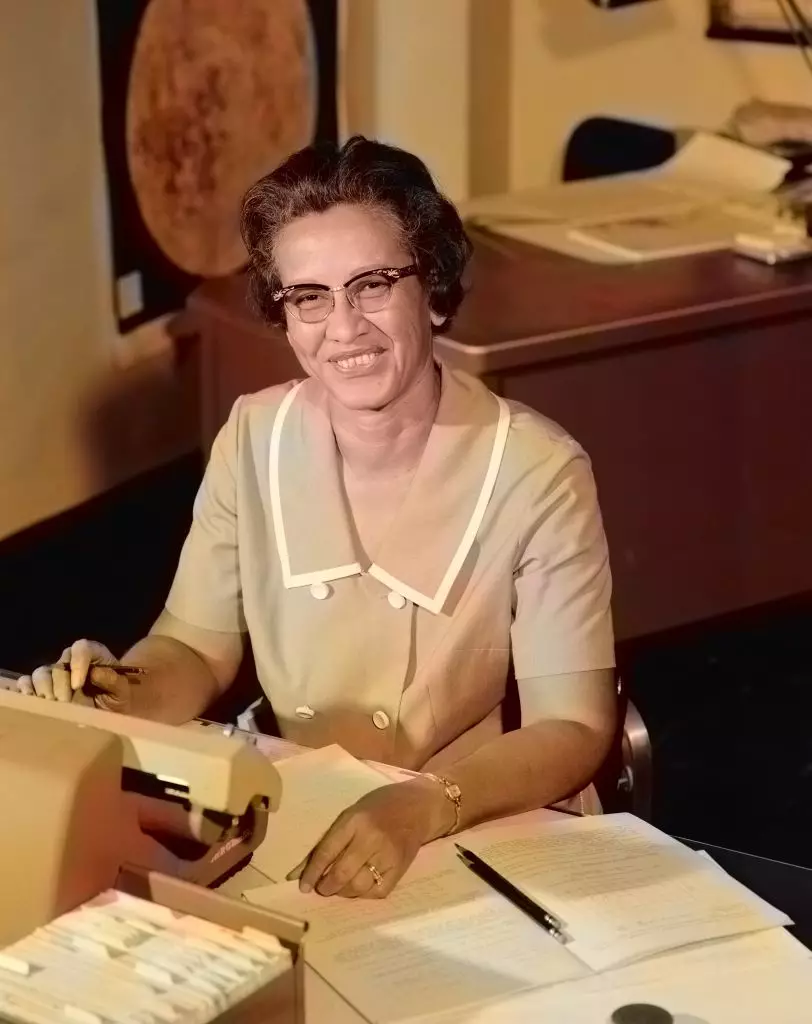
Her name is Katherine Johnson.
In the early days of NASA, the calculations behind launches, flight paths, and returns to Earth were carried out by hand. Johnson, a specialist in analytical geometry, became central to the development of the mathematical methods that made those missions possible—and the principles behind her work still underpin modern approaches.
Among her major contributions were trajectory analysis for Alan Shepard’s May 1961 mission Freedom 7, and co-authoring Determination of Azimuth Angle at Burnout for Placing a Satellite Over a Selected Earth Position in 1960, which detailed equations central to orbital spaceflight.
Her expertise became so trusted that astronaut John Glenn asked her to verify the results produced by early computers when NASA began using digital systems for orbital calculations in the early 1960s.
For Glenn’s Mercury-Atlas 6 mission, he asked for Johnson to personally check the figures.
NASA explained: “In 1962, as NASA prepared for the orbital mission of John Glenn, Johnson was called upon to do the work that she would become most known for… The computers had been programmed with the orbital equations that would control the trajectory of the capsule in Glenn’s Friendship 7 mission from liftoff to splashdown, but the astronauts were wary of putting their lives in the care of the electronic calculating machines, which were prone to hiccups and blackouts. As a part of the preflight checklist, Glenn asked engineers to ‘get the girl’—Johnson—to run the same numbers through the same equations that had been programmed into the computer, but by hand, on her desktop mechanical calculating machine.”
Johnson also played a key role in Apollo 11, supporting the work that enabled the first Moon landing. During that mission, she helped ensure the spacecraft’s trajectory was correct—especially the angles required for both launch and safe re-entry into Earth’s atmosphere.
Although today’s mission planning relies heavily on advanced computing, much of what those systems calculate still rests on the same mathematical fundamentals Johnson helped establish decades ago.
When Johnson passed away in 2020 at the age of 101, NASA Administrator James Bridenstine said: “Our NASA family is sad to learn the news that Katherine Johnson passed away this morning at 101 years old. She was an American hero and her pioneering legacy will never be forgotten.”