

Apple users are being warned about an increasingly common tactic cyber criminals are using to try to access iPhones, along with banking details and other sensitive personal information.
The scheme typically relies on iCloud storage fears, aiming to pressure people into sharing personal data. Once scammers have that information, they may attempt to use it to drain bank accounts or commit other forms of fraud.
After reports from some of Apple’s 1.8 billion users, consumer watchdogs have urged the public to be on alert for this growing wave of scams. It often starts with a message claiming your iCloud storage is full — something many iPhone owners have experienced at some point.
Because people may worry about losing treasured photos and videos if storage runs out, some are tempted to act quickly and provide private information, especially when the message appears to come from an official source like “The iCloud Team”.

If you click the link in the convincing-looking email, it can lead to a polished imitation website. There, you’re prompted to enter payment card details to “upgrade” your iCloud plan, sometimes with a promise of 50GB of storage “for free” when you sign up.
But entering information on those pages can hand scammers exactly what they’re looking for, including personal details and private banking information.
Consumer champions Which? issued a warning on social media after an increase in these phishing attempts, saying: “Every Apple user needs to know about this nasty scam doing the rounds.
“These sneaky fake emails that look like they’re from iCloud and threaten you with claims that ‘all your photos will be deleted.’”
While some scam messages are easy to spot because of obvious spelling mistakes or strange sender addresses, fraudsters are increasingly using more sophisticated methods to appear legitimate and extract private data.
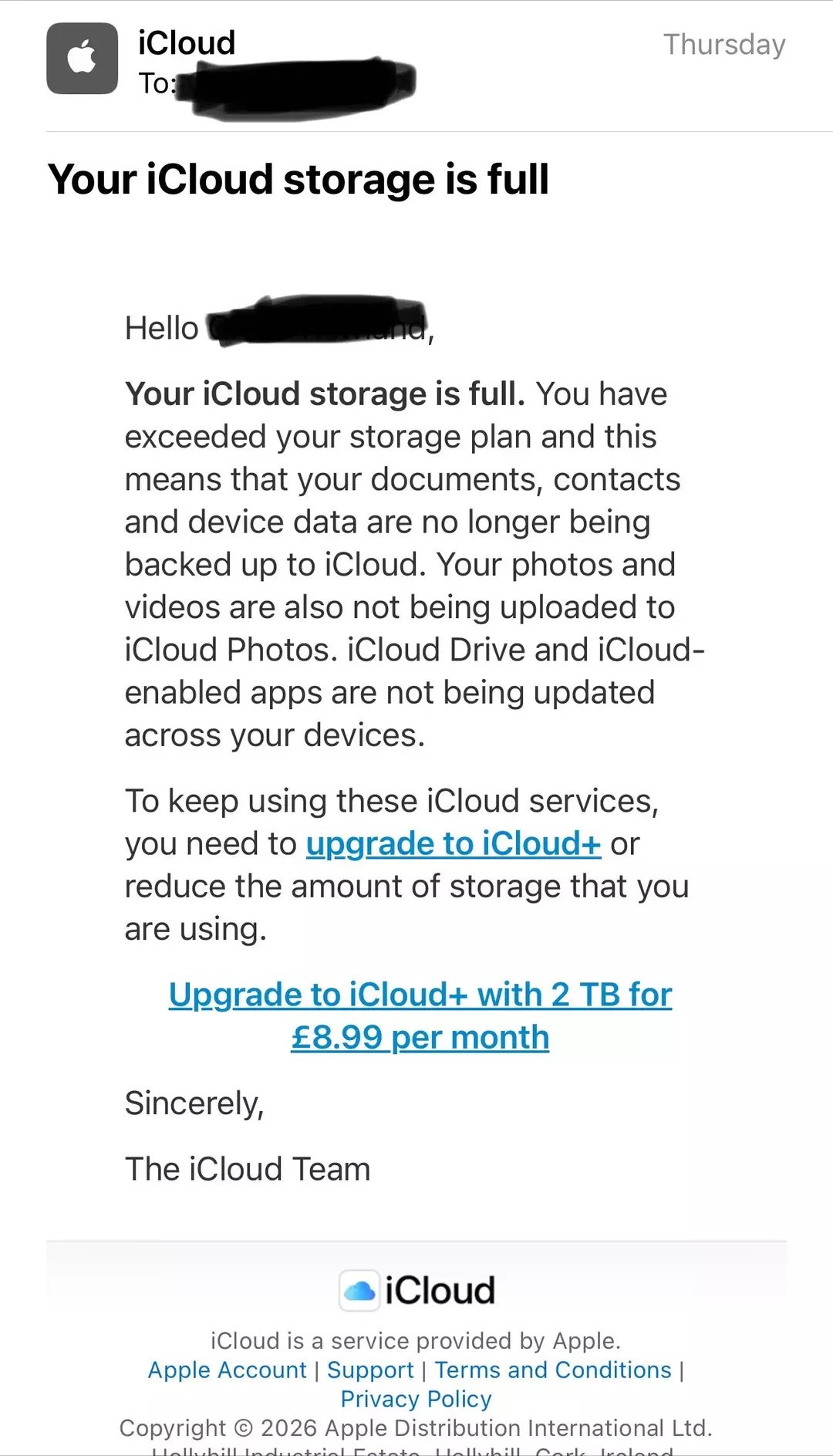
This can include “spoofing” an email address so it appears official, and copying branding elements like trademarks and copyright-style footer text to make the message look authentic. If you’re unsure, it’s safest to avoid entering any financial information prompted by an email or text.
Another common tactic is manufacturing urgency to make you act before you think. In this type of scam, the email may claim you’re “at risk of losing your photos, videos and important files” unless you pay immediately.
Alternatively, the message may push a “limited-time” deal, urging you to “upgrade today to keep your precious files and memories safe,” using steep discounts and time pressure to nudge you into sharing your details.
Some recipients also report messages claiming their iCloud information is outdated and must be updated to keep using Apple services. Legitimate companies generally do not request sensitive updates in this way via unsolicited emails.
In replies to the warning, many people said they’d recently received the same scam and voiced concern about the sheer volume of attempts, with one commenting that “going digital has made being mugged so much easier for the mugger.”