


A shocking new study has illustrated the damage ultra-processed foods do inside the body.
Health professionals have been increasingly vocal about ultra-processed foods, warning that many people may not realize how these products can affect the body or the health problems they’ve been associated with.
Often shortened to UPFs, ultra-processed foods typically contain added chemicals such as preservatives, colorings, flavor enhancers, and other ingredients you wouldn’t usually use in home cooking.
They’re also frequently engineered to be high in calories, sugar, fat, and salt, which can improve taste and extend their shelf life.
Many of the usual examples are everyday staples found in kitchens, with common options including cereals, fizzy drinks, potato chips, canned and packaged foods, cured meats, and ready-to-heat frozen meals.

In one recent case study exploring the impact of UPFs, clinicians shared an image of a woman’s thigh after she reportedly got 87 percent of her nutrition from ultra-processed products.
Her diet largely consisted of cold cereals, chocolate bars, and soda. Even though she had a moderate level of physical activity, the heavy reliance on UPFs appeared to be linked with visible changes in her leg muscle composition.
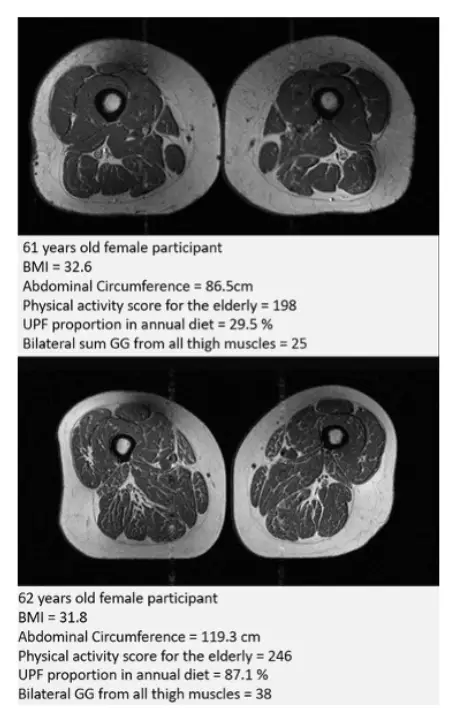
The top image shows a woman whose thigh muscles have minimal fat infiltration, with a diet made up of 30 percent UPFs. The bottom image shows a woman’s thighs with more pronounced marbling, and her diet consists of 87 percent UPFs.
Researchers said higher UPF intake was associated with more visible “marbling” — a term describing fat building up within thigh muscles, gradually replacing healthier muscle tissue and potentially reducing strength.
As fat within the thighs increases, everyday movement can become more challenging, including brisk walking, carrying groceries, or standing up from a chair. Over time, that can encourage less activity, which may accelerate declines in muscle mass and function.
Elevated fat infiltration in muscle has also been linked to a higher risk of metabolic disease.
Known as myosteatosis, this process involves fat accumulating within muscle fibers. People with higher levels of fat in muscle are thought to face increased rates of insulin resistance, metabolic syndrome, and chronic inflammation.
Researchers note that when certain metabolic pressures are present — such as diets heavy in UPFs, persistent low-grade inflammation, or insulin resistance — fat cells can begin to form and expand between and inside muscle fibers.
To investigate the pattern in a larger population, the scientists analyzed information from the Osteoarthritis Initiative, a major research project tracking individuals at risk of developing knee osteoarthritis.
They narrowed the dataset to 615 participants who did not already have arthritis, chronic illness, or joint pain. Each person also completed a detailed food questionnaire covering what they had consumed over the previous year.

Using a dietary classification method, the team estimated what proportion of each participant’s daily intake came from ultra-processed foods.
Each participant then received an MRI scan of their thighs. Researchers evaluated the images for fat infiltration across multiple muscle groups — including the hamstrings, quadriceps, and inner thigh muscles — grading results from zero (no fat) to four (more than 50 percent fat).
Across the study, higher UPF consumption tracked with higher levels of fat within the muscles. The relationship appeared consistently in every muscle group assessed, including the hamstrings, quadriceps, and inner thighs.
Overall, the researchers concluded that people consuming larger amounts of ultra-processed foods and drinks tended to have substantially more intramuscular fat, particularly in the thighs.
The findings were published in the journal Radiology.