

Whether it’s a spontaneous holiday tattoo you got after a few drinks or a name you’d rather forget, plenty of people eventually reach a point where they wish they could hit “undo” on their ink.
One celebrity who’s taken that route is Pete Davidson, who has decided to remove the vast majority of his tattoos.
The Saturday Night Live comedian previously had close to 200 tattoos, but began the removal process in 2020. He’s since shared that he’s already spent around $200,000 on the treatments.
Even though he’s aiming to clear most of his body art, he’s reportedly holding onto one particular piece: his tattoo of Hilary Clinton. Davidson got the portrait after Clinton lost the 2016 presidential election, saying it was meant to ‘cheer her up a little bit’.
It’s certainly one way to show support — though most people would probably choose something a little less permanent.

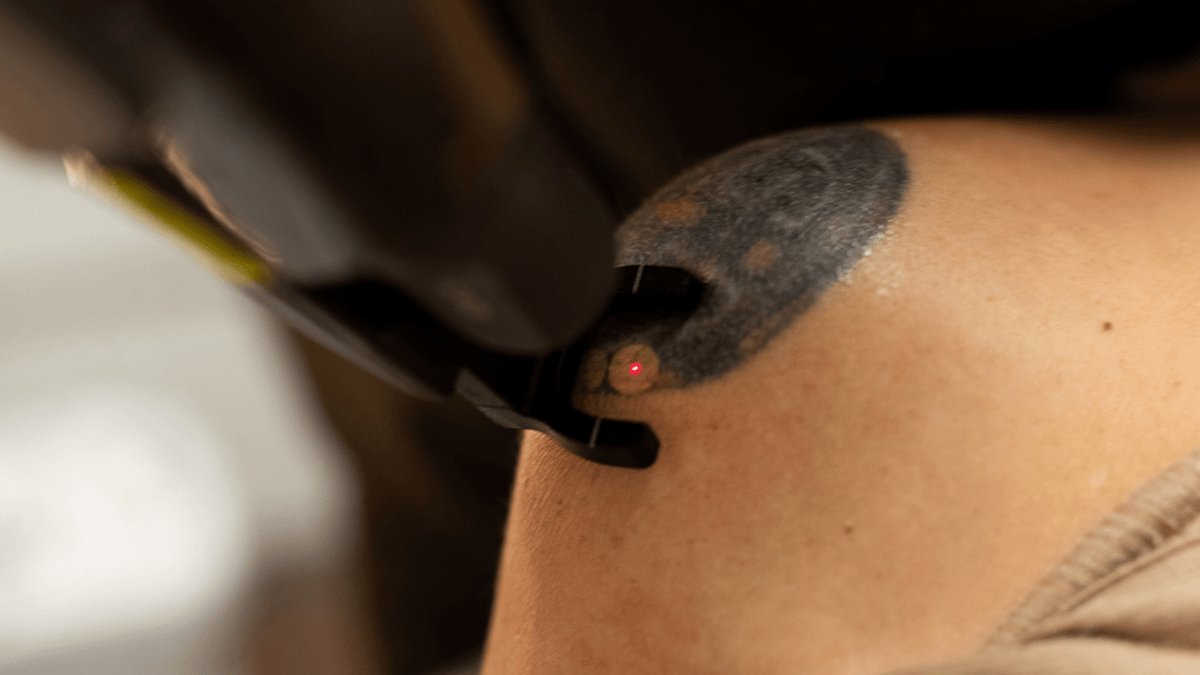
Davidson is removing his tattoos using laser treatments, widely considered the most common and safest method for eliminating unwanted ink.
According to Cleveland Clinic, the basic idea is that lasers break the tattoo pigment into much smaller particles, which your immune system can then gradually clear away.
A YouTube channel called Macro 3D illustrated the process with a simulation that many viewers found hard to look away from.
In the animation, the laser passes through the skin and targets ink deposits in the upper layers, breaking them apart.
Ink embedded in the dermis is shattered into tiny fragments, which allows the immune system — specifically white blood cells known as macrophages — to move in and deal with the pigment pieces.
Those cells then transport the pigment away from the tattooed area so it can be processed and eventually removed by the body.
The video sparked plenty of reactions from people impressed by how accurately it shows what’s happening beneath the surface.
Somebody commented: “It’s amazing how our own immune system literally ‘eats’ the tattoo once it’s broken down!”
“This is so educating,” said another, as a third person added: “These videos are absolutely informative. More of this is needed on this app. Enjoyed it immensely. So much better than all that trash that is on here.”
Others who are currently going through tattoo removal said the simulation matched what they’ve experienced.
They penned: “I’ve had 4 treatments so far. I have definitely seen significant fading. There’s different color lasers that work more effectively on different colors. Black is the easiest to fade.”
Supporting that, med spa LaserAway explains that black ink is typically simpler to remove ‘because the laser is able to target the black pigment more precisely’.
“Other colors such as red, blues and greens can become more difficult to remove depending whether the tattoos were amateur or professional,” the website goes on, adding that green is the most difficult color to get rid of.