

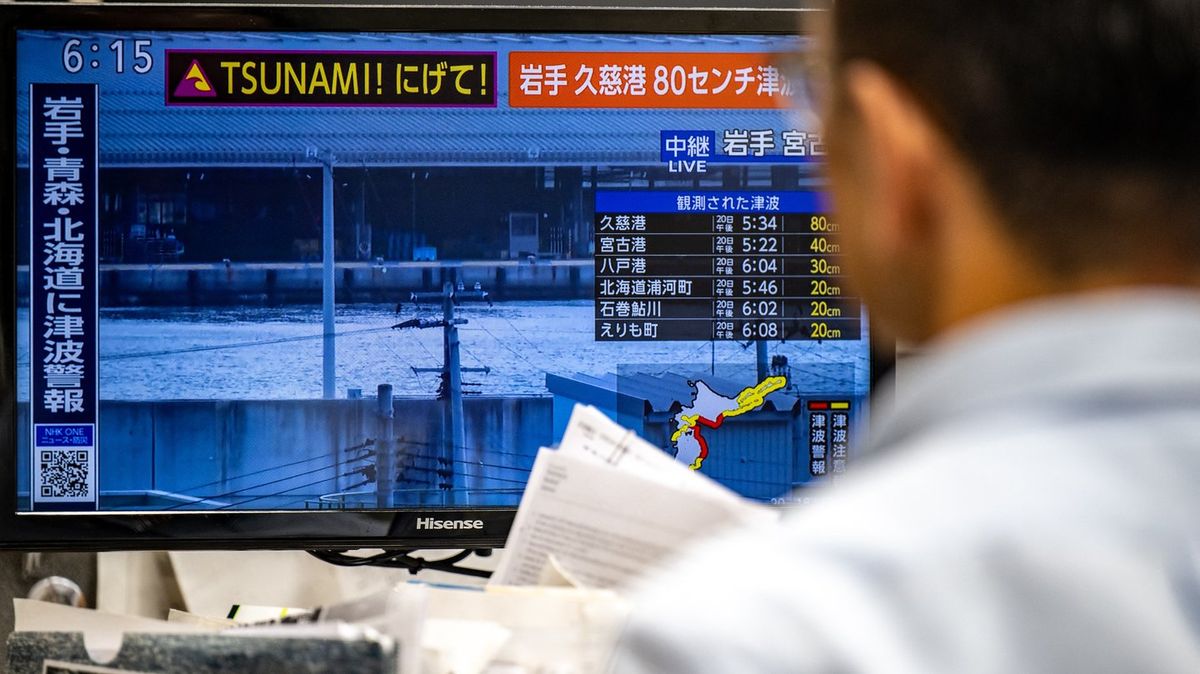
Japan has declared a national emergency after a 7.4-magnitude earthquake struck offshore, with tsunami waves now reaching parts of the country.
The quake was reported at around 6pm JST, with alerts issued after tremors were detected off the Sanriku coast on Japan’s eastern side.
Japan’s meteorological agency said the earthquake struck at a depth of roughly 10km, about 100km off the east coast.
Following the seismic activity, authorities issued emergency notices for coastal communities, including tsunami warnings and subsequent advisories.
NHK reported that residents in 11 towns across the northeast were instructed to evacuate, while Japan’s prime minister confirmed a task force had been formed to respond to any damage.
Sanae Takichi, who is the first female leader of Japan, repeated the evacuation call for people in Iwate prefecture, where the most significant waves are expected.
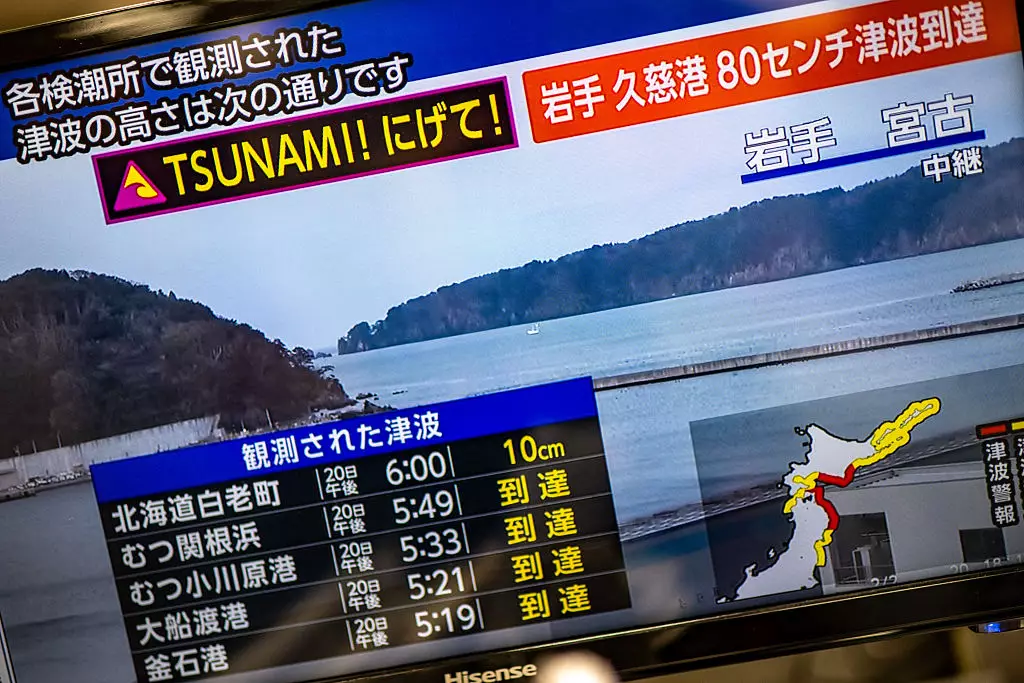
Within the past hour, the Japan Meteorological Agency has continued issuing safety guidance as officials work to assess the likely scale of the tsunami and any knock-on effects.
At present, waves of up to 3 meters (10 feet) have begun reaching coastal stretches, and the agency is urging people to stay away from shorelines and rivers and to move to higher ground.
Dr Simon Boxal, a senior lecturer in oceanography at the University of Southampton, said that he expects the impact to be ‘moderate’, explaining that time will tell how bad it’ll be: “You’d expect the main waves to be hitting, probably, given the water depth, about an hour later. So, we’d expect those waves to be hitting pretty soon.”
In addition, the BBC has reported that there are warnings this week about landslides and the risk of further seismic activity, alongside concerns that a larger tsunami could still be possible.
The Independent says tsunami waves of up to 80cm have already been recorded, with a chance they could grow.
#岩手駐屯地 #震度5弱 #津波警報
岩手駐屯地は、4月20日(月)16:53三陸沖で発生した最大震度5強の地震による津波警報発令にともない、17:26岩手県庁に情報収集のため出発しました。 pic.twitter.com/uxtdHBmwhV— 陸上自衛隊岩手駐屯地 (@Gsdf_Camp_Iwate) April 20, 2026
The areas currently expected to be most affected include the central Pacific Hokkaido coastline, the coast of Aomori prefecture, and the coast of Iwate prefecture.
Japan frequently experiences earthquakes because it sits on the ‘Ring of Fire’, a seismically active zone that rings much of the Pacific Ocean.
The region is known for intense tectonic movement, deep ocean trenches, and large numbers of volcanoes, and Japan’s most devastating recent quake occurred in 2011.
That disaster involved a magnitude-9 earthquake that set off tsunami waves reaching around 40m in some places.
Nearly 20,000 people were reported dead or missing.