


Plenty of celebrities will happily spend six-figure amounts on cosmetic tweaks that help them stand out, but Pete Davidson has put a comparable sum into doing the opposite: dialing his look back.
Davidson, 32, has been working for years to erase a large portion of the roughly 200 tattoos that once covered his body, and reports suggest he’s already spent about $200,000 on repeated removal sessions as he tries to start fresh.
That progress was especially noticeable last week at CinemaCon in Las Vegas, where the comedian walked on stage in a short-sleeved red T-shirt and appeared to have dramatically clearer, more bare-looking arms than fans are used to seeing.
The transformation is a big departure from the heavily tattooed image he became known for—an aesthetic he’s previously said could take around three hours of makeup to conceal on set. Actually removing the ink, though, is far more involved than covering it up.

The King of Staten Island actor has leaned on laser removal—the most common approach for undoing what’s meant to be permanent ink—to tackle the hundreds of tattoos he’s accumulated over roughly the past six years.
But while “laser removal” can sound like a quick fix, the science behind it is surprisingly complex, and it also highlights why tattoos are so difficult to erase in the first place.
Tattoo pigment doesn’t stay put simply because it stains skin; it lasts largely because of how the immune system responds to the repeated needle punctures. Infection-fighting white blood cells called microphages move in to deal with the injury.
Those cells try to engulf and eliminate the foreign material introduced by the tattoo needle, but they can’t fully break down the pigment’s chemical compounds—so the ink effectively becomes trapped with them in place.
Influencer Aakash Gupta pointed out: “It gets weirder. When one of those cells finally dies of old age, a nearby macrophage grabs the released ink before it can drain. Then that one dies and passes it to the next one.
Pete Davidson is on pace to spend $660K removing his tattoos, and the reason it costs that much is genuinely one of the weirdest things happening inside the human body.
Tattoos are permanent because your immune system is actively holding the ink in place. White blood cells… https://t.co/HQnFuq5uUN
— Aakash Gupta (@aakashgupta) April 20, 2026
“The tattoo is a relay race of immune cells handing off the same ink particles for 50 years.”
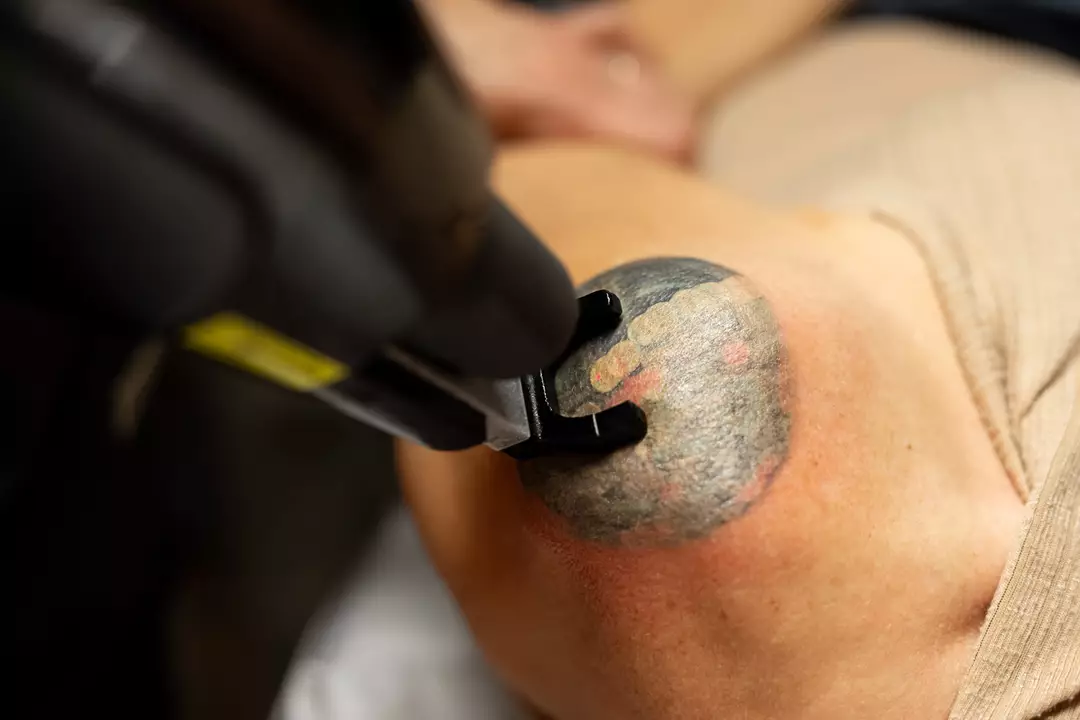
Laser treatment works by delivering extremely rapid bursts of light that fracture the tiny ink particles held under the skin, breaking them into smaller fragments the body has a better chance of clearing away.
Even then, it isn’t a one-and-done process. Time between appointments is essential so the body can process those fragments, which is why larger or denser tattoos typically require many sessions before they noticeably fade—let alone disappear.
The ink doesn’t simply vanish after it’s broken up, either. Much of it is transported out through the lymphatic system over a period of months. In some cases, traces can remain, with leftover pigment potentially staining lymph nodes and even causing confusing readings on certain medical scans.
Gupta argued: “Pete has 200+ tattoos. Each one needs 10-12 sessions because each session only wins a tiny fraction of the war. He’s not buying tattoo removal.
“He’s buying a decade-long siege against his own immune system, paid in installments of $500 shockwave blasts, while white blood cells inside his body sprint back and forth trying to eat their own ammo.”