

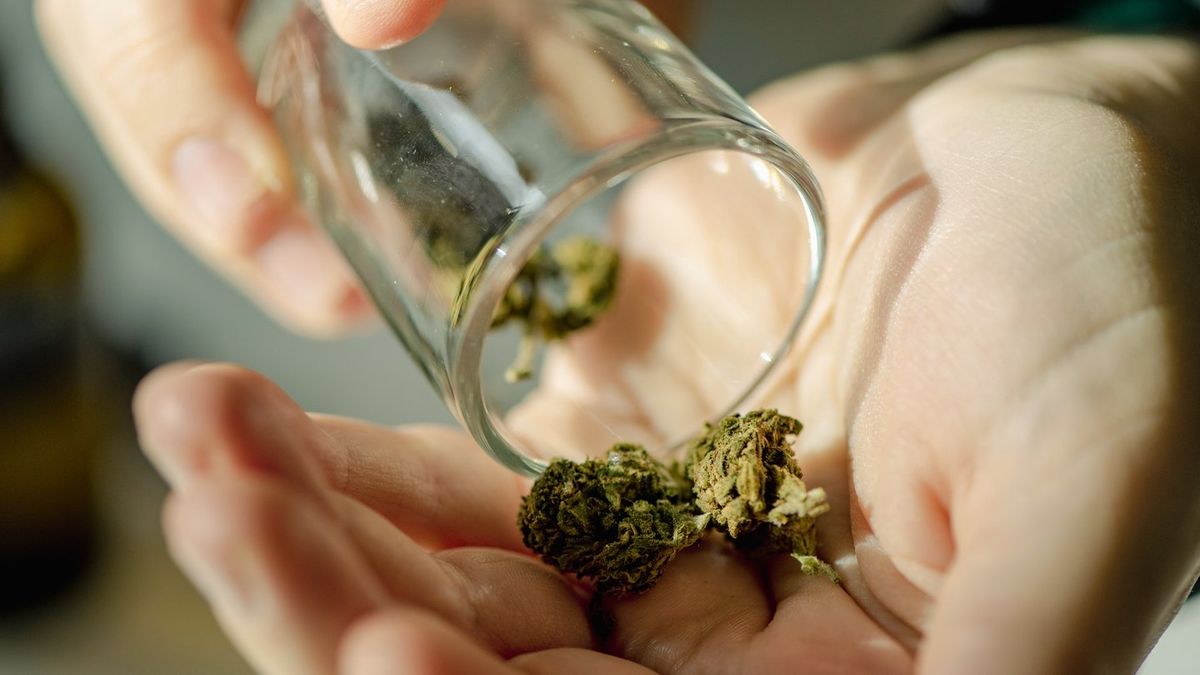
Smoking weed can leave you asking important questions about the universe like, where did I put that bag of chips? Or even, should I get more chips? Indeed, getting stoned can even make a video about the Earth being flat seem credible.
A new piece of research suggests there’s a specific biological reason why cannabis can make people feel confused, overly trusting, and mentally foggy — a finding that could be worth paying attention to for anyone using it heavily.
Most people who’ve tried the so-called “devil’s lettuce” know the feeling: thoughts drift, details slip away, and your short-term memory can feel like it’s working through syrup. It’s as familiar a side effect as red eyes or the sudden urge to snack.
But this study didn’t just link cannabis with forgetfulness. It found that THC may do more than make it harder to remember simple things — it may also alter recall in a way that increases memory distortion and even encourages false memories.

To investigate one of cannabis’ best-known effects — the mental haze — researchers designed a randomized, double-blind, placebo-controlled trial involving 120 participants, divided into three groups.
Each person used a vape. One group received a placebo. Another group took a moderate dose of THC (20mg). A third group took a higher dose (40mg). THC is the main psychoactive compound in cannabis responsible for the “high.”
After dosing, participants completed a battery of memory tasks intended to measure different types of recall and processing.
The tests assessed verbal memory (remembering spoken information), visuospatial memory (mentally mapping and orienting objects or locations), cue-based recall (remembering information when prompted by an object), and sequence memory (remembering things in the right order).
To make sense of the results, it helps to understand both what THC does in the body and how memory is formed and accessed in the brain.

THC (tetrahydrocannabinol) produces its effects by interacting with the body’s endocannabinoid system — a network present from birth that helps regulate processes such as mood, sleep, and memory.
When cannabis is consumed — whether through edibles, bongs, vapes, or blunts — THC enters the system and floods cannabinoid receptors, disrupting how this regulatory network normally operates.
This interference is part of why cannabis can help some people manage pain at low to medium doses, including those with chronic issues like arthritis. But it’s also why users can experience memory and thinking as if everything is slightly obscured.
In simplified terms, cognitive scientists often describe memory in three stages: encoding (taking in information), consolidation (processing and storing it), and retrieval (accessing it later).
These stages are shaped by senses and emotions, with the hippocampus playing a key role in converting experiences into memories that can be recalled later. The endocannabinoid system, meanwhile, is involved in how signals are handled across those phases.

Co-author of the study Carrie Cuttler, Washington State University’s associate professor and director of the Health and Cognition Lab, said: “You are activating certain pathways to create a memory and to recall something, you are trying to reactivate that same pathway.”
Although scientists still need to refine exactly how intoxication affects each stage of memory formation, the researchers suggest that cannabis essentially overstimulates the system involved in these processes.
“If you blast the system with THC, the THC hijacks the system,” Cuttler explained.
Across 21 memory measures, about 70 percent of participants who received THC showed some level of impairment compared with those given the placebo.
The most worrying effects appeared in two areas: false memory and source memory. People found it harder to identify where information came from, and they were more likely to “remember” details that weren’t actually true.
The researchers’ interpretation is that THC weakens the ability to pull up precise details, even when a memory still feels familiar. When the details aren’t accessible, the brain may try to “complete” the memory by filling in gaps — increasing the chance of inaccurate recall.
In the experiment, people given THC were about twice as likely to experience false recall compared with the placebo group, which could also help explain why far-fetched ideas can feel more convincing while high.
Even so, the findings are not necessarily permanent. The authors pointed out that many cannabis-related memory issues can improve after around four weeks of abstaining.
And when comparing substances, the researchers also noted that alcohol tends to impair memory more severely during acute intoxication. Cuttler said: “Acute alcohol intoxication is generally more disruptive to memory than cannabis.”