

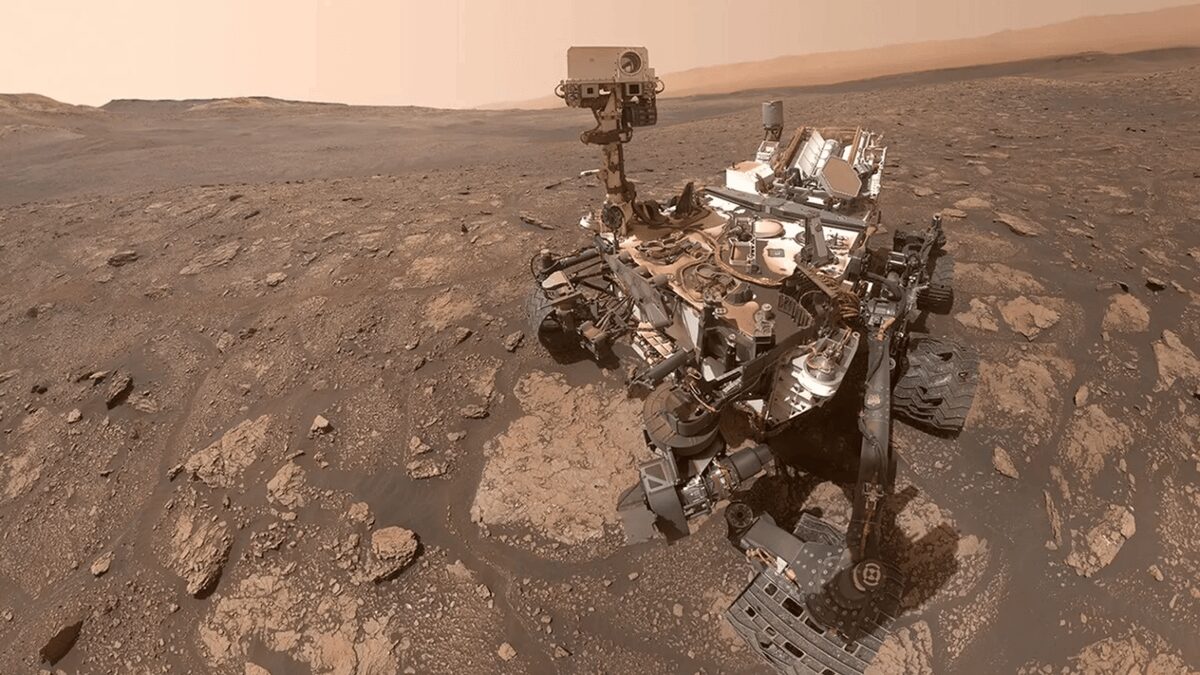
Scientists are leaning further into the possibility that Mars may once have supported life after a Curiosity rover sample revealed a striking range of organic chemistry.
On April 21, a paper titled ‘Diverse organic molecules on Mars revealed by the first SAM TMAH experiment’ appeared in the Communications section of the journal Nature.
The research details how Nasa’s Curiosity rover came across an unusual rock in 2020, later drilling into it and running laboratory-style tests using onboard instruments.
Curiosity, which has been exploring Gale crater and Mount Sharp, is a key part of Nasa’s Mars Science Laboratory (MSL) mission and continues to provide some of the mission’s most important geochemical findings.
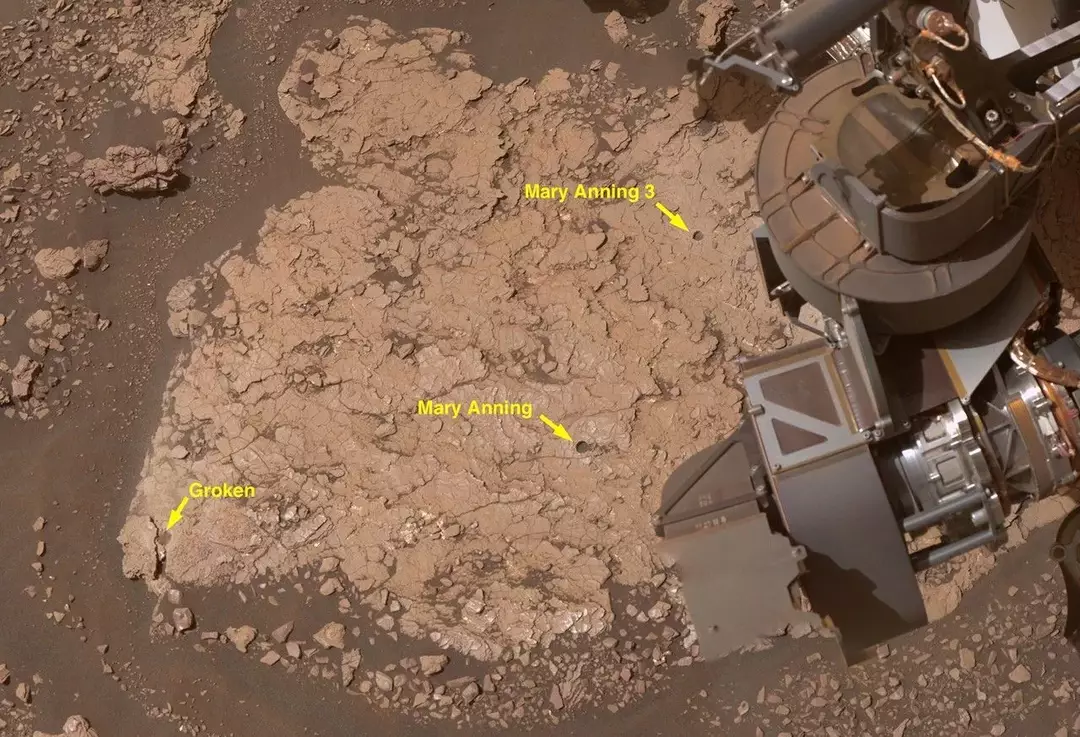
In the paper, researchers explain that the target was first spotted on October 25 at a location nicknamed ‘Mary Anning’, a reference to the famed English fossil collector and palaeontologist.
After years of analysis, the team now says the sample represents the most “diverse collection of organic molecules ever found” on Mars.
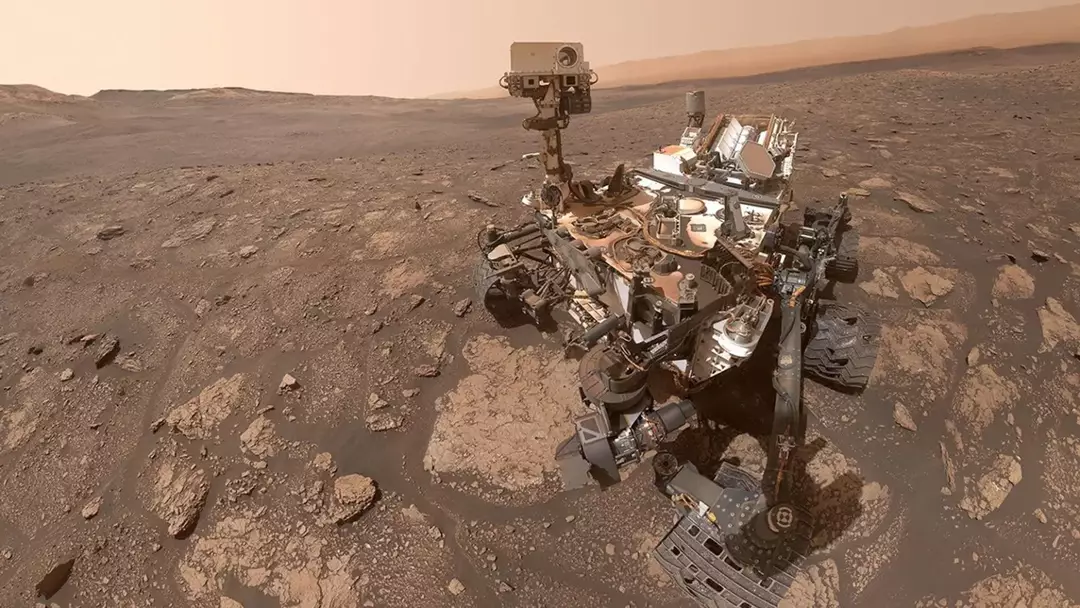
Nasa said 21 carbon-containing compounds were identified in the rock, including seven detected for the first time on the planet.
The drilled material—labelled ‘Mary Anning 3’—contains organics that scientists currently can’t definitively attribute to either biological activity or purely geological chemistry.
Among the new detections was a nitrogen heterocycle, which Nasa described as a ring-shaped carbon structure that includes nitrogen.
Researchers note that molecules with this kind of architecture can be relevant to the chemistry that precedes RNA and DNA, the nucleic acids responsible for carrying genetic information.
Overall, the findings strengthen the argument that ancient Mars had chemical conditions compatible with life.
“That detection is pretty profound because these structures can be chemical precursors to more complex nitrogen-bearing molecules,” said lead paper author, Amy Williams, of the Department of Geological Sciences at the University of Florida in Gainesville.
“Nitrogen heterorcycles have never been found before on the Martian surface or confirmed in Martian meteorites.”
She continued: “We think we’re looking at organic matter that’s been preserved on Mars for 3.5 billion years. It’s really useful to have evidence that ancient organic matter is preserved, because that is a way to assess the habitability of an environment.
“And if we want to search for evidence of life in the form of preserved organic carbon, this demonstrates it’s possible,” Williams added.
In addition to the nitrogen heterocycle, the team also identified benzothiophene, a molecule containing both carbon and sulfur that has previously turned up in meteorites.
Nasa noted that meteorites—and the organic compounds they carry—are thought to have helped spread prebiotic chemistry throughout the early solar system.
“This is Curiosity and our team at their best. It took dozens of scientists and engineers to locate this site, drill the sample, and make these discoveries with our awesome robot,” said the mission’s project scientist, Ashwin Vasavada of Nasa’s Jet Propulsion Laboratory in Southern California.
“This collection of organic molecules once again increases the prospect that Mars offered a home for life in the ancient past.”