


The Centers for Disease Control and Prevention (CDC) has alerted the public to a salmonella outbreak affecting multiple states across the US.
Health officials say the infections are associated with contact with backyard poultry, including chickens and ducks, meaning a large number of people could potentially be exposed.
Data from the American Pet Producers Association suggests backyard flocks are widespread; in 2018, it estimated around 10 million US households kept backyard chickens.
Figures reported in 2021 showed major egg-laying populations in states such as Indiana (35.4 million laying hens) and Ohio (35.1 million). Those states are now among 13 where cases connected to the current salmonella investigation have been identified.
So far, authorities have not announced any deaths linked to the outbreak, though some patients have required hospital treatment.

In a CDC update dated April 23, the agency reported 34 illnesses across the 13 states. Of those cases, 13 led to hospitalizations.
“Public health officials in several states are investigating a multistate outbreak of salmonella illnesses linked to contact with backyard poultry,” the website says.
“Any backyard poultry can carry salmonella germs that can make you sick. Always take steps to stay healthy around your flock.”
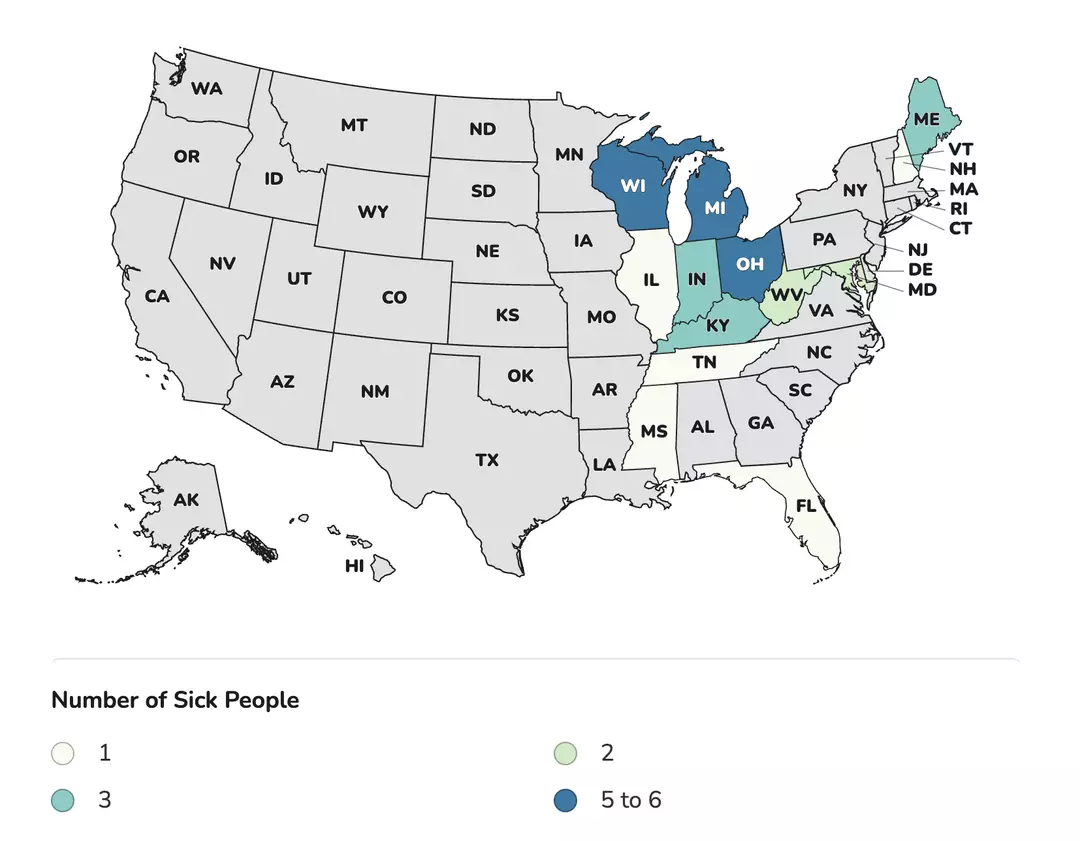
Michigan has recorded the highest number so far with six infections, while Wisconsin and Ohio have each reported five.
Indiana, Kentucky, and Maine have each confirmed three cases, with West Virginia and Maryland reporting two apiece.
Single cases have been reported in Florida, Illinois, Mississippi, New Hampshire, and Tennessee.
The CDC notes that birds can carry salmonella even when they appear healthy and their feathers look clean, which can make the risk harder to spot.
The agency has also issued practical guidance for people who keep or handle backyard poultry:

According to Mayo Clinic, some people infected with salmonella may have no symptoms. Most, however, develop issues such as diarrhea, stomach cramps, fever, nausea, vomiting, chills, headache, and sometimes blood in the stool.
Symptoms often resolve without treatment within a few days, but medical advice is recommended for infants and young children, older adults, and anyone with a weakened immune system.
The CDC also advises seeking medical care if diarrhea lasts more than two days without improvement, vomiting prevents you from keeping liquids down, or a fever rises above 102°F.