

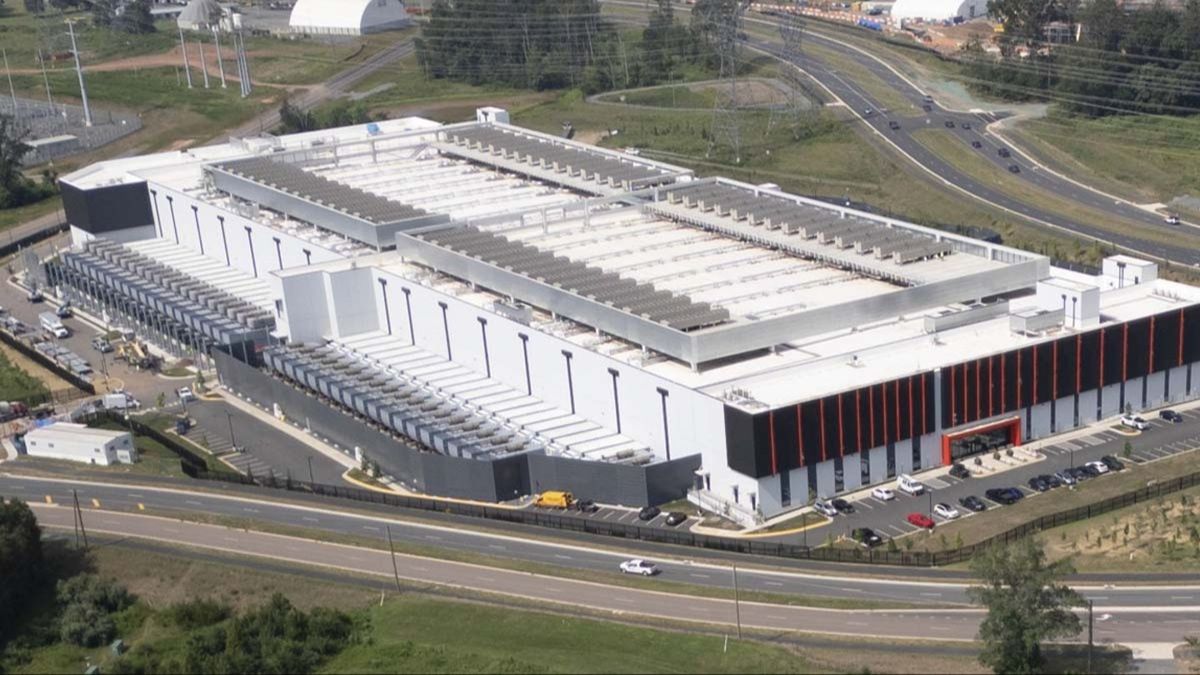
A new study suggests the rapid worldwide rollout of AI-driven data centers is contributing to localized “heat islands” that raise surrounding temperatures.
AI adoption is accelerating as more companies integrate the technology into their products and operations, but researchers warn the infrastructure required to run it could carry environmental consequences.
Debate about climate policy remains politically charged, with the Trump administration taking a markedly different approach to environmental regulation than several previous governments.
According to the research, the growth of data centers supporting AI workloads may be intensifying small-scale heating effects, with some locations seeing temperature increases of up to roughly 16 degrees Fahrenheit.
The work was led by researchers at the University of Cambridge, who estimate the phenomenon could ultimately affect more than 340 million people worldwide.
Andrea Marinoni, an associate professor at the university, said that major uncertainties remain, pointing to “big gaps” in what is currently known about how these facilities influence the environment.

Even so, the early figures are raising alarms, particularly as demand for AI computing is expected to keep climbing.
The Cambridge team reviewed two decades of temperature records from areas where large data centers have been built in recent years.
They examined around 6,000 facilities located away from heavily built-up city centers, aiming to avoid temperature distortions caused by dense development and industrial activity.
To sharpen the analysis, the researchers attempted to account for broader background influences such as overall warming trends and seasonal variation.
On average, surface temperatures near the sites rose by about 3.6 degrees after the centers began operating, while the highest observed increase reached 16.4 degrees Fahrenheit.
Deborah Andrews, emeritus professor of design for sustainability at London South Bank University, also spoke after the results were released.
She urged caution, emphasizing that this is an early, novel piece of research that will require further confirmation.
“The ‘rush for AI-gold’ appears to be overriding good practice and systemic thinking and is developing far more rapidly than any broader, more sustainable systems.”
Another specialist, Ralph Hintemann, questioned aspects of the analysis, saying the largest temperature jumps were “interesting” but also “very high.”
In addition to documenting the temperature effects, the researchers outlined potential ways to reduce AI’s environmental impact, including “carbon-aware” software designed to shift computing to cleaner energy periods or locations.