

An artist renowned for pushing boundaries has sparked fresh controversy with her newest show.
Austrian choreographer, director and performance artist Florentina Holzinger is drawing major attention at this year’s Biennale, which opens to the public on Saturday (May 9), thanks to a provocative installation in the Austrian pavilion.
The exhibition is titled ‘Seaworld Venice’—and its components quickly explain why it has become one of the event’s most talked-about works.
One section features nude women submerged inside a large glass water tank, breathing through scuba mouthpieces.
What makes the scene even more confronting is what the tank is topped up with. Two portable toilets sit on either side of the chamber; when visitors urinate in them, the liquid is filtered and then used to replenish the tank’s water level.
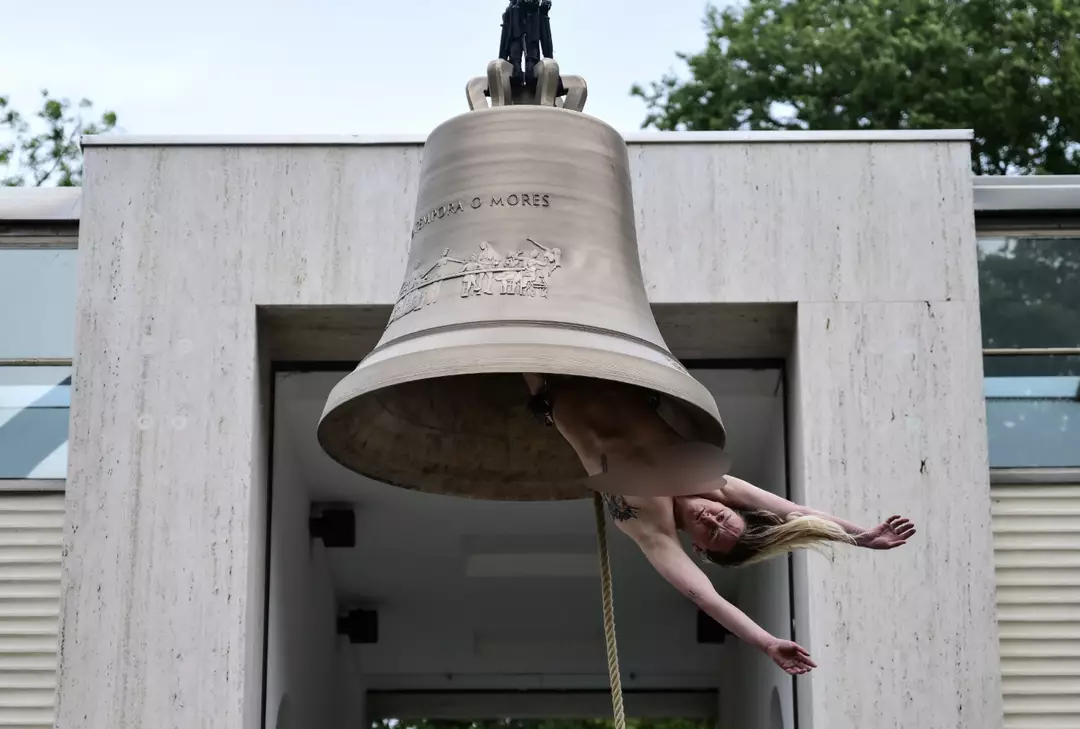
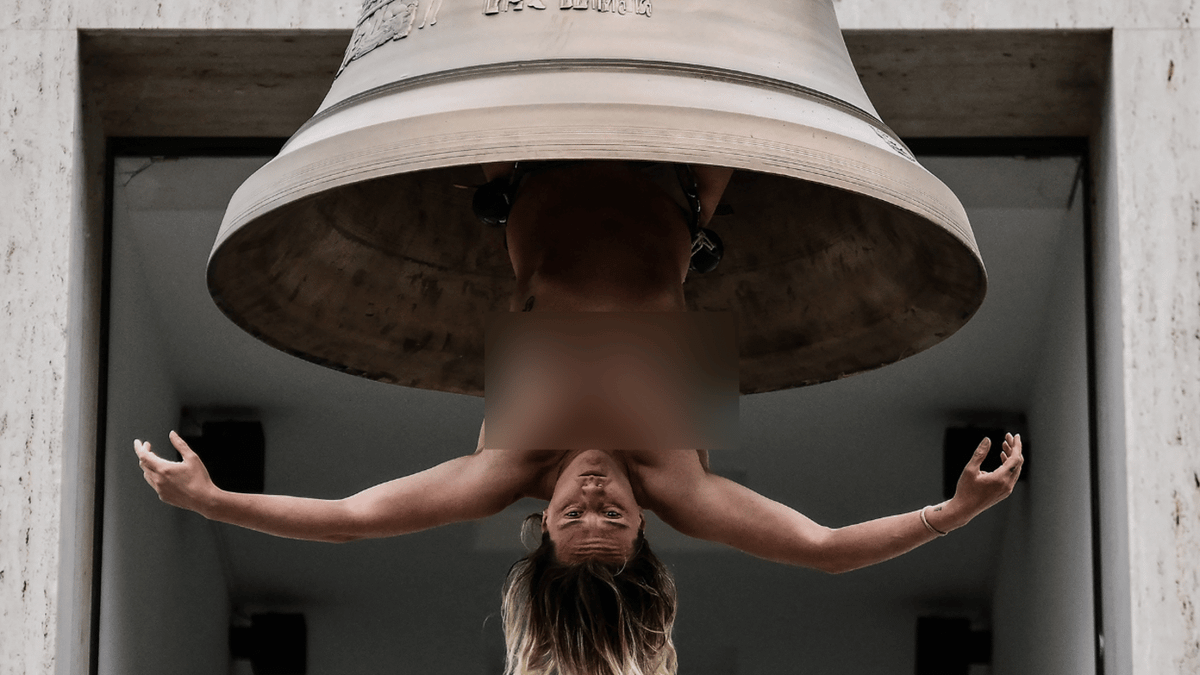
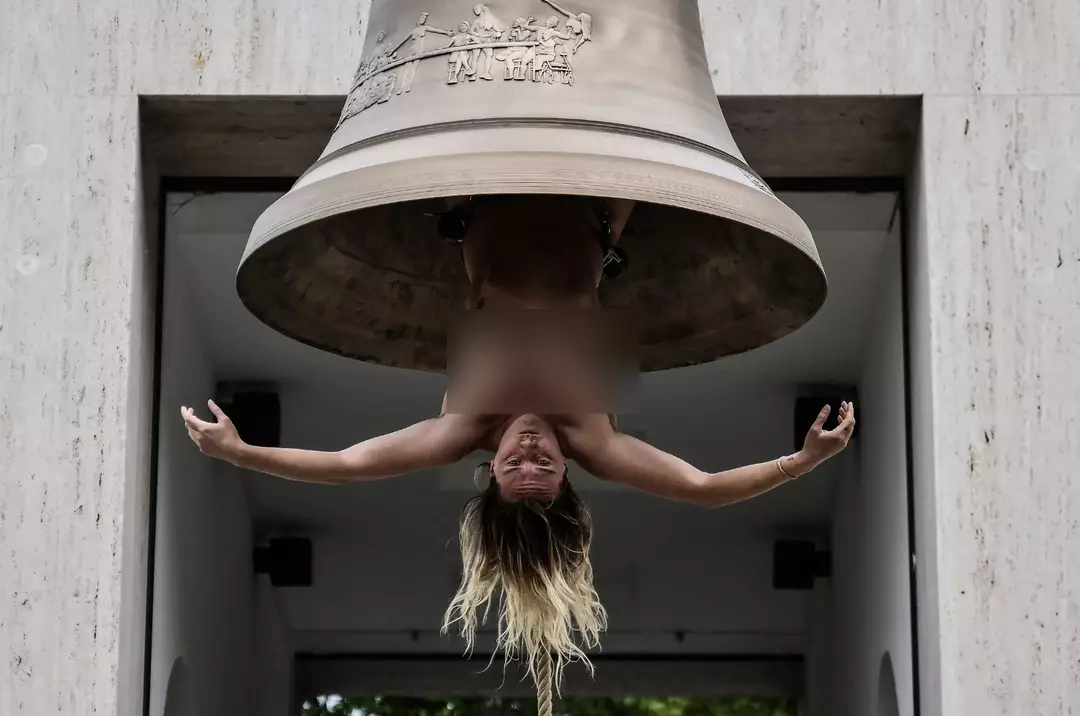
Elsewhere in the pavilion, Holzinger appears nude, suspended upside down inside a large bronze bell. She strikes the bell from within, using her body like a clapper to produce the ringing sound.
Another room presents a different kind of spectacle: a naked performer repeatedly circles the space on a jet ski, creating spray and motion as she rides.
Behind the shock value, the installation points to the environmental risks facing Venice, particularly from climate change and rising sea levels. In a severe scenario, the city could be partly—or even entirely—submerged by 2100.
The work also highlights broader concerns about water use and pollution, including the ways wastewater can end up flowing into rivers and the sea.
The Art Newspaper said that the controversial artwork ‘functions as an underwater theme park, sewage treatment plant and sacred building, imagining Venice as a flooded metropolis, the water level so high that dry land disappears and sewage seeps into daily life’.
Expanding on the idea, the exhibition’s curator, Nora-Swantje Almes, told a news outlet: “We think about Venice as a city that is particularly threatened by the climate crisis and flooding.
“At the same time that we’re critical of it, we’re also part of it. We are complicit, as are the visitors to the Biennale.”
Almes also indicated that officials were receptive to the concept from the outset.
“The reaction we got from the ministry was a very positive one,” Almes said. “Very encouraging, very supportive. It might be partly because Florentina’s work is also internationally recognised.”