

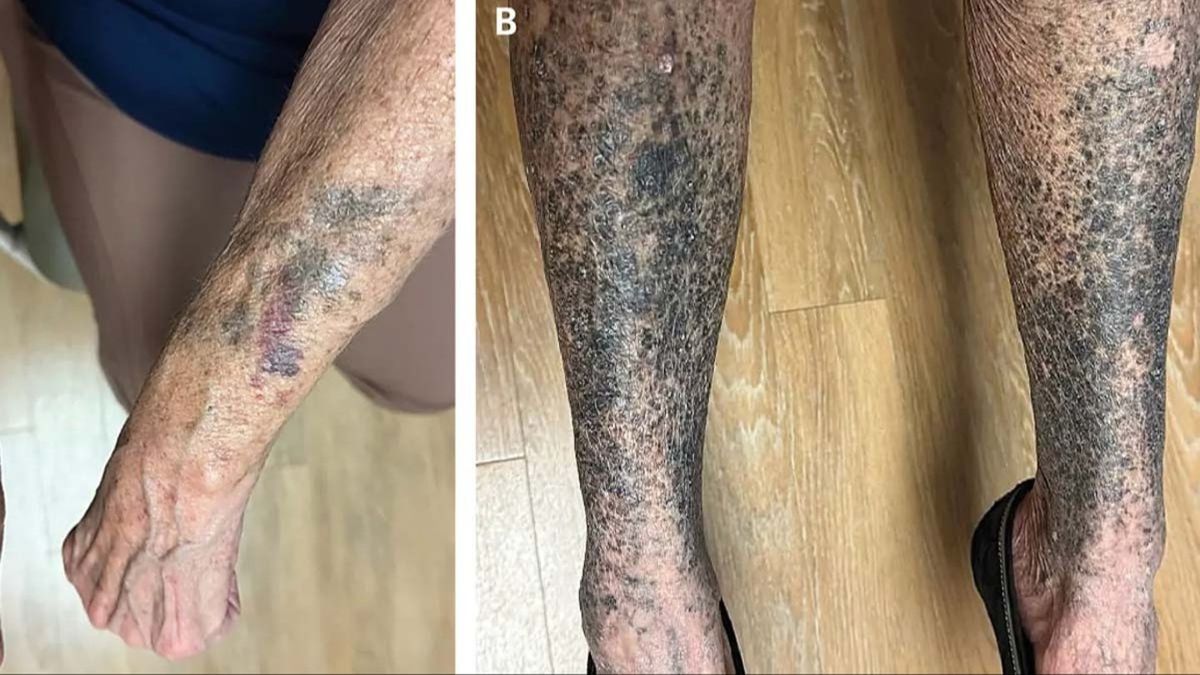
A woman developed blue-gray discoloration on her arms and legs after experiencing an unusual reaction to a commonly prescribed medication used to treat a range of health issues.
The 68-year-old patient, who was not named, went to seek medical advice when the darker patches failed to clear up over a six-week period.
According to a case report published in the New England Journal of Medicine, the woman had rosacea — a “common skin condition that causes flushing or long-term redness on your face”, as described by Mayo Clinic.
Explaining the condition, dermatologist Alicia Zalka said: “Rosacea is a chronic inflammatory condition in which the skin appears inflamed along with evidence of acne-like bumps and textural change.
“Because the condition is multifaceted and is the result of the interplay of genetics, environment, vascular inflammatory responses of the skin, and even skin mites, there is no single cause of rosacea and similarly no single treatment.”

While there is no cure for rosacea, symptoms can often be managed with treatment — which is why the woman started medication to help control her flare-ups.
She had begun taking 100 mg a day of oral minocycline, and about two weeks later the dark patches on her arms and legs appeared.
Mayo Clinic notes that minocycline is commonly prescribed for issues such as acne and certain bacterial infections.
“It works by killing bacteria or preventing their growth,” the health sites adds. “However, this medicine will not work for colds, flu, or other virus infections.”
The medication is only available with a prescription from a GP.
Although minocycline can cause side effects like dizziness, nausea, headaches, fatigue, and increased skin sensitivity, doctors said the reaction seen in this case was uncommon.
The woman’s symptoms were linked to hyperpigmentation — a side effect reported in an estimated 3 to 15 percent of people who take the drug. Specialists add that this kind of discoloration is more often seen after months of use, rather than within a few weeks.
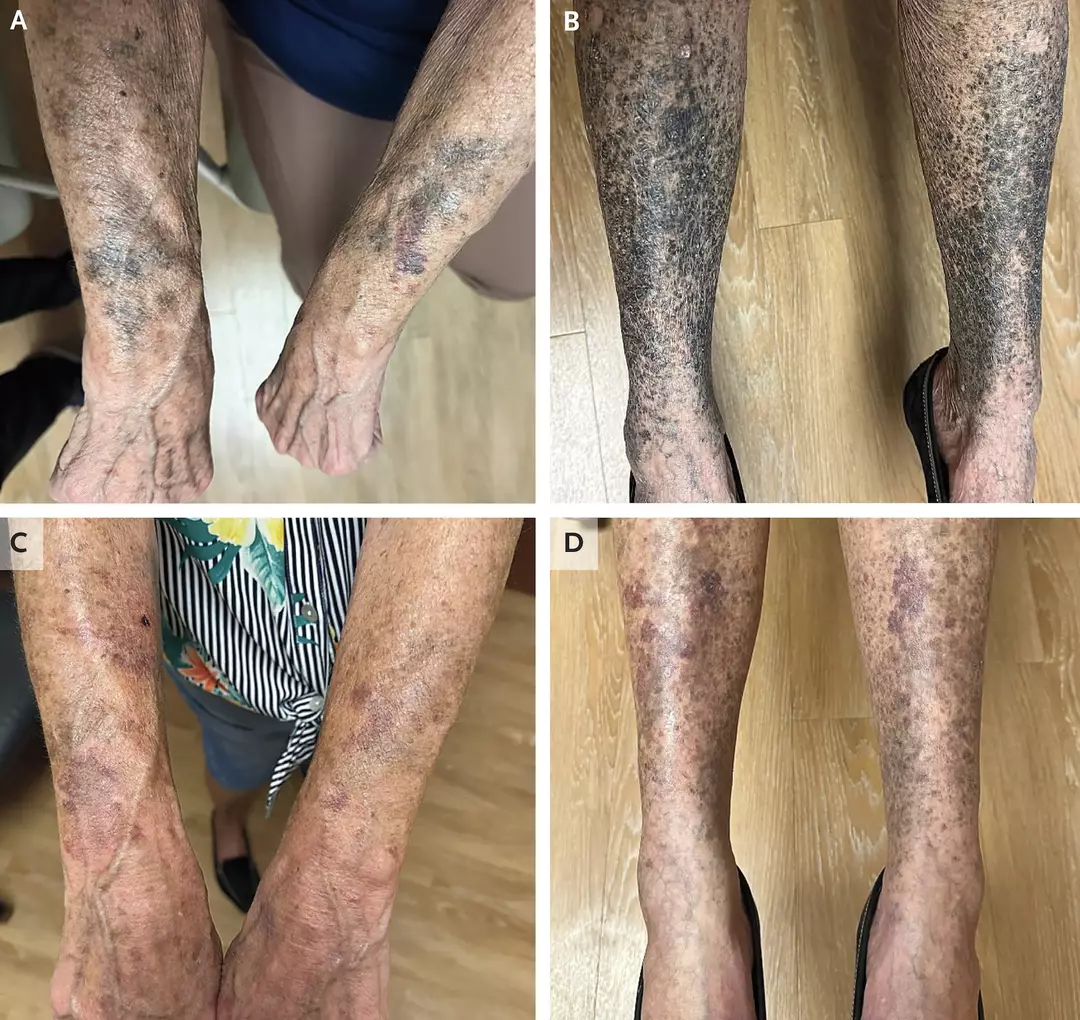
Hyperpigmentation causes certain areas of skin to become darker than the surrounding tissue, producing spots or patches that can range in shade.
“The areas are not painful or itchy, but they can make people self-conscious,” Cleveland Clinic states.
After consulting clinicians, the woman was advised to stop taking minocycline and to limit sun exposure. She was diagnosed with Type II minocycline-induced hyperpigmentation.
When she returned for a follow-up appointment six months later, the discoloration had “abated somewhat”, but it had not fully disappeared.