

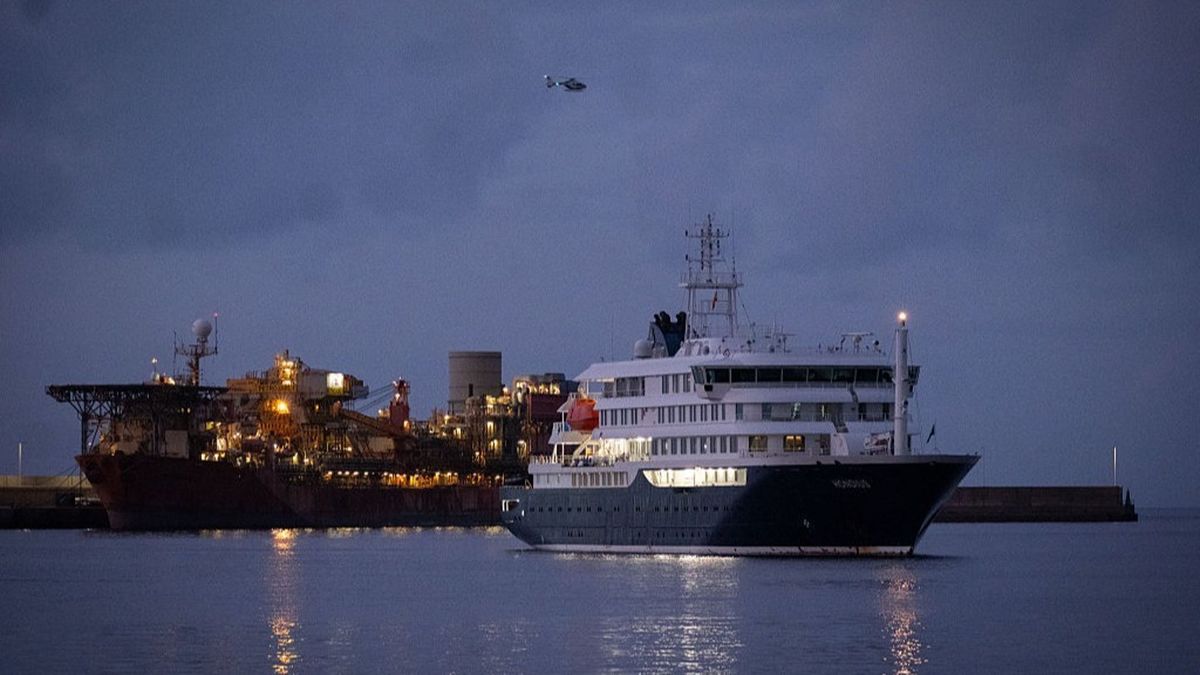
Experts say the current hantavirus outbreak is not a sign that the world is ending, but they are investigating whether the virus may have originated from a place often associated with “the end of the world”.
Health officials have turned their attention to a city at Argentina’s southernmost tip after the MV Hondius cruise ship departed from there and later reported a case of hantavirus linked to the Andes strain.
That departure point was Ushuaia, a well-known gateway for travellers drawn by its dramatic snow-covered mountain views and its proximity to two of the planet’s most remote regions, Antartica and Patagonia.
Now, however, Ushuaia has found itself under an uncomfortable spotlight as epidemiologists try to trace the source of the outbreak. One prominent line of inquiry suggests that ‘patient zero’ may have visited an area close to the city before boarding.
Investigators believe two passengers went to a landfill near the isolated city in the hope of seeing rare Patagonian birds. According to the current hypothesis, one of them was exposed to the Andes strain there.
Officials in Argentina said they suspect the infection could have come from rodent droppings at the dump. That suggestion has been strongly contested locally.
Juan Petrina, the region’s director of epidemiology and environmental health, rejected the idea that the illness is present in Tierra del Fuego, stating: “In Tierra del Fuego we have no record of hantavirus cases in our history.
“And specifically, since 1996 – when the National Surveillance System included it among mandatory reporting diseases – we haven’t had a single case in Tierra del Fuego.”
While the landfill theory remains a key focus, the individual thought to be ‘patient zero’ had travelled extensively before joining the expedition cruise to Antarctica.

Leo Schilperoord, a Dutch national believed to be the first infected, had already spent a month in South America. He reportedly arrived in Argentina in November, 2025.
Schilperoord is believed to have been travelling with his wife. They crossed into Chile by car on January 7 and spent the next 44 days visiting locations in both countries. Their trip also included time in Uruguay, before they re-entered Argentina on March 27.
After that, they travelled to Ushuaia and boarded the ship on April 1.
That travel timeline is part of why Petrina argues the virus is more likely to have been contracted far from his region, suggesting a source more than 900 miles north of Ushuaia.
“To begin with, we do not have the subspecies of the long-tailed mouse [which transmits the disease], nor do we share the same climatic conditions as northern Patagonia – neither in humidity nor temperature – for its development,” he said.
Petrina also pointed to the area’s geography as another obstacle to the virus establishing itself locally. He explained: “And if rodents were to start moving, since they don’t respect geographical boundaries, it’s important to remember that we are an island.
“They would face the limitation of crossing the Strait of Magellan in order to infect local species, so that is an additional difficulty, beyond the climate.”
The Andes strain of hantavirus is considered uncommon. Microbiologist Dr Gustavo Palacios said there have only ever been 3,000 known cases.
It is also the only hantavirus known to spread from person to person. Research has suggested patients may be infectious for roughly a day around the time fever appears, and that transmission can occur even with brief close contact.
Andes virus (ANDV) is mainly found in South America and can be deadly, with fatality estimates ranging from 20 to 40 percent. It can lead to hantavirus pulmonary syndrome (HPS), a serious illness that affects the lungs. Symptoms can appear one to eight weeks after infection and the first signs can include:
Later symptoms include: