

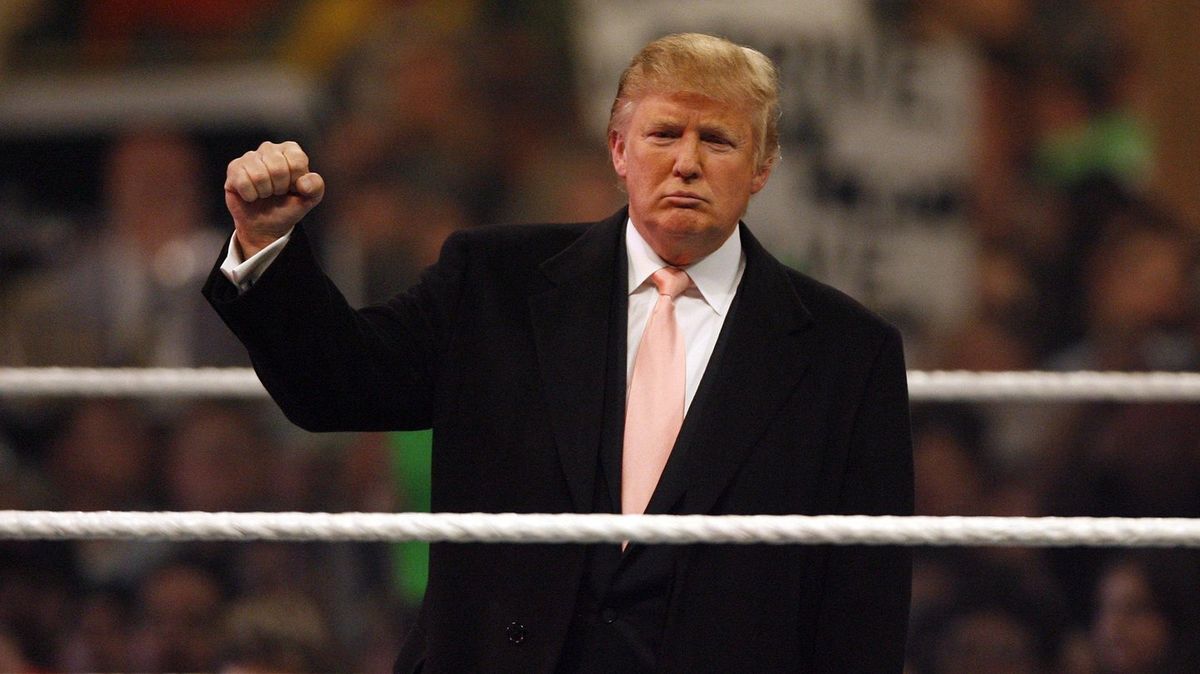
US President Donald Trump is the subject of Wrestling with Trump, a new Channel 4 documentary examining his relationship with the world of professional wrestling, and the experts who know the sport best say the parallels are no accident.
Presented by comedian and broadcaster Munya Chawawa — widely known for viral political impressions and satire — the programme follows him across the US as he speaks to WWE icons, people from Trump’s inner circle and wrestlers on the independent scene. The aim: to trace how a sports-entertainment style of performance may have been repurposed into a political strategy.
Chawawa, whose online work often targets public figures and power, uses humour as a way into a sharper point about what happens when the boundaries between spectacle and real life blur.
He said in the documentary: “The misogyny, the xenophobic trash talk, that’s fine in the ring.
“It was never meant to leave the living room. But when a person takes those behaviors into the real world, people begin to get hurt.”
So what, exactly, do the documentary’s contributors think Trump borrowed from wrestling and carried into campaigning? Here are four of the core techniques they highlight.
Trump’s links to WWE stretch back decades. The documentary notes that his ascent in public culture in the 1980s broadly overlapped with Vince McMahon’s expansion of what was then WWF (The World Wrestling Federation), before the company later rebranded.
WWF star Brutus Beefcake recalls Trump as a genuine enthusiast who would fly wrestlers’ families to shows and cover accommodation at his Atlantic City hotel, simply because he enjoyed having them around. Beefcake also describes late nights socialising, with Trump buying steak dinners for the group.
The connections became political as well as personal: Linda McMahon, Vince McMahon’s wife, serves as Trump’s Secretary of Education. The documentary also points to famous wrestlers appearing in Trump campaign moments — including Hulk Hogan, Kane and Undertaker — with Hogan tearing open his shirt at the Republican National Convention in 2024 and yelling “Let Trump-a-mania rule again!”
Speaking in the doc, Brutus said: “Trump is a winner, he’s always going after what he wants, and making things happen. A lot of wrestlers are like that too.”
The documentary also features Christopher DeJoseph, a former pro wrestler and script writer, who discusses how the WWE-Trump relationship played out in storylines.
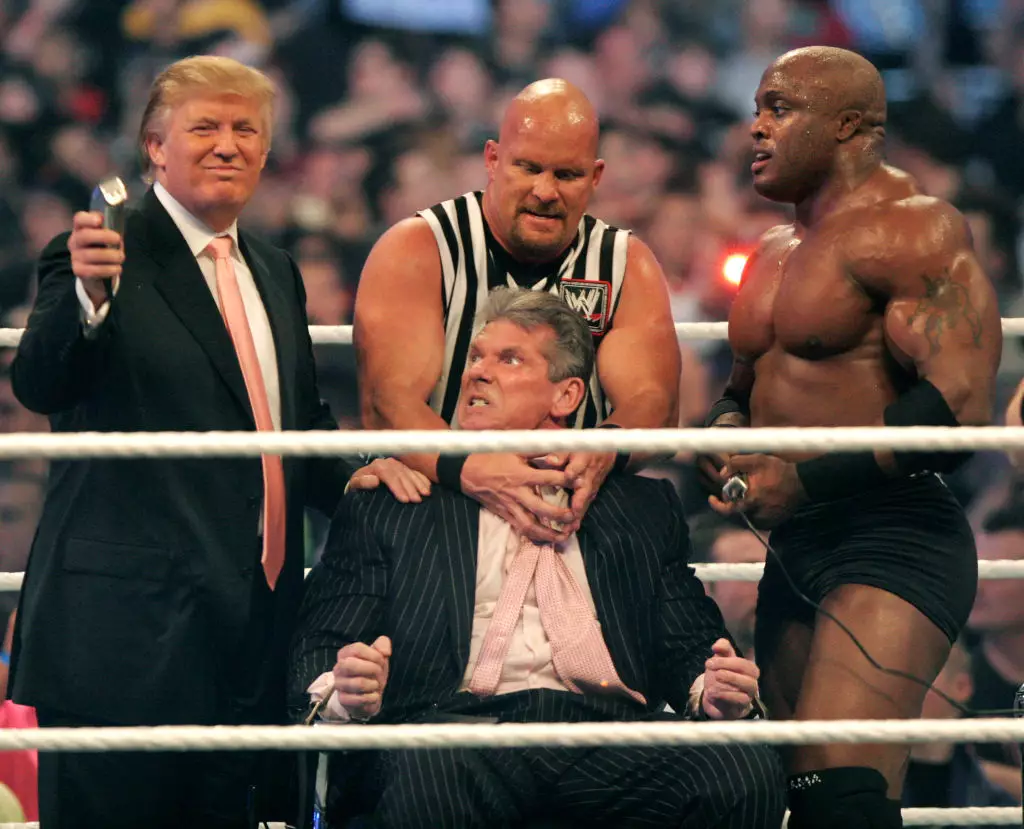
DeJoseph wrote the Wrestlemania 23 angle Vince McMahon vs Trump — the ‘Battle of the Billionaires’ — where each man backed a wrestler. Trump aligned with ECW World Champion Bobby Lashley; McMahon chose Umaga; and Stone Cold Steve Austin served as guest referee. Lashley won, which meant Trump shaved McMahon’s head in the ring.
He said: “The match clearly had a huge impact on Trump. Look at the way he sets up his rallies, it’s the same thing. He’ll get the crowd to boo the villain, then give them what they want, throw them a bit of red meat and getting them to cheer.”
Pro wrestler Brian Idol argues the influence is obvious, framing it less as a vague similarity and more as a direct lift from wrestling’s methods. “I think the storytelling aspects of wrestling 1000% influenced Trump. Everything he does is from the psychology from a pro wrestler.”
Idol shows Chawawa side-by-side footage: a Trump rally entrance placed next to the Undertaker’s iconic walk to the ring. He points to matching staging beats — silhouette, smoke, and even the same song — as evidence of deliberate mimicry. “I think he picked up all of the things he does in politics from professional wrestling,” Idol added.
The documentary notes Trump doesn’t use that exact entrance every time, but suggests the wider pattern remains: suspense, anticipation, and a theatrical build before he reaches the stage.
One of the documentary’s key concepts is “kayfabe”: wrestling’s tradition of treating scripted storylines as real within the world of the show. Fans understand it’s performance — and still choose to play along.
Independent wrestler “Handsome” Beau James argues Trump operates with the same logic, presenting politics as a continuous narrative of good guys and bad guys. In the documentary, he says: “He’s the definition of wrestling, pulling the wool over people’s eyes, creating heroes and villains, taking it to a national, global stage.”
That framing is backed up by Sam Nunberg, a Trump adviser on the 2016 campaign, who describes it as intentional: “We used the WWE as a model for the campaign. We branded him as a heel, an iconoclast, working for the people.”
The documentary points to a familiar pattern: bold statements and sweeping claims — including ‘Mexico will pay for the wall’, ‘windmills cause cancer’, and the insistence that the 2020 election was ‘stolen’. The argument presented is that even when audiences doubt the truth of these lines, they may still accept the performance because it reinforces the story they want to see.
It also includes a Trump supporter at a so-called ‘Magathering’ who says they personally examined 30,000 alleged lies attributed to Trump during his first term — and concluded they were all false allegations.
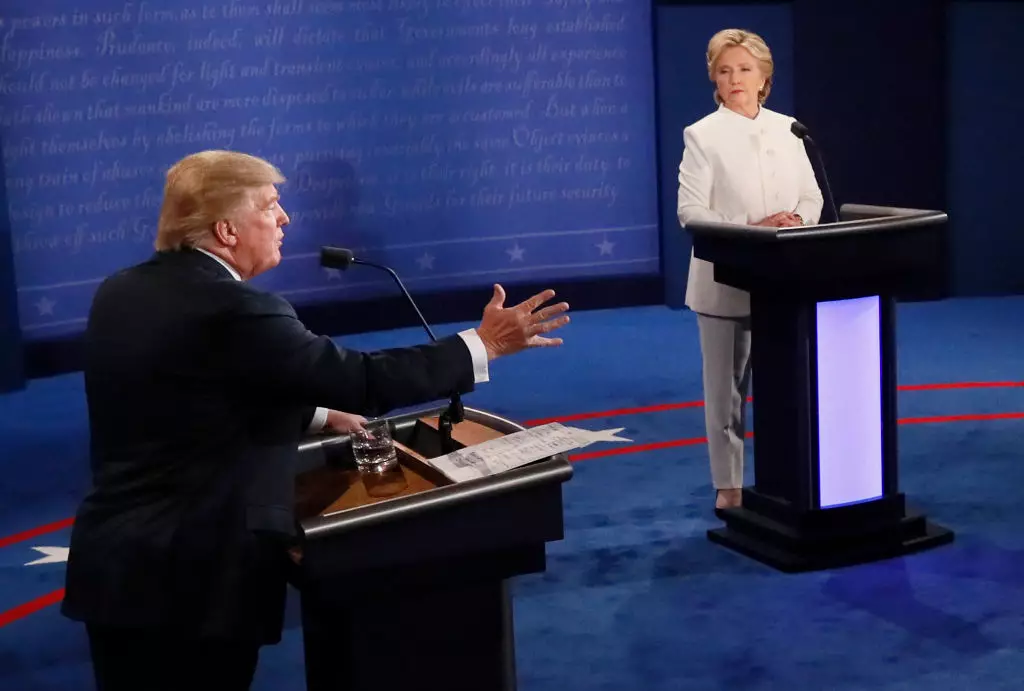
Another alleged wrestling-to-politics overlap is the use of nicknames as verbal weapons: “Crooked Hillary.” “Sleepy Joe.” “Lyin’ Ted.” Idol describes this as one of the most obvious imports from the ring.
He explained in the documentary: “It’s classic pro wrestling trash talk. He can nullify people by giving them ridiculous names.” The series suggests the effect is to shrink an opponent into a single, repeatable insult — useful for crowd dynamics in wrestling and for dominating attention in political media.
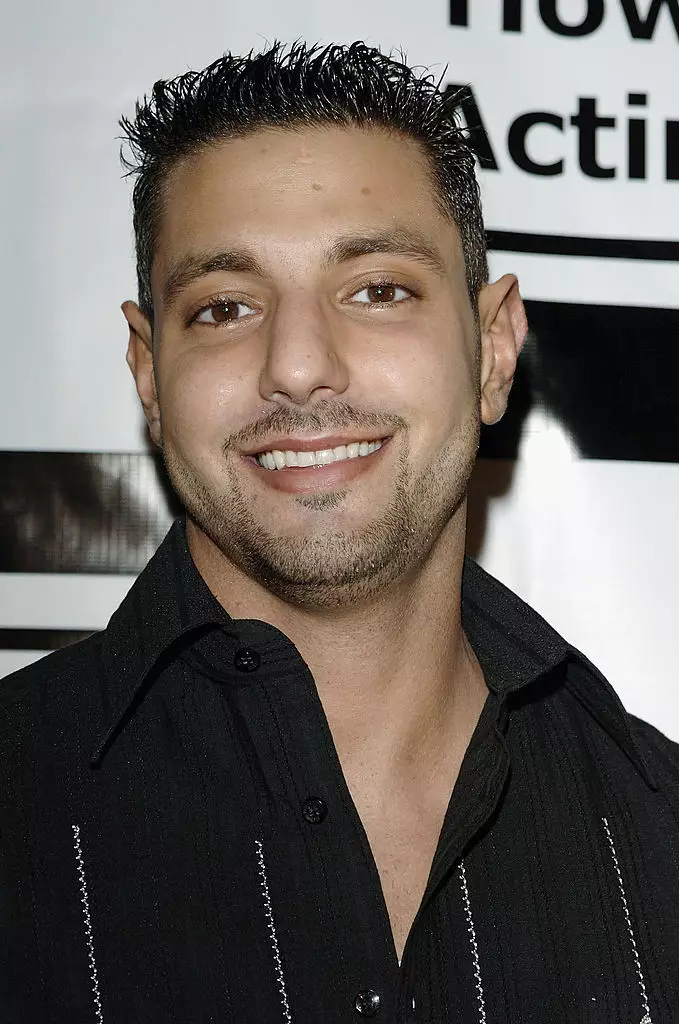
The documentary also explores how wrestling has long relied on a clear “outsider” villain. After 9/11, wrestler Marc Copani portrayed Muhammad Hassan — a character designed to exploit rising anti-Muslim feeling. Copani, who is Italian-American, has previously spoken about the lasting guilt he felt over how the storyline fed real prejudice.
Wrestling with Trump links that tradition to modern political messaging. The series cites claims such as Haitian immigrants eating pets in a small Ohio city as an example of an outrageous, sticky narrative — the equivalent of a heel’s shocking promo — built to energise supporters by focusing anger on a shared target.
Copani reflected on the real-world damage such tactics in Wrestling with Trump, saying: “Targeting Mexicans, Guatemalans, people who’ve been in this country for decades. It’s had a devastating effect on the US.”
Wrestling With Trump airs on Channel 4 on Tuesday 12 May at 10pm.