

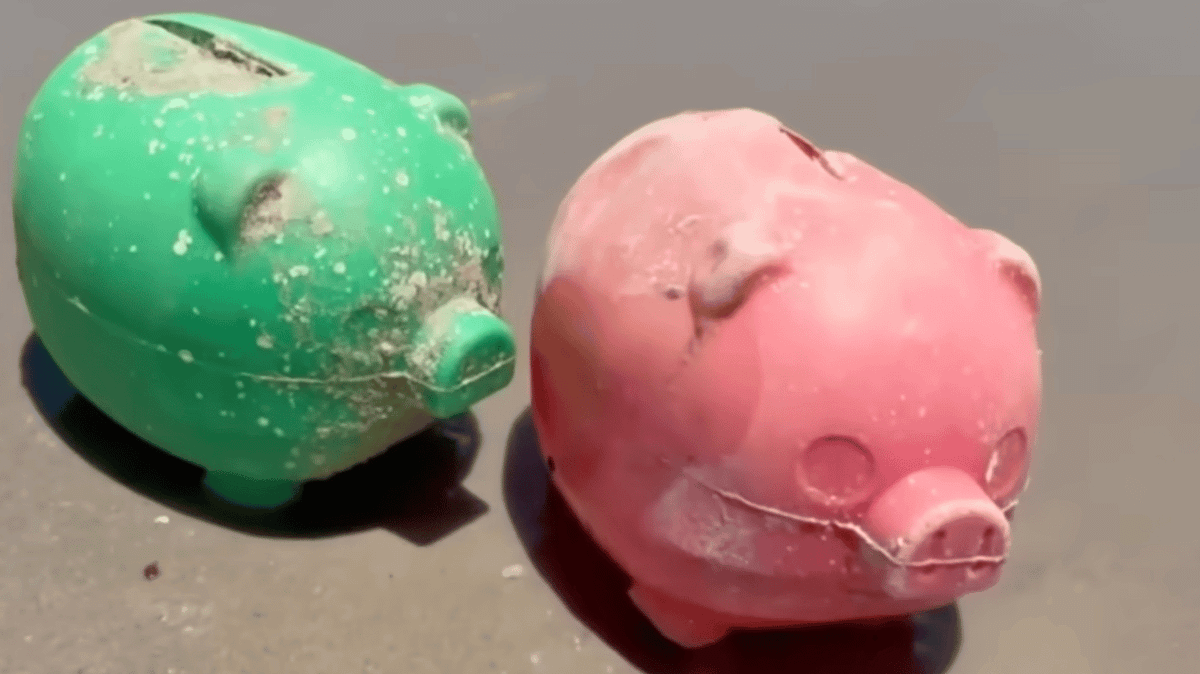
Officials in Texas are scratching their heads after five dozen damaged piggy banks turned up on beaches in 2026.
Beaches usually deliver the expected mix of sand, surf and seaweed, plus the occasional piece of driftwood. What most people don’t anticipate finding at the shoreline, though, is a child’s piggy bank.
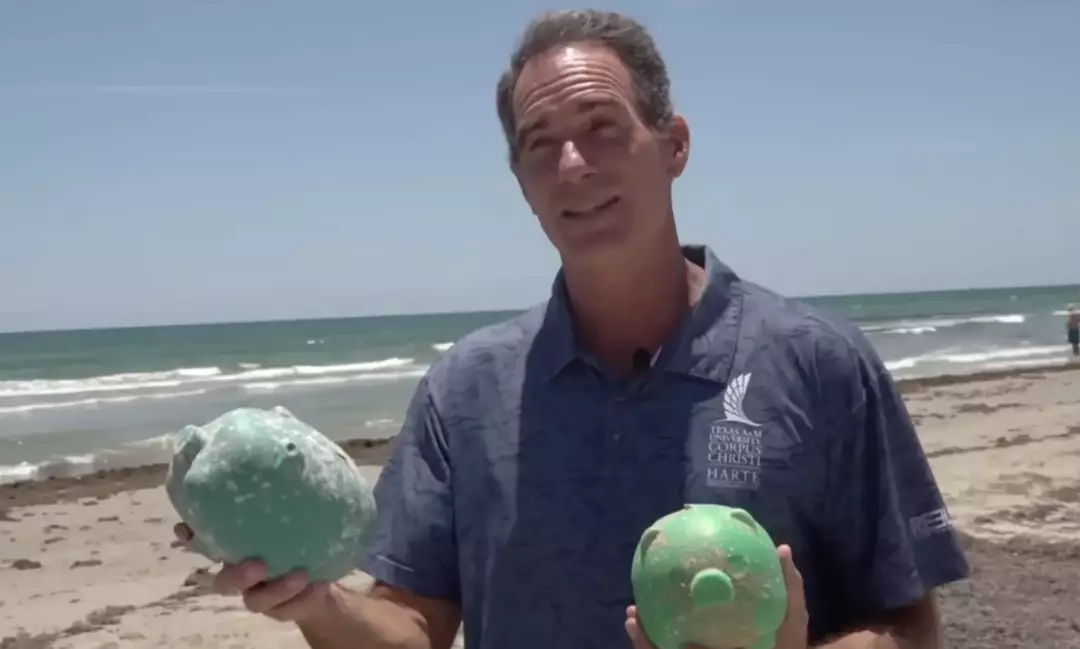
Yet that’s what marine biologist Jace Tunnell has been documenting across South Texas, logging 60 piggy banks so far this year.
Tunnell, who works with the Harte Research Institute, even came across 14 in a single day—raising the obvious question of how so many are ending up in the same region.
He told 12NewsNow he suspects they were thrown away after use, though he’s still working to gather enough evidence to confirm exactly how they entered the water.
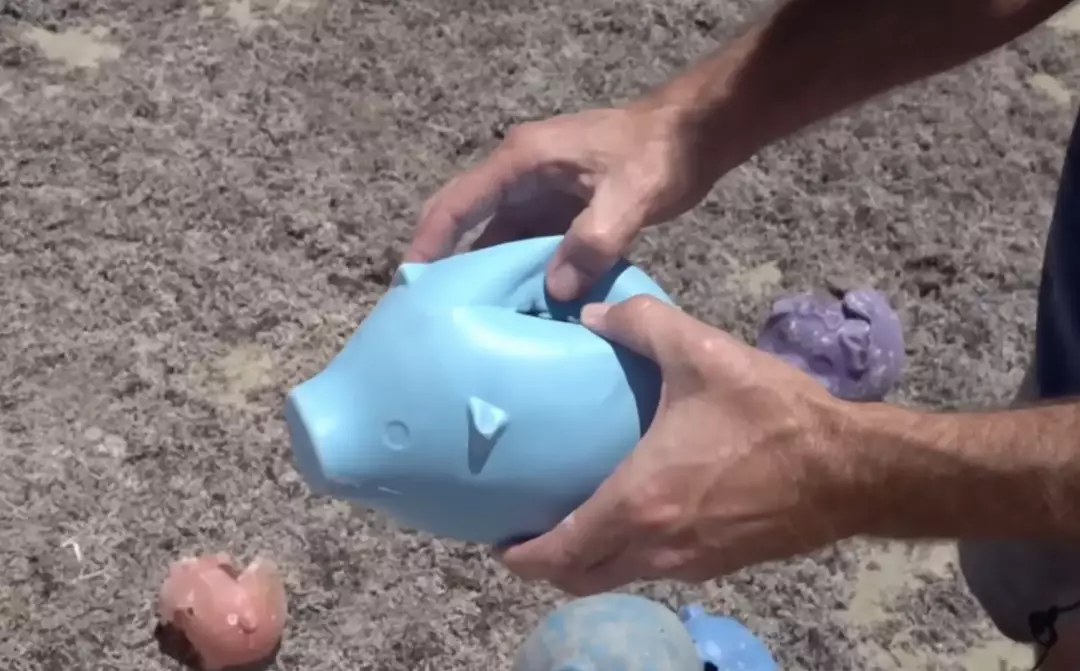
What he is confident about is their likely point of origin: Tunnell says the piggy banks appear to have come from South American or Caribbean countries, drifting in from the Gulf of America (formerly the Gulf of Mexico). They’ve been turning up on the Bolivar Peninsula and on South Padre Island, often spotted by everyday beach visitors.
Explaining why many of the piggy banks look the way they do, Tunnell told 12NewsNow: “Once these piggy banks have been used, you’ll notice there’s a bunch of cuts in them. There’s no other way to get the money out, so people dispose of them, whether it’s directly in the ocean or on land.”
Despite the steady stream of discoveries, none of the 60 piggy banks has contained any cash—though that doesn’t necessarily mean they were empty before being tossed away.
As Tunnell noted: “Every time I post one, people are like, ‘What was in there? Did you find any money?’ I just tell them, sand dollars. That’s the only thing I ever found in there,” Tunnell added.
Tunnell later expanded on the mystery in a column for the Caller Times, writing that available signs suggest some of the items may have been unused when they entered the water—effectively “sent straight from store shelves to the sea.”
He outlined several plausible routes for how they might have reached Texas, writing: “One possibility is a lost shipping container, as thousands fall overboard each year. Another is land-based disposal, where bulk plastic enters rivers and is carried to sea.
“Once in the Gulf, currents do the rest. The Loop Current and its eddies can move debris long distances before depositing it along Texas beaches, often mixed in with seasonal sargassum.”
For now, Tunnell and his team say they’ll keep tracking new finds to see whether the unusual trend continues—and what it might reveal about how plastic waste moves through the region.