

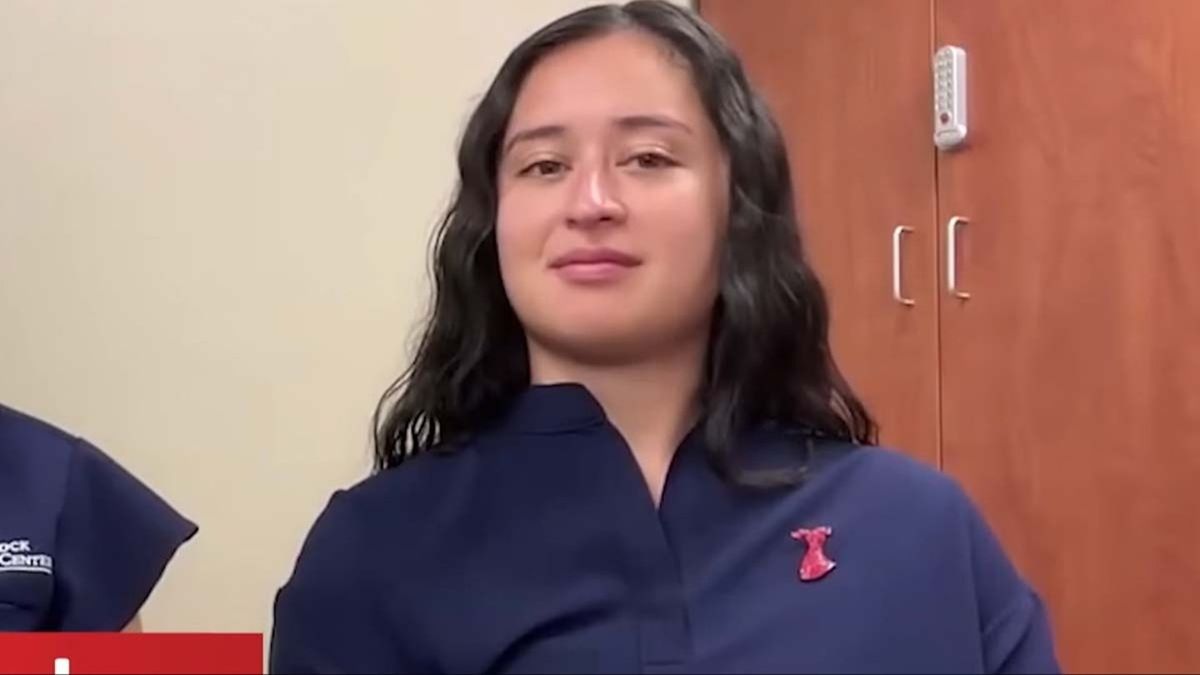
A 24-year-old nurse is urging people to learn the warning signs of stroke after her husband’s quick reaction helped save her life.
Alex Wilson-Garza, from Round Rock, Texas, had a stroke in 2023.
“I just remember that the world suddenly became super dizzy,” she told Inside Edition. Alex said that everything after that ‘became a blur,’ and she only knows the information she does because of her husband.
According to Alex, her husband later explained that she began showing classic stroke symptoms: her speech became slurred, she struggled to walk, and she had ‘no control’ over one side of her body. She also experienced drooping on the left side of her face — something her husband described as being ‘like her face was melting’.
Her husband, Caleb, who works as a police officer, rushed her to the hospital where she was employed, meaning she was quickly evaluated by colleagues who knew what to look for.
“Even being an ER nurse, there was definitely a denial that there was nothing wrong,” she said.

One co-worker who treated Alex said the experience felt ‘surreal’.
Because she arrived at the hospital within the critical window after symptoms began, Alex said she was able to receive a clot-busting drug called TPA, which can help break up the clot in the brain.
The CDC explains that a stroke ‘occurs when something blocks blood supply to part of the brain or when a blood vessel in the brain bursts,’ a medical emergency that can result in long-term brain damage or, in severe cases, death.
Alex spent several days in ICU, but with her husband acting quickly and treatment starting soon after symptom onset, she has been left with minimal lasting effects.
Now, the 24-year-old says recognizing the earliest signs is vital — and points people to the acronym BE FAST as a simple way to remember what to watch for.
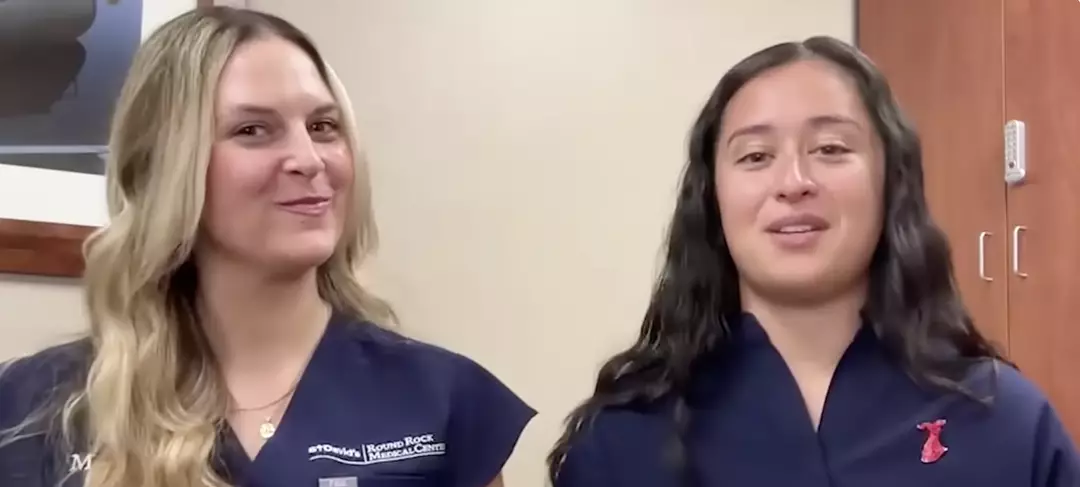
BE FAST is commonly used to help identify whether someone may be having a stroke:
B – Balance
E – Eyes – Alex states during some strokes, you can have loss of vision in one of your eyes.
F – Face – whether someone has a facial droopage
A – Arm weakness
S – Speech – slurred speech and difficulty speaking
T – Time – Like Alex’s situation, the faster you act, the less chance of long-term consequences
The CDC also notes there are multiple factors that can raise stroke risk, including high blood pressure, high cholesterol, heart disease, and diabetes.
In addition, certain lifestyle habits may increase risk as well, such as eating a diet high in saturated fats, drinking too much alcohol, and using tobacco.