

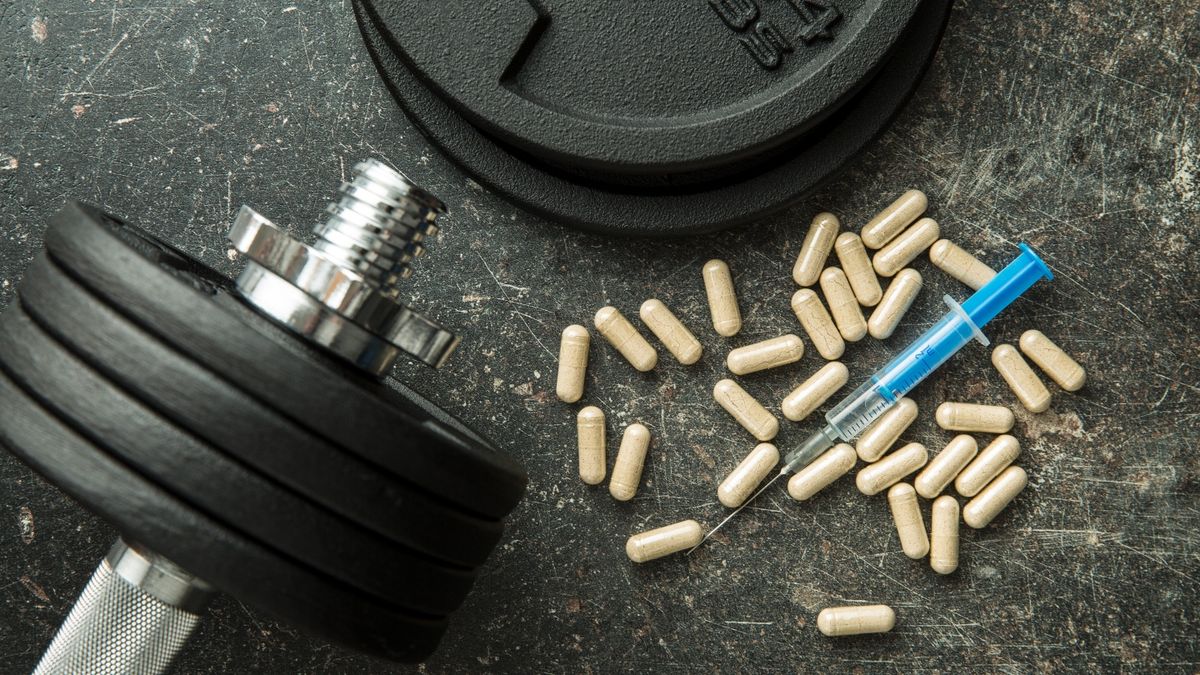
Picture the Olympics — except, rather than outlawing performance-enhancing drugs, officials are the ones providing them.
That’s the provocative idea behind the much-debated Enhanced Games, a planned Las Vegas competition where athletes are openly permitted — and effectively encouraged — to use steroids, hormones, and other substances in pursuit of record-breaking performances.
It’s sparked immediate backlash from the anti-doping world, with authorities warning that deliberately loading competitors up with performance-enhancing drugs could carry severe, even lethal, consequences.
The U.S. Anti-Doping Agency has issued a stark warning to anyone considering entering the Enhanced Games, an event promoted as having no drug testing and a permissive approach to PED use.
In a sharp “need to know” briefing, USADA didn’t soften its view, calling the event a “dangerous clown show.”
The agency cautioned that while promoters are dangling huge payouts for world-record results, the potential fallout includes serious mental health effects, permanent damage to organs, and a genuine risk of death.
Travis Tygart, the Chief Executive Officer of USADA commented, “While those behind the Enhanced Games might be looking to make a quick buck, that profit would come at the expense of kids across the world thinking they need to dope to chase their dreams.
“We desperately wish this investment was being made in the athletes who are currently training and competing the real and safe way.
“They are the role models this world so desperately needs and they are the ones who deserve our support – not some dangerous clown show that puts profit over principle.”

Marketed as a spectacle exploring the outer edge of “superhumanity,” the event would allow competitors to use steroids and growth hormones openly, aiming to turn record attempts into headline-grabbing, cash-backed moments.
Notably, the format also leaves room for athletes who choose not to dope, raising the question of whether natural ability can compete with a pharmacological advantage.
Aron D’Souza, an Australian businessman leading the project, has suggested that access to PEDs could help athletes feel better for longer while also extending careers in a controlled way.
USADA’s Chief Science Officer, Dr. Matt Fedoruk, says that framing doesn’t square with what’s known about many banned substances.
“Many [substances] are banned because they’ve been proven to be dangerous for athletes, with some harmful side effects being potentially irreversible,” Fedoruk explains. “This event is being done purely for the entertainment and shock value. If you’re an athlete looking for a payout, the promises may be appealing, but it’s forcing you to put your body, health, and probably your longevity at risk.”
One athlete reportedly drawn to the concept is Australian swimmer and three-time Olympic medalist James Magnussen. With payouts advertised as high as $500,000 per event — plus a $1 million incentive tied to breaking the 100m sprint or 50m freestyle world records — the financial lure is obvious.

But going after that kind of prize money could come with heavy professional consequences beyond the event itself.
World Aquatics, which oversees international swimming, has said it will bar athletes, coaches, and officials from top-level competition if they take part in the Enhanced Games.
The organization said it won’t associate with the promotion of prohibited substances and urged other governing bodies to adopt a similar stance.
Other groups have stopped short of handing down an immediate lifetime ban. USA Swimming, for instance, has not announced instant expulsions, but it did issue a firm caution to athletes: “Even if you are not personally engaged in doping, affiliation with the Enhanced Games could significantly affect your ability to participate in future competitions due to USADA and WADA rules.”
Enhanced Games organizers, meanwhile, have pushed back aggressively. They are suing World Aquatics, the World Anti-Doping Agency (WADA), and USA Swimming for $800 million, alleging an unlawful, monopolistic campaign designed to intimidate and deter athletes from joining.
Even with an “enhanced” premise, the competition isn’t described as a total anything-goes environment.
While athletes may use performance-enhancing substances — including testosterone, anabolic steroids, hormones and growth factors (including HGH and EPO), metabolic modulators and stimulants — the organizers say there are still boundaries.
In particular, participants would be restricted to substances approved by the Food and Drug Administration (FDA). That would rule out illegal, non-prescription drugs such as cocaine and heroin.
The event also claims competitors using PEDs would do so under medical oversight, including ongoing monitoring and medical profiling intended to prevent dangerous levels of use.
And, crucially, athletes aren’t required to take anything to enter — “un-enhanced” competitors can also participate, creating a format that pits medically augmented performances against entirely natural limits.