

Authorities have launched an investigation into what is being described as the deadliest diving disaster in the Maldives, after five Italian nationals died during a cave-diving expedition on Thursday, May 14.
The bodies of all five divers — Monica Montefalcone, her daughter Giorgia Sommacal, Federico Gualtieri, Muriel Oddenino, and their instructor Gianluca Benedetti — have now been recovered by specialist teams.
However, the precise chain of events that led to the tragedy remains uncertain. The group reportedly included both seasoned divers and less experienced participants, with the dive led by an instructor, yet they still failed to return from the cave system almost 200 feet below the surface.
In the days since, limited public details have fueled a range of theories, from equipment problems to errors in preparation. Now, the professional divers involved in the recovery have added their perspective on what may have happened inside the cave.
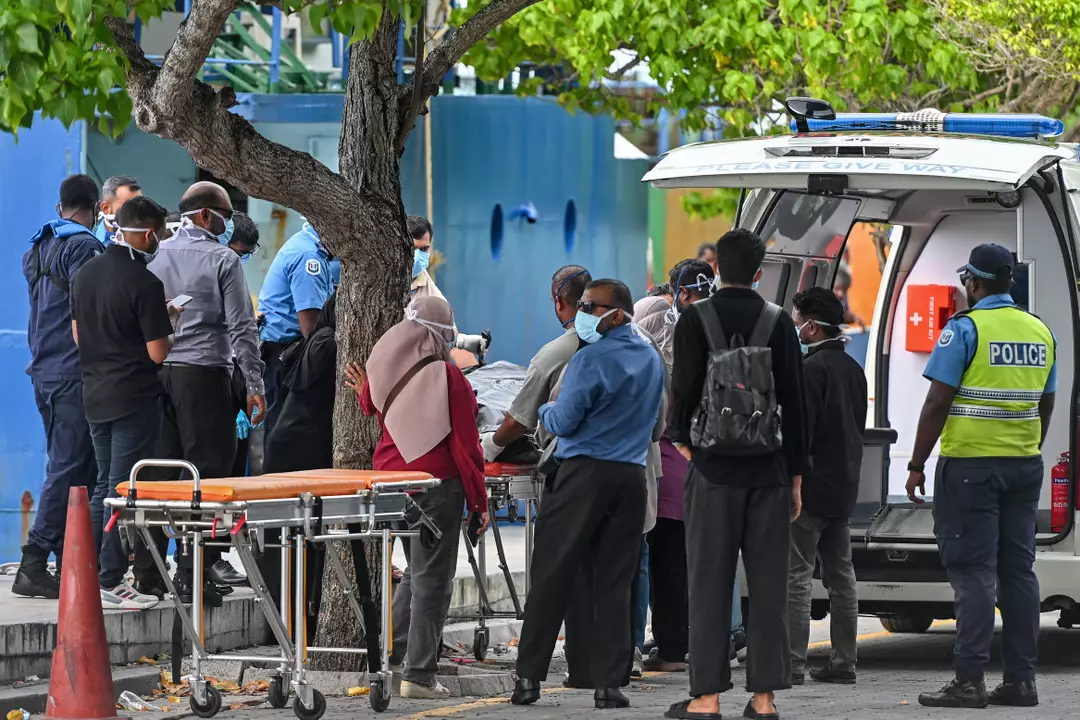
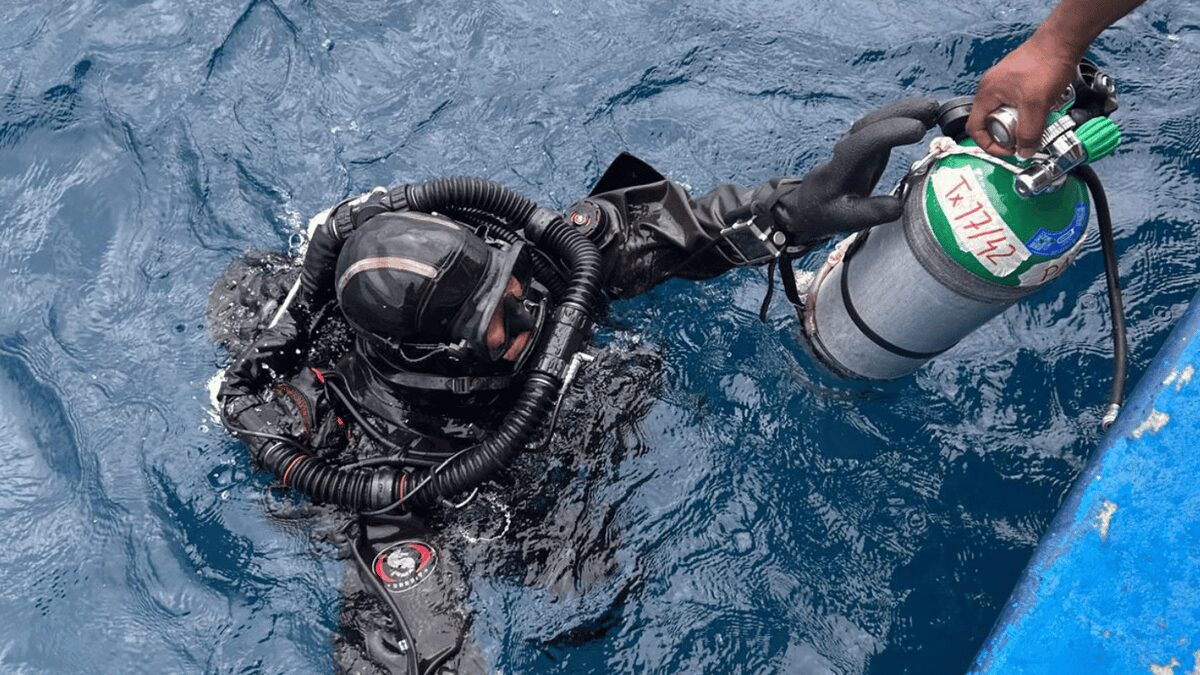
The recovery operation was carried out by Finnish rescue divers working with research organization Dan Europe. They spent around three hours making a deep descent under Vaavu Atoll to find and bring out the four bodies that were still located far inside the underwater cave network.
The fifth victim — the instructor — was recovered earlier, about 30 minutes after the group did not surface. His body was found near the cave entrance, while the remaining four were positioned much deeper inside the system.
The Finnish team ultimately located Montefalcone, Sommacal, Gualtieri, and Oddenino roughly 200 meters into the cave. They were found beyond two interior “rooms,” at the end of a corridor that offered no onward route.
Laura Marroni, CEO of Dan Europe, told Italian media that ‘there was no way out from there,’ and went on to describe how the cave’s complex structure — including a deceptive “sand wall” — may have contributed to the group becoming trapped.
According to Marroni, the first chamber benefits from natural light and connects to a corridor with ‘excellent’ visibility. But before reaching the second chamber, divers encounter a sizeable sandbank. She explained that while crossing it may feel straightforward on the way in, returning across it can be far more challenging.

She said that underwater disorientation, combined with lower light levels deeper inside and the sediment stirred up as divers move, can make the sandbank appear like a solid barrier when a person turns back.
To the left of this apparent blockage, Marroni said, there is another corridor — a dead end slightly over 20 meters long — and this is where the four divers were later found.
Marroni added: “The divers’ bodies were all found inside, as if they had mistaken it for the right one.”
Footage of the same cave system recorded in 2014 by Russian diving expert Vladimir Tochilov shows a labyrinth-like environment: narrow passages, bends, and multiple chambers, with limited natural light and several features that could leave even trained divers uncertain of their direction.
Tochilov said: “This cave is accessible only for technical cave divers who have the appropriate preparation, the appropriate experience and who are planning on correctly diving into this cave.”
He also emphasized how quickly spatial awareness can break down in a dark, unfamiliar setting — even when guide lines are used. “Any person, if you try to spin them in the dark and ask to find an exit in a dark room, there will also be difficulties,” Tochilov said.
Tochilov added that cave diving is not typically associated with the Maldives, making the site unusual. He suggested the area’s distinctive marine life may have been part of what drew divers into the system.
“This is probably why it attracted the attention of divers, including scientists, biologists, and researchers,” he said. “The cave has its own flora and fauna that you will not see outside the cave.”