

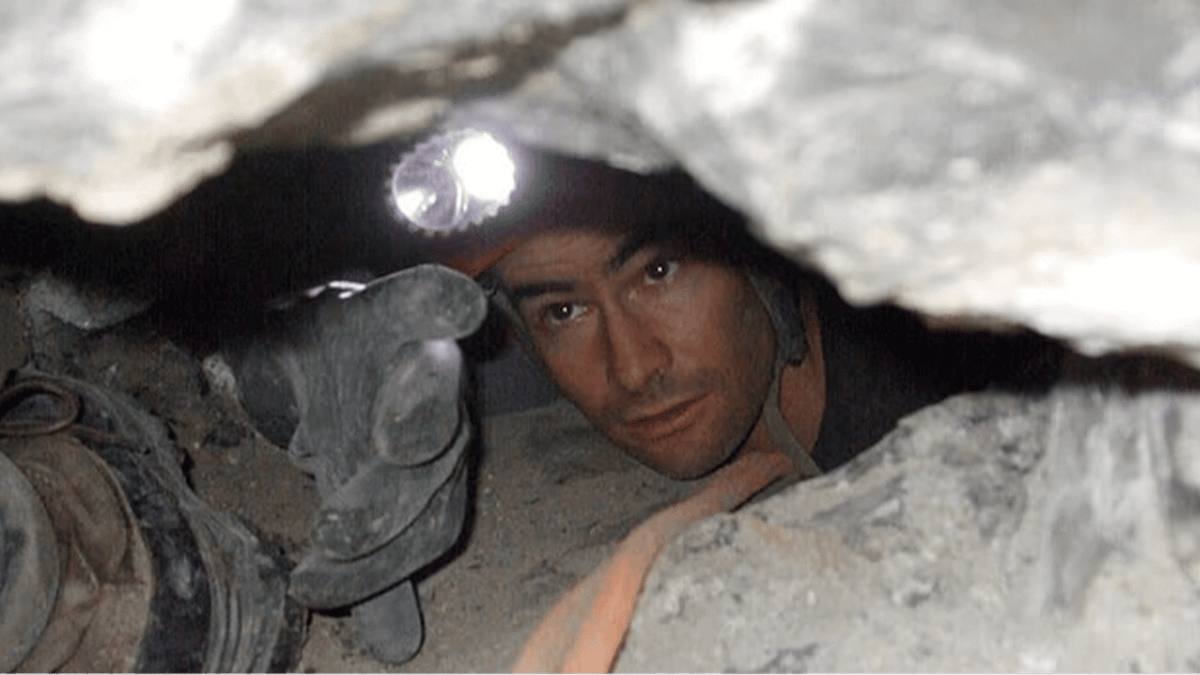
For many people, the words “Nutty Putty” instantly bring to mind the tragic final hours of John Edward Jones.
In November 2009, Jones became trapped headfirst inside a tight fissure, setting off a frantic rescue operation that stretched to 27 hours.
The 26-year-old medical student and new dad had mistakenly turned into the cave’s infamous “birth canal” area and ended up wedged in a position so narrow he couldn’t free himself.
In the end, John died underground after spending more than a day stuck, in circumstances that are still described by some as “the worst death imaginable”.
“I’m going to die right here. I’m not going to come out of here, am I?” he reportedly told rescuers.
As the hours passed, rescue crews worked to reach him and pull him out, but his upside-down position caused his condition to worsen. With gravity working against normal blood flow, his heart had to work far harder to circulate blood between his head and the rest of his body.
Despite the intensity of the effort, the attempt to save him ultimately failed.
Nutty Putty Cave was later sealed shut permanently, leaving his body inside. A plaque was also placed near the entrance in his memory.
While many people know the grim details of what happened there, fewer know how the cave came to be called Nutty Putty in the first place.

The cave system sits near Pleasant Grove, Utah, and was first found and explored in the 1960s.
The name comes from the soft brown clay that seeps through sections of the cave. The person who discovered it noticed the clay could behave in an unusual way—starting off relatively firm, but becoming stretchy and pliable when squeezed.
That quality reminded explorers of Silly Putty, which was once marketed under the name “Nutty Putty”, and the cave’s name stuck.
With hindsight, the nickname feels darker: the same slick, yielding clay may have played a role in why Jones couldn’t gain traction or shift his body enough to break free.
The clay itself consists of extremely fine particles of silicon dioxide (silica), a compound commonly found in nature, including in quartz.
Nutty Putty is also geologically unusual. Rather than forming as surface water drains downward (an epigenic process), it’s considered a hypogenic cave—created by heated groundwater rising from below.
That process can produce acidic conditions, helping carve out convoluted passageways that became known by ominous names such as “The Helmet Eater”, “The Maze” and “Scout Trap Passage”.

One of the last people to see John alive was cave explorer and YouTuber Brandon Kowallis, who later wrote that, even with everyone’s best efforts, the situation was essentially impossible from the outset.
By the time Kowallis arrived, rescuers had already been trying to extract John for hours and had provided him with a radio so he could speak to his family.
But John’s physical state was rapidly declining.
Because he was inverted, blood pooled toward his head instead of his feet. The position also compromised his breathing, and his heart rate climbed dramatically as his body struggled to maintain circulation against gravity.
Describing what John was experiencing near the end, Brandon said: “He was in and out of consciousness and had started talking about seeing angels and demons around him.”
Kowallis also described hearing gurgling that suggested fluid was accumulating in John’s lungs, while his legs began to jerk violently.
It became increasingly clear that the teams underground were running out of options.
“It looked like he could only be lifted another foot or two in his current position because of where the webbing was anchored around his knees,” the explorer explained.
“After a foot or two his feet would hit the ceiling. And then once he reached the ceiling, there was no way to tilt him to a horizontal position.”
For those who want a clearer idea of what the ordeal may have been like, a YouTuber has shared a VR simulation recreating what John Edward Jones would likely have seen and felt while trapped.