

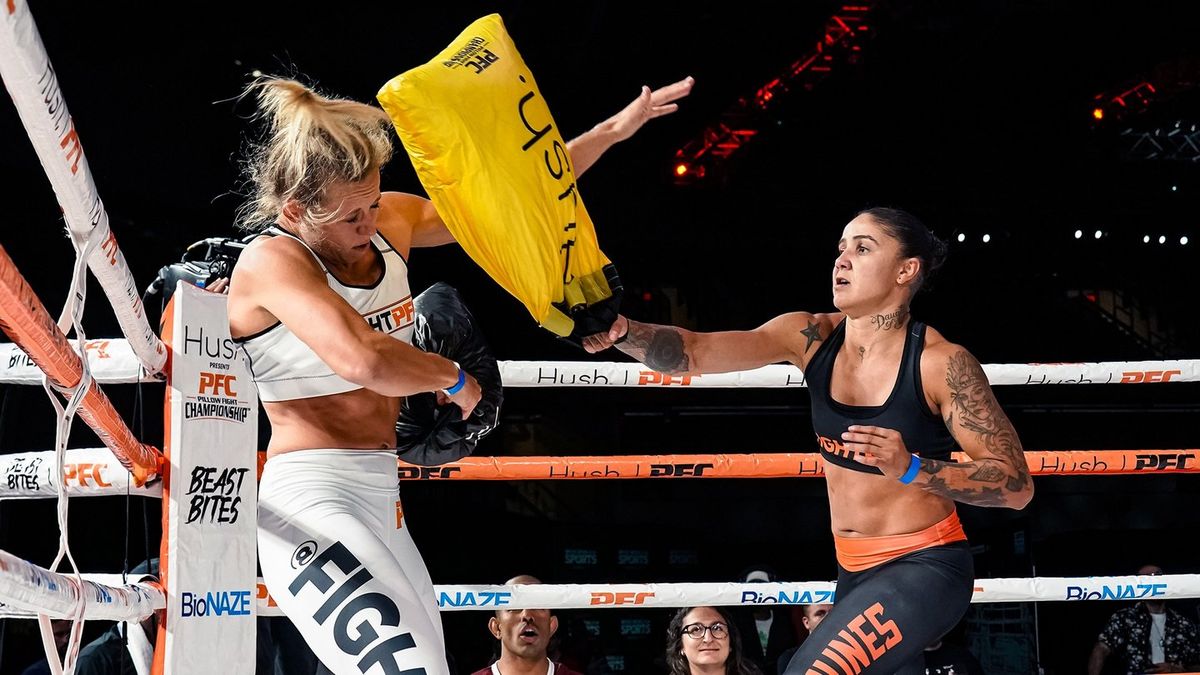
There’s an unlikely combat sport pulling in former UFC names in droves — and it isn’t the brutal blood-and-guts show people assume.
It’s professional pillow fighting. It sounds like a novelty until you hear the resume: it’s aired on ESPN, it’s reportedly delivered some of the network’s best audience-retention numbers, and hardened ex-MMA pros are lining up to give it a go.
For Steve Williams, that reaction cycle has become familiar.
He introduces the concept, watches eyebrows rise and smirks appear, and then sees the mood change the moment someone actually watches a bout. Confusion turns into curiosity, and curiosity turns into genuine fandom.
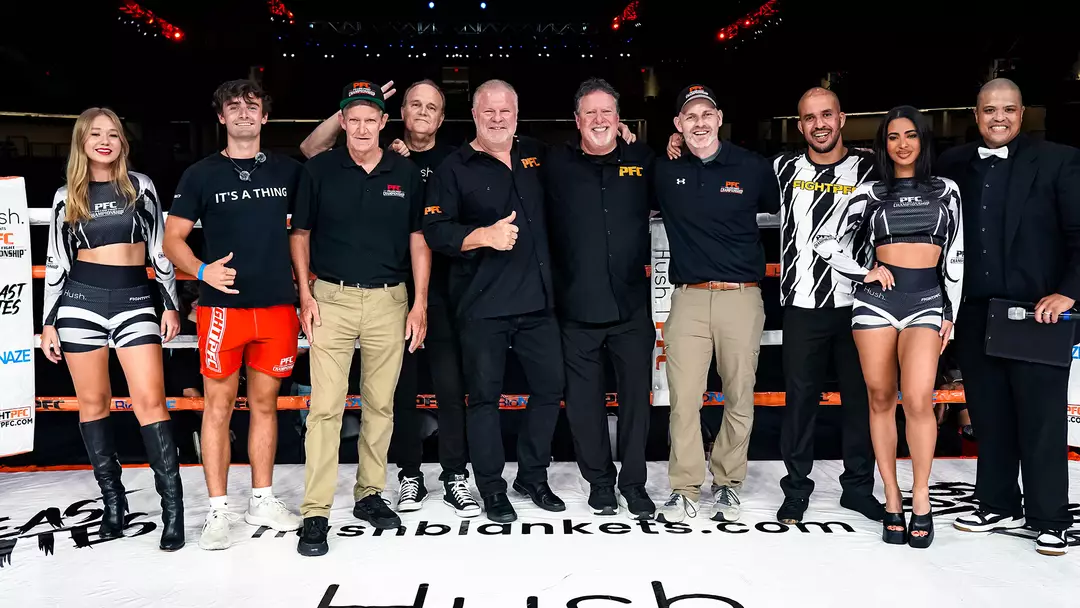
Williams is the co-founder and CEO of the Pillow Fight Championship (PFC) — a fully professional combat-sports promotion now licensed across nine countries. It has patented gear, a reigning world champion, and even the kind of long-term “why not?” vision that reaches all the way to the Olympics.
That ambition is less surprising when you learn Williams spent years working with WWE. He understands how to build a sporting product that’s both competitive and watchable — and he believes pillow fighting occupies space traditional fight promotions haven’t claimed.
“We fit squarely between UFC and WWE in our own niche,” Williams said. “The competition is 100% real with a truly unique entertainment value.”
Kevin Powers, the PFC’s chief content officer, says the league fits perfectly alongside the kind of programming featured on ESPN8: The Ocho — the network’s home for sports that sound strange until you see them in action.
“We definitely embody that Ocho Sports spirit,” he says, referencing ESPN8: The Ocho, the network’s home for offbeat sports programming where the PFC has now aired twice.
“The kind of ‘wtf is this’ on paper, but once you actually see it, you become a fan.”
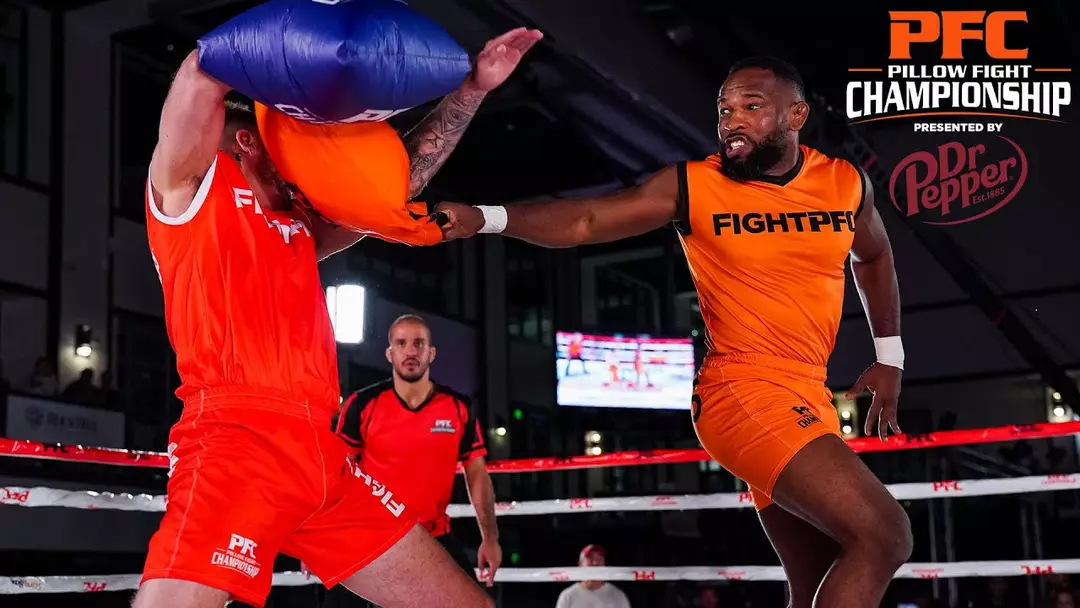
The rule set is simple and TV-friendly: three rounds, each lasting 90 seconds, separated by 60 seconds of rest.
Competitors also have to follow a strict code of conduct, keeping the action controlled and within the sport’s safety framework.
Scoring comes down to what officials can clearly judge — with points awarded for technique and the impact of headshots.
And then there’s the equipment — which is where most people’s assumptions fall apart.
These aren’t soft bedroom pillows. The PFC uses patented Combat Pillows made from neon ripstop nylon originally sourced from sailcloth, with a coating that makes them air-tight. The result is a drum-like surface that produces a sharp crack on contact. Fighters must use a single-handed grip, and the sound, Williams says, grabs people instantly.
“That shocking hit was the loudest I ever heard. Despite the noise the fighter was completely undazed, which is a very valuable feature of our patented pillows and sport.”
Ironically, the fighters are the part Williams doesn’t worry about. The bigger hurdle is getting everyone else to take the concept seriously before they’ve seen it.
“Whenever I mention ‘Professional Pillow Fighting’ I get a wide range of responses,” Powers says. “Almost always the first thought that comes to mind is ‘Women in lingerie’, but then I’ll bring up our Instagram or YouTube, show off what we do and from there we usually have a new fan.”
When it comes to recruiting former UFC athletes, Williams says the pitch is often straightforward — especially for veterans who still miss competition but don’t want the physical cost of another hard-contact sport.
“Pitching PFC to a former UFC fighter is far easier than pitching a current PFC fighter,” Williams explains. “Former fighters see it as fun and a way to get back in the ring and stay relevant, without getting more headaches, injuries and CTE, and get paid for having the most fun they’ve ever had in or out of the ring.”
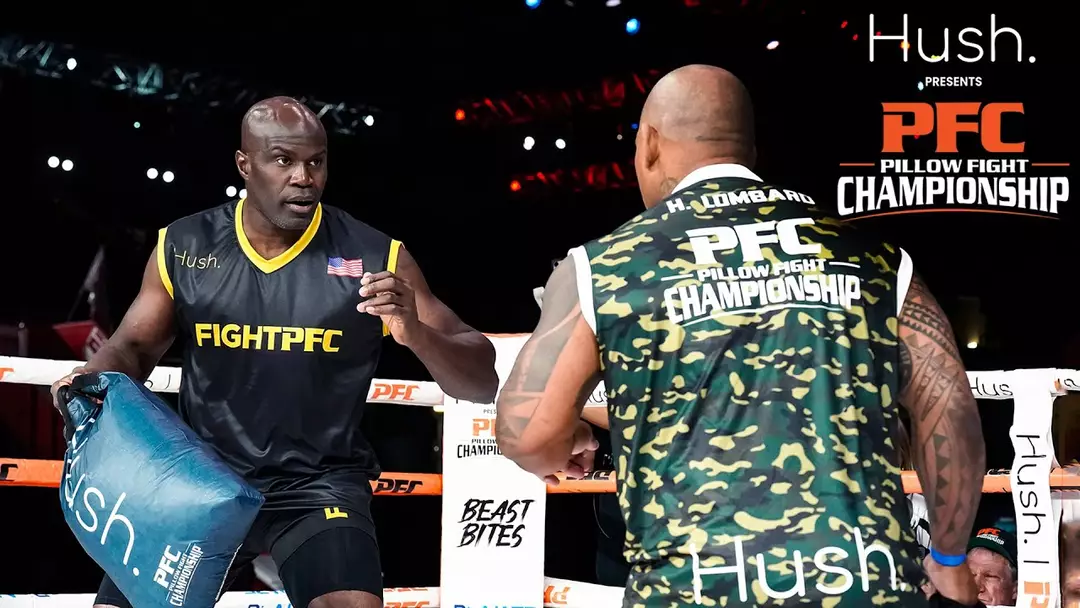
That idea became reality last August when former UFC standouts Cheick Kongo and Hector Lombard met at the ESPN Wide World of Sports Complex at Walt Disney World — not for an MMA bout, but for a pillow-fighting match broadcast live on ESPN.
Unsurprisingly, the internet had opinions. One YouTube comment joked: “Wow, I always wanted to see Lombard vs. Kongo, and now we get it in pillow fighting,” followed by: “Truly a man’s dream.” Another viewer wrote: “In the era of 98-year-old Mike Tyson losing to a roided-up loser, this is the best outcome for retired MMA fighters.”
Lombard ultimately got his hand raised, and both fighters appeared to relish the whole experience.
The appeal, Williams believes, is that pillow fighting removes the grim stakes that hover over many combat sports. Without the bloodshed or the sense that a career (or long-term health) can hinge on a single moment, the competition can feel lighter — even when it’s still real.
“The fighters are loose and in a good mood, their personalities come out as opposed to a rigid UFC mindset where death is possible in every fight,” Williams says.
“Fighters get loose and have fun with each other and the crowd. It’s the best unscripted entertainment, it’s 100% real and the things that go down are 100% organic.”
There are other combat-sports crossover names getting involved, too. BKFC fighter Uly Diaz — who owns the Bare Knuckle Fighting Championship record for fastest knockout — appeared on the PFC’s show and, according to Williams, “had an absolute blast and can’t wait to fight again.” Meanwhile, current PFC world champion Leandro “Apollo” Silva has taken it a step further by adding pillow-fighting training to the curriculum at his martial arts academy.
The next major PFC event is scheduled for July 3rd in Altoona, Pennsylvania, where the promotion will stage fights inside a minor league baseball stadium. Beyond that, Williams is aiming for monthly tournaments, league structures around the world, and eventually a place on the Olympic stage.
Steve added: “The Combat Sports landscape is moving in our direction. We’re already licensed and played in 9 countries. We’re growing rapidly and people really see the value in what we’re offering for all ages.
“In five years, I see us being an even bigger global sport with leagues all over the world and our ultimate goal is to get into the Olympics!”