

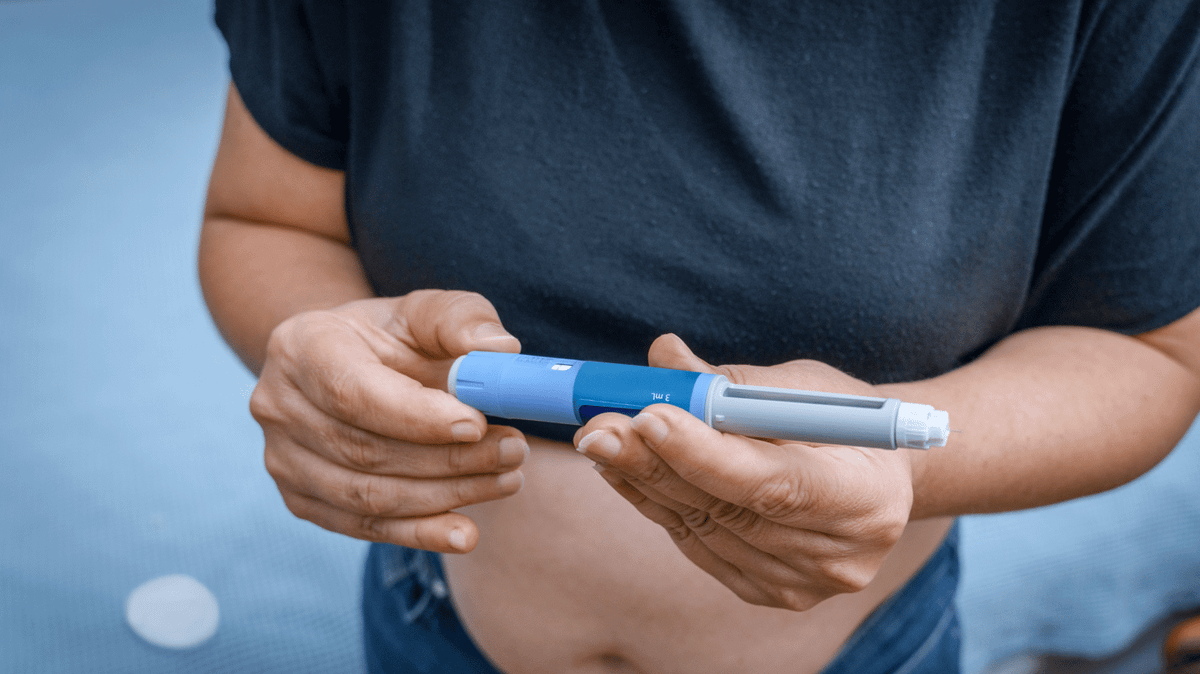
As GLP-1 medications become more widely used, a long list of side effects has been reported — and one specialist says a new concern is being overlooked.
GLP-1 drugs such as Ozempic and Mounjaro were developed to help people with type 2 diabetes manage blood sugar, though they’ve also become popular for weight-loss purposes.
As with any medication, effects can vary from person to person. Some users say they’ve noticed an unpleasant odor on their breath, a phenomenon often referred to as “Ozempic breath.”
Others have discussed “Ozempic butt,” describing soreness after sitting for extended periods.
More established side effects include gastrointestinal problems such as nausea, vomiting, diarrhea, and constipation — issues that can be especially common when starting treatment or increasing a dose.

Now, experts are drawing attention to another potential issue that may be easier to miss: nutrient deficiency.
Because these drugs reduce appetite and slow digestion by mimicking a natural hormone linked to fullness, some researchers worry that people may unintentionally fall short on key nutrients.
A Cleveland Clinic study involving 460,000 people taking GLP-1 medications reported that nearly one in five developed a nutrient deficiency within a year — with many not realizing it.
BBC Science Focus reports that a similar study in Mexico found that “13.6 per cent developed a significant vitamin D deficiency within a year of starting the drugs.”
Researchers also found that among roughly 480,000 participants, 60 percent weren’t getting enough calcium or iron, and many were also coming up short on protein and fibre.
One challenge is that many people don’t routinely track what they eat or monitor nutrient intake closely, so deficiencies can go unnoticed.

Discussing the topic with BBC Science Focus, Dr Steven Heymsfield — director of the Metabolism and Body Composition Laboratory at Louisiana State University — argued that monitoring should be treated as part of ongoing care: “Obesity is a chronic disease and it should be managed like one,” he says. “If your doctor prescribes these drugs for you, that doctor should assess you with nutrient blood tests – just like they do for other diseases.”
Some research suggests that shortages may extend beyond major nutrients, with certain users also lacking micronutrients such as magnesium, potassium, and vitamins A, C, D, and E.
Specialists also note that deficiencies like low vitamin D, calcium, and iron are not limited to people taking GLP-1 medications — they’re common in the wider population as well.
Professor Giles Yeo, a neuroendocrinology and obesity expert at the University of Cambridge, told the publication that many people who use these medications “may not have had great diets to start with”. In that context, without meaningful dietary changes, cutting down on food may simply mean eating “less of a not so great diet.”
Experts add that side effects such as diarrhea can contribute to nutrient loss, potentially compounding the issue for some patients.
While Yeo reportedly described the medications as “powerful tools” and emphasized that experts don’t want to “scaremonger,” the message is that people should pay attention to “the micronutrients which are common deficiencies” — something that can become more relevant when overall food intake drops.