

There’s a spot on the planet you can travel to — even though it “doesn’t exist” in the usual sense because of where it is.
Imagine setting sail on a cruise and being told your destination is essentially nowhere, with nothing to see.
That’s the unusual stop Russell and Gail Lee encountered while onboard the 2023-2024 Viking World Cruise, after the ship traveled off the coast of West Africa.
The route included a point in the Atlantic known as Null Island — a name most people have never heard, and for good reason.
Despite how it sounds, Null Island isn’t an island at all. There’s no landmass, no beach, and no landmark waiting for you.
What makes it notable is purely mathematical: it sits at the intersection of zero degrees latitude and zero degrees longitude.
Cartographers and mapmakers refer to this coordinate as Null Island, a tongue-in-cheek label that grew out of mapping and data errors.
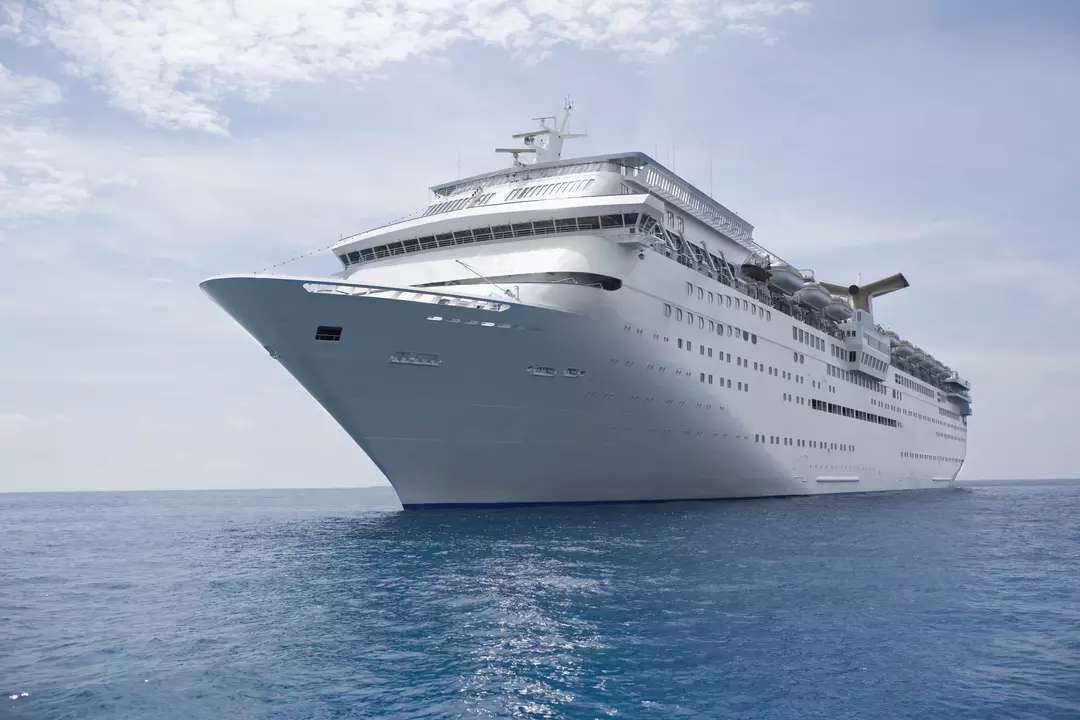
The coordinate lies where the equator meets the prime meridian, out in the South Atlantic Ocean — and the Lees have both visited the exact spot.
They described the moment as an excursion to an extremely remote patch of open water, with nothing but ocean in every direction.
Getting there isn’t simple, either; it generally requires a long journey by ship, since there’s no nearby “attraction” to anchor it to.
“Everyone had their geolocators out, counting down … 0.01… 0.005 … 0.0001,” Gail told CNN Travel of her experience. “We were all comparing phones. Whoever took a selfie closest to 0, 0 got bragging rights.”
Over time, Null Island has developed a small but dedicated following online, partly because random or incorrect data sometimes gets attached to those coordinates.
As a result, various odd entries — from unsolved cases to mysterious incidents — can end up pointing to Null Island, even though there’s nothing physically there.
The term gained traction in the Geographic Information Systems world around 2008, as geospatial data became more common and widely shared.
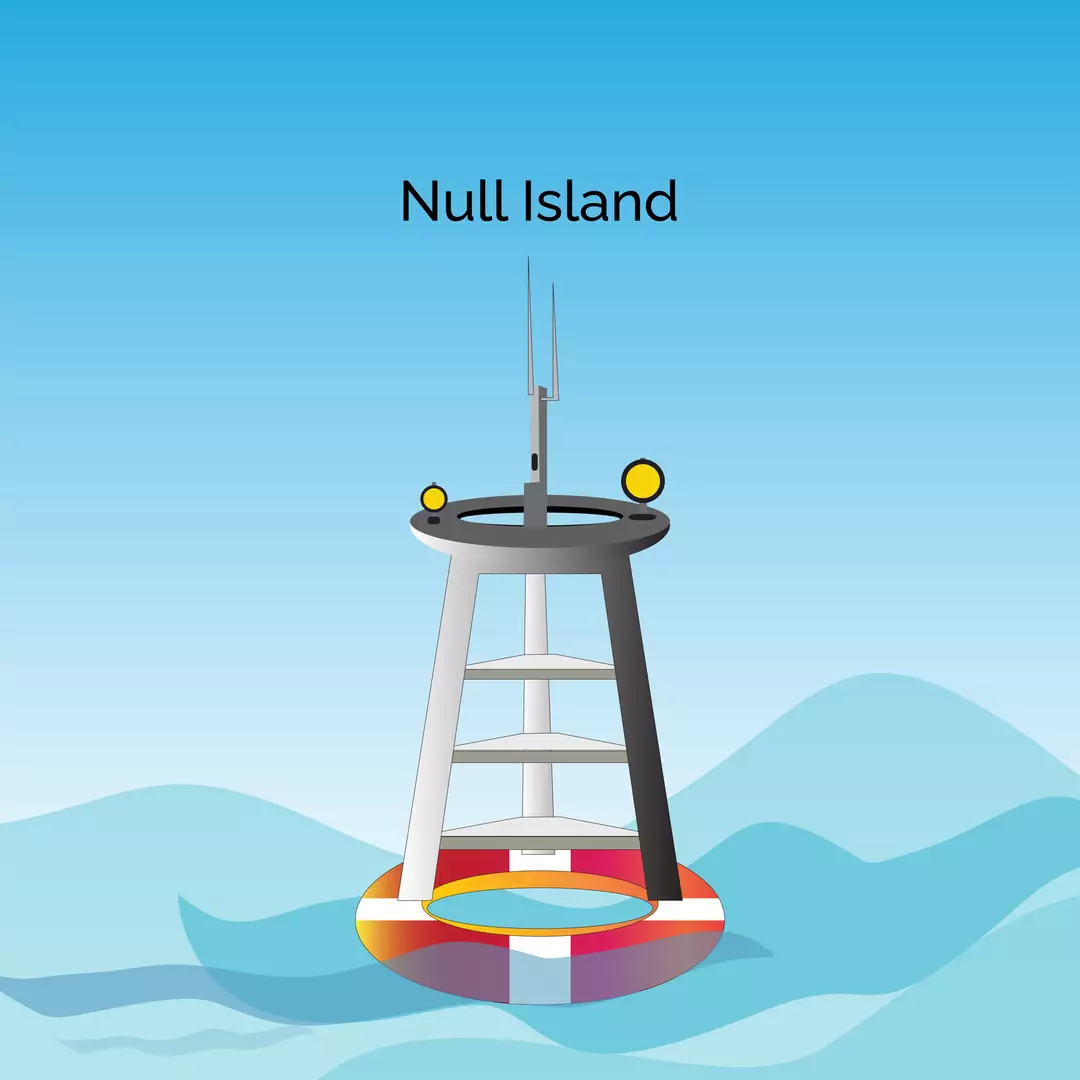
When a dataset is incomplete or a location field is missing, some systems default to “null,” which can translate into a 0.0 coordinate — unintentionally “placing” the entry at Null Island.
Then, in 2010, while GeoIQ was working on new maps, geospatial specialist Mike Migurski added a tiny island shape at 0, 0, inspired by the game ‘Myst,’ so that people could more easily recognize the reference.
“It helped crystallize for people that it was something you could picture,” Migurski told the outlet. “We didn’t do any kind of explicit reference. it was just an ‘If you know, you know,’ thing.”
From there, Null Island became a long-running inside joke in mapping circles — a fictional “place” born from a very real technical quirk.
Now, some cruise itineraries even build it in as a novelty stop, giving curious travelers a chance to say they’ve been to one of the most conceptually strange “destinations” on Earth.
One example is a Holland America sailing planned for 2028, which is set to pass the coordinates during a 129-day voyage.
Just don’t expect anything other than open water when you arrive.
“There is no ‘there’ there,” Russell said. “There’s really nothing. Just open sea. But you’re some of the only people on Earth ever to visit, and that is really special.”