

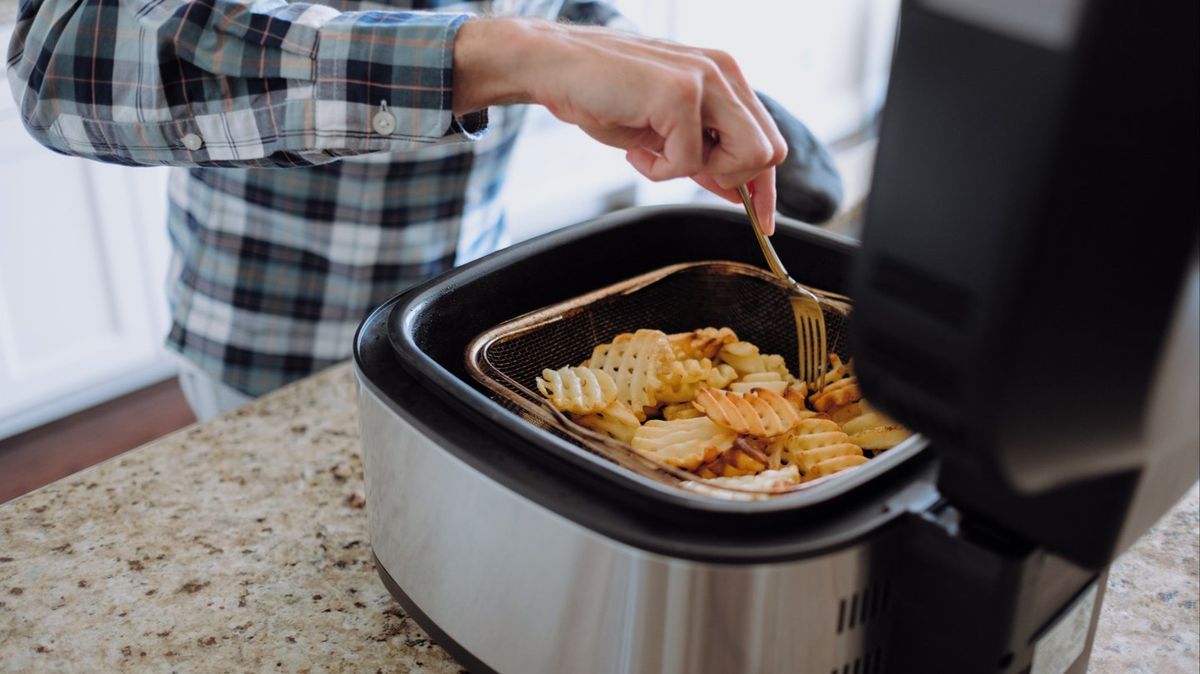
Air fryers are now a fixture in many kitchens because they cook quickly, handle a wide variety of foods, and don’t cost much to use.
Ownership has surged too, with estimates indicating roughly 60 to 70 percent of households in the US have one.
As popular as they are, some experts say it’s worth paying attention to what may be on the inside of certain models—and whether everyday cooking could contribute to a person’s overall exposure to industrial chemicals.
The discussion often focuses on PFAS (per- and polyfluoroalkyl substances), a large group of man‑made compounds that have been used in non-stick surfaces, including coatings made with polytetrafluoroethylene (PTFE).
Because PFAS can persist for a long time without breaking down, they’re frequently described as “forever chemicals,” and research has associated some types of PFAS with a number of health concerns.
A wide-ranging 2025 review in the journal Life, led by researchers from the Slovak Medical University, reported that long-chain PFAS exposure has been associated with lipid disorders, hypertension, thyroid disorders, infertility, cancer, cardiovascular disease, and kidney and liver damage.
Human exposure is already widespread. The CDC’s National Health and Nutrition Examination Survey has reported that more than 95 percent of people in the US have measurable PFAS in their blood. PFAS have also been detected in breast milk and umbilical cord blood, adding to concerns about exposure during pregnancy and early development.
Dr Hannah Moody, Director of Research and Engagement at Breast Cancer UK, says air fryers themselves are not considered a major source—but she argues they still deserve attention in the bigger picture.
“For air fryers in particular, exposure to PFAS is relatively low and largely comes from damage or scratches to the non-stick coating, as they are generally not heated to the high temperatures that can cause PFAS release,” she explains.
“Although the amount you’re exposed to from air fryers on its own is likely too small to harm your health, it still matters. That’s because it adds to the many different chemicals we come into contact with in our everyday lives, which together can have an impact on our health over time.”
The likelihood of a problem increases if the cooking surface is no longer intact. Scratches and wear—often caused by metal utensils, harsh scrubbing, or simple long-term use—can raise questions about whether the coating is degrading.
A 2024 study examining six aluminium-based cookware types coated with PTFE or ceramic found that extended heating above 250°C changed the internal structure of every item tested. Some air fryers can reach temperatures in that range at their highest settings.

Separate research has also strengthened concerns about PFAS in general. A major 2023 study in EBioMedicine from researchers at the Icahn School of Medicine at Mount Sinai reported a 56 percent higher rate of thyroid cancer diagnosis per doubling of a key PFAS compound in plasma, with comparable findings when looking at specific thyroid cancer subtypes.
While those findings relate to PFAS exposure overall rather than air fryers specifically, they highlight why cumulative exposure is often the central concern.
As Dr Moody puts it: “PFAS are known as forever chemicals as they break down very slowly, meaning they can build up in the body, and the environment, over long periods of time. It is the long-term exposure to low levels of multiple chemicals that is most concerning from a human health perspective.”
Other studies have linked PFAS accumulation with thyroid disease, fertility issues, elevated cholesterol, and several cancers, including breast cancer. The Environmental Working Group has also pointed to potential developmental and reproductive harms, such as low birth weight, impacts on male reproductive health, and pregnancy-induced high blood pressure.
Policy is beginning to shift as well. Minnesota became the first US state to ban the sale of PFAS-coated non-stick cookware in January 2025. Other states—including Vermont, Connecticut, Rhode Island, and Colorado—have introduced bans or restrictions with enforcement timelines currently spanning 2026 to 2028.
In response, some air fryer manufacturers have moved away from PTFE and toward ceramic-based non-stick coatings often promoted as PFAS-free.
However, Dr Moody notes that “PFAS-free” does not automatically mean “chemical-free,” and she says consumers may not be able to easily verify what’s used in certain coatings.
“Ceramic alternatives, while PFAS free, may still use a coating to provide the non-stick properties of certain cookware,” she says.

“These coatings can contain or release other potentially harmful chemicals, such as siloxane and titanium dioxide, when used or damaged. Cookware manufacturers are not required to release the makeup of their products by law, making it difficult to know which chemicals are being used.”
For anyone aiming to lower exposure as much as possible, she suggests choosing simpler materials that don’t rely on chemical non-stick treatments.
“Safer alternatives include cookware made from stainless steel, cast iron or glass, which are naturally non-stick,” Dr Moody says. “This means they are less likely to have any other chemicals added.”
For frequent air fryer users, the takeaway isn’t to panic, but to be mindful—especially if a basket or tray is showing signs of damage.
She adds: “While more research is needed, existing evidence linking PFAS exposure to several health conditions, including breast cancer, is concerning. It is therefore best to try and reduce your exposure to PFAS and other potentially harmful chemicals where you can.
“Remember that small changes to your lifestyle can make a big difference when it comes to your chemical exposure.”
In practical terms, that can mean inspecting the basket for scratches, avoiding metal tools on coated surfaces, and thinking about other everyday PFAS sources—such as takeaway packaging, cosmetics, and certain clothing—where cutting back may be possible.