

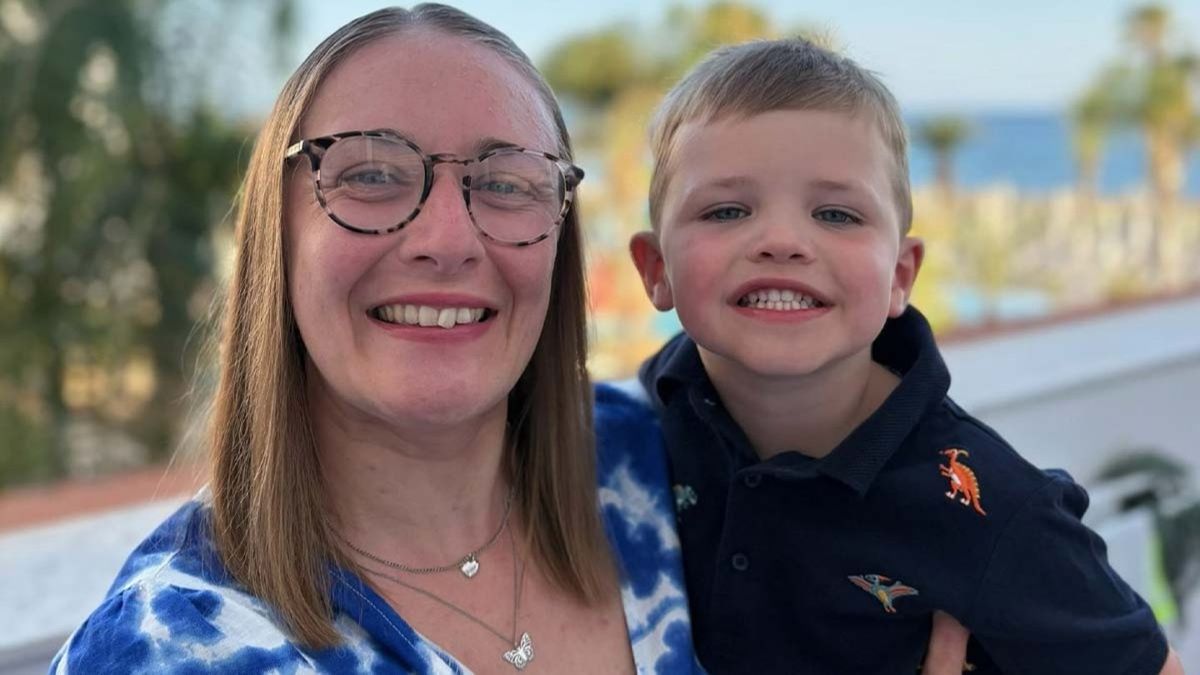
A mum whose skin can tear and blister from everyday tasks like writing, walking and eating says she was “devastated” to learn her little boy has the same condition.
Jennifer Taylor, 34, first showed symptoms of dystrophic epidermolysis bullosa (DEB) in infancy, when a blister formed on her thumb, turned blue-purple and eventually led to her fingernail coming off.
DEB is a rare inherited disorder affecting roughly 5,000 people across the UK. It is often referred to as “butterfly skin” because the skin can be as delicate as a butterfly’s wings.
Jennifer, from Prescot, UK, said childhood was dominated by painful flare-ups. Her feet blistered from walking, meaning she sometimes had to wear slippers to school, and she also experienced blistering inside her oesophagus that later formed a scar-tissue “web”.
She said teenage years were especially difficult due to bullying and poor self-confidence, and that things many of her peers enjoyed — like make-up, getting her hair done, or having her nails painted — could trigger irritation and injury.
In 2021, after welcoming her son William (now four), Jennifer found out he had inherited DEB. She realised something was wrong when, just 10 days after birth, a bath caused the skin on his leg to tear away on the eve of his newborn photo shoot.
She said even cuddling him as a baby could set off itching and blisters on her own skin, while William began showing similar symptoms — including painful blisters in his mouth from chewing.
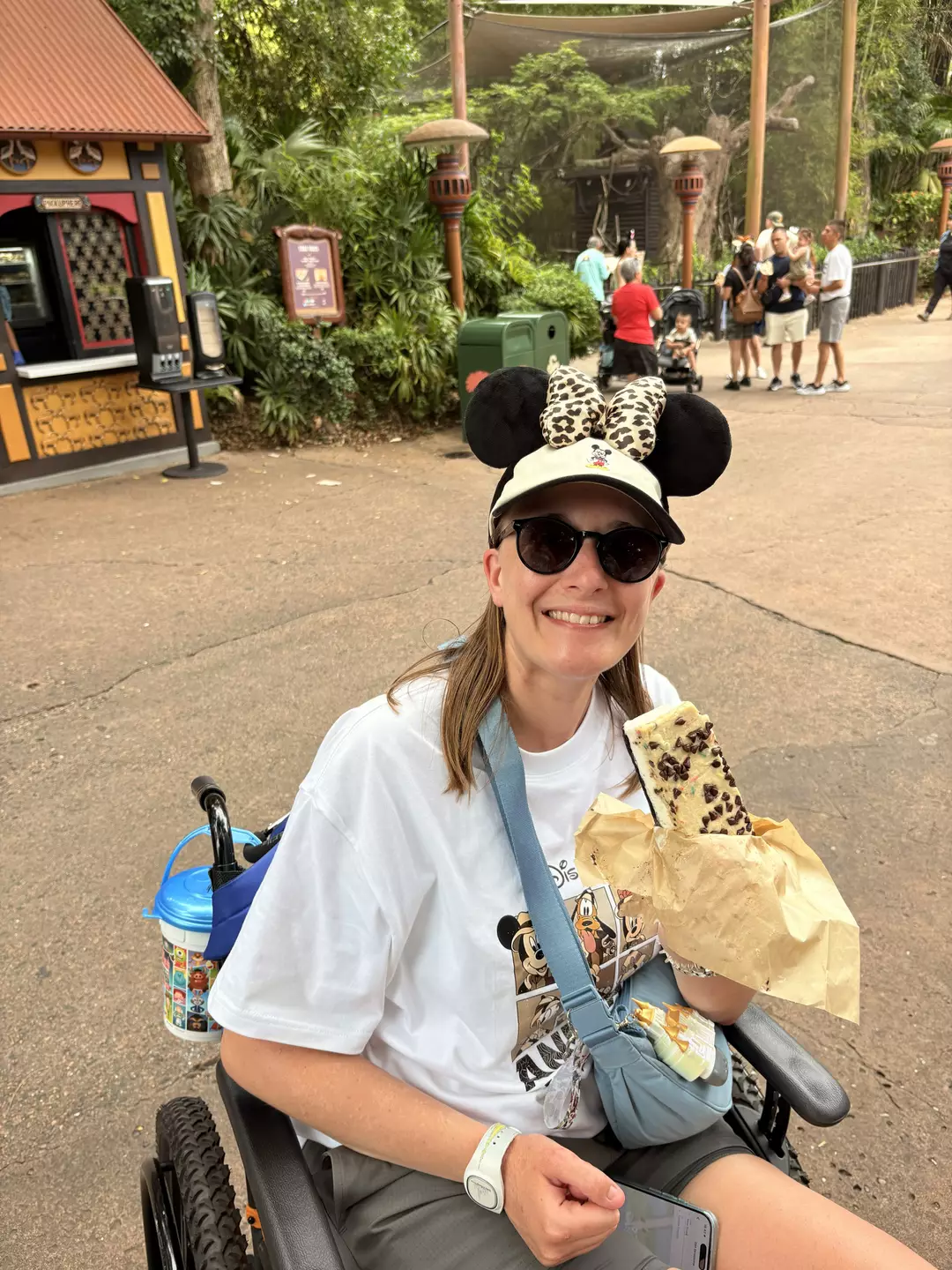
Jennifer, who is married to 34-year-old husband Matthew, told PA Real Life: “We wish that even doctors knew more about it. They often don’t give us enough dressings, they don’t realise how much we need.
“We have to change our dressings multiple times a day, constantly. I change William’s 10 times a day sometimes.
“Even cooking, I might burn myself or some steam gets on me, and that’ll make my skin blister and I’ll be in pain for weeks. It’s the same with housework, it causes me so much pain just if I knock myself slightly.”
Her earliest clear flare-up was the thumb blister as a baby, which left her nail detached. Because her father also lived with the condition, her family recognised the symptoms — but Jennifer said it still took years before she received an official diagnosis.
Through childhood, she said blistering and tearing were frequent, especially on her hands, elbows and knees.
She said: “I’d get blisters on my feet just from walking to school, so I often wore slippers or trainers to school. The skin on my hands would get sore and bleed and blister from writing. Someone else had to write for me.
“I got bullied a lot but I had a small group of friends around me. On sports day I had to sit to one side, and I just watched everyone else play at play times. If I went outside I’d hurt myself.”
Jennifer was formally diagnosed at Great Ormond Street Hospital in London when she was nine, and was given extra dressings to help manage day-to-day injuries.
By 13, she needed an oesophageal dilatation after blistering in her oesophagus led to scar tissue forming into a “web”.
At 16, she started dating Matthew. She said he researched DEB straight away and has been her “rock” ever since.
In 2021, aged 30 and following another oesophageal dilatation, Jennifer became pregnant. While itchiness can be common in pregnancy, she said scratching for her could quickly cause severe blistering.
To reduce injury risk, she chose a caesarean section to “minimise trauma” to both herself and her baby.
After William was born on November 2 2021, Jennifer said she needed specialist dressings for the incision and that recovery took several weeks longer than usual.
She recalled noticing a few small marks on William at first but assumed it was simply “normal newborn skin”. The reality became clear 10 days later.
Jennifer said: “We thought we’d bathe him because it was the day before his newborn baby photoshoot, and we were getting him registered the day after.
“I remember putting him in the bath, in a plastic baby bath with a seat, and he started screaming. He kicked his leg down and it took all the skin from his knee down to his ankle off, it just peeled off, and I just knew then.”

During William’s first months, Jennifer said she had to learn how to cope with both of their symptoms at once.
She described constant washing due to weeping blisters, buying seamless clothes to reduce rubbing, and relying on ultra-soft blankets to avoid triggering flare-ups.
Jennifer said she managed to breastfeed for six weeks, using shields and creams to help her continue.
She also said nappy changes required extra caution and that even minor bumps could worsen inflammation for her. However, she credited her mum and Matthew with stepping in when things became unmanageable.
She added: “Even the heat from holding William would make my skin itch.”
Jennifer said William now “understands” his condition and can tell others he gets hurt easily. Despite that, she described him as a “typical four-year-old” who runs around “all day”.
To make outings easier, William uses a wheelchair funded by DEBRA and Whizz Kidz, helping him conserve his skin and energy on longer days.
When travelling, the family has to pack large supplies of suitable bandages for both Jennifer and William. She said some people affected by the condition receive unsuitable or lower-quality dressings, which can happen when clinicians are unfamiliar with EB care.
In March 2026, DEBRA wrote to UK Government ministers to highlight the issue and to request meetings aimed at finding a solution.
The charity’s aim is to secure a mandate requiring GPs to follow prescriptions recommended by EB centre clinical teams — and, where there is uncertainty, to consult the centres directly for guidance.
Alongside the rollout of a new training module, the proposed approach is intended to reduce inconsistent prescriptions for people living with EB.
Jennifer added, “It’s hard because we don’t always look like there’s anything wrong – people don’t realise what it’s like day-to-day, the pain, the dressing changes, it’s really tough.”
For more information and support, visit: www.debra.org.uk.