

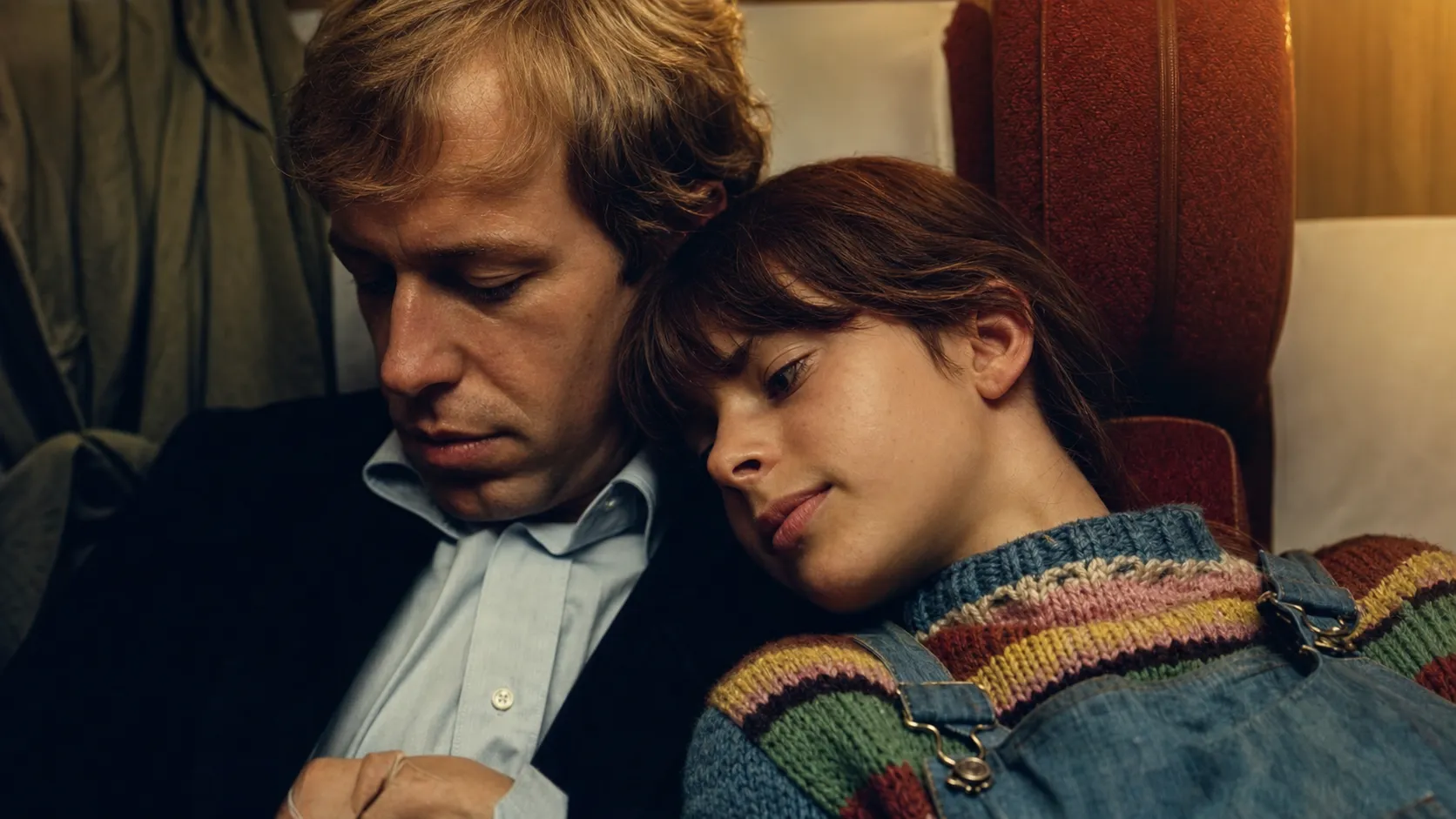
Nastassja Kinski has succeeded in a battle that stretched over many years, securing the removal of a film that included a scene shot when she was 13, in which a 30-year-old man undressed and climbed into bed beside her.
The German actor, now 65, made her screen debut in Wim Wenders’ 1975 road movie Wrong Move, where she played a silent teenage acrobat. The film was made in 1975 and first released in Germany on 25 June 1976.
Although the cast also featured Rüdiger Vogler and Hanna Schygulla, the film has long remained overshadowed by Kinski’s role in it and the circumstances surrounding one particular scene.
“That was my first film, he was my first director, and he didn’t protect me,” she said.
“Even though I didn’t know much aged 13, I knew that that was not okay.”

Kinski first publicly objected to the film in 2011 and spent the following 15 years urging Wenders to take it out of circulation.
At the German Film Awards in late May 2026, where he accepted a lifetime achievement honour, Wenders addressed the issue. His remarks were widely seen as presenting Kinski’s request as a challenge to artistic freedom, while arguing that any retrospective alteration would need to be considered as part of a wider conversation across the industry.
That response quickly drew criticism. Filmmaker and Babylon Berlin actor Julius Feldmeier then issued an open letter directed at Wenders, arguing that the decision rested with him because the Wim Wenders Foundation controls the rights to the film.
“it’s your responsibility alone to set things right.”
Only days later, Wenders changed his position completely.

In a statement posted on his foundation’s website on 3 June 2026, he said the Wim Wenders Foundation, which holds the rights to the film, would pull it from all existing distribution and exhibition channels.
“As the only person responsible at the time for Wrong Move who is still here, I recognise that Nastassja Kinski should have been better protected back then,” he wrote.
“For that, I apologise to you, Nastassja, unreservedly, no ifs or buts.”
Streaming services, TV outlets and distribution partners were told to take the film out of public availability. Reports in Germany said the withdrawal was being carried out immediately, marking a rare case of an established director removing one of his own works from circulation over the treatment of a child performer.

For scholars examining how young women have been treated within the film business, the move is seen as an important one.
Professor Tanya Horeck, Professor of Film and Feminist Media Studies at Anglia Ruskin University, said the result mattered, despite how long it took to happen, in comments to The Mirror.
“It took Wim Wenders an incredibly long time to address and honour what she wanted to happen,” she said.
“The film as a piece of art is not more important than the fact that a child was harmed. A film director’s ego does not matter more than that.”
Horeck also stressed that the case should be viewed as part of a larger reckoning within cinema, rather than as a one-off example.
“There is not a time limit on these cases. Trauma is a very complicated thing,” she said.
“You can’t separate what happens on set from the final product. We need to recognise the harm that has occurred on sets, and acknowledge that that has to be part of how cinema is now framed and viewed.”
Kinski has taken similar action before.
She had previously pushed successfully for restrictions around a television film by Das Boot director Wolfgang Petersen, in which she appeared nude at age 15, eventually reaching an agreement with broadcaster NDR over how it would be distributed. In 2024, NDR said the production had been blocked across all of its broadcasting channels while discussions continued.
The renewed attention on Wrong Move has also fed into a broader industry conversation in Germany about archival works, child safeguarding and whether films can be reconsidered when performers later say they were harmed during production.
Now 80, Wenders remains one of the most acclaimed German filmmakers of the postwar period, with credits including Wings of Desire, Paris, Texas and Perfect Days, which was nominated for the 2024 Academy Award for Best International Feature Film.
Kinski later built a career spanning more than 60 films across Europe and the United States, including a reunion with Wenders in Paris, Texas in 1984.