


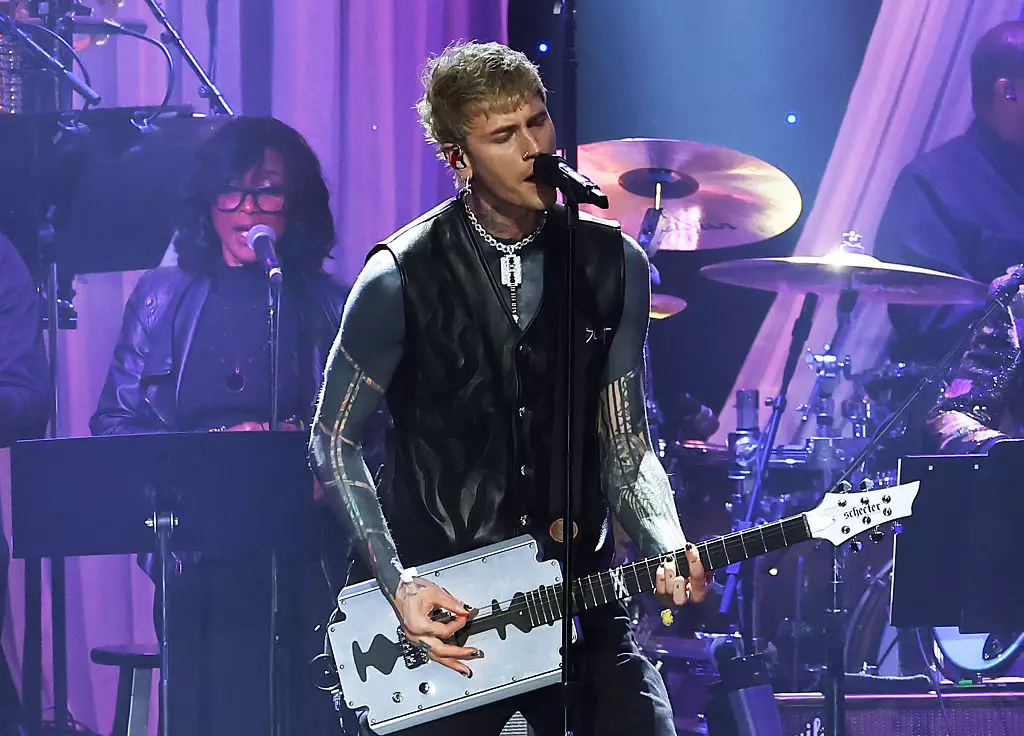
Machine Gun Kelly’s striking blackout tattoos sparked huge online discussion, but a clinical specialist says anyone considering the look should pause first and ask themselves one important question.
Often referred to as a ‘dark mode’ tattoo, a blackout tattoo involves packing large areas of the body with solid black ink until the skin is fully saturated.
That can mean covering an entire arm, the chest, the back or other large sections of the body, sometimes leaving carefully planned negative space to form abstract shapes or bold geometric designs.
The style drew major attention after MGK revealed his own extensive blackout work, helping push the aesthetic further into mainstream conversation on social media.

Dr. Caitlin Artiaga, PhD, LMFT, Clinical Director at Blume Behavioral Health, says it is the kind of body modification people should think through very carefully before committing.
To understand why, it helps to know exactly what a blackout tattoo involves.
A blackout tattoo is different from other black-ink styles. Dark art tattoos usually focus on gothic, horror or occult themes, while blackwork typically uses black ink for patterns, linework or tribal-inspired designs. A true blackout tattoo, by contrast, fills broad sections of skin with dense, opaque black ink.
People are drawn to the trend for different reasons. For some, it is an intense but effective way to cover older tattoos, especially since black ink can conceal unwanted or badly done work more thoroughly than many other options.
For others, it is about personal style, a dramatic visual reset, or even a symbolic fresh start. In some cases, a healed blackout area is later used as the base for white ink details or scarification.

Dr. Artiaga says the bigger issue is often the reason someone feels compelled to make such a dramatic physical change.
“Take a moment to think about why you’re changing,” she says. “This isn’t a challenge but a direct invitation to clarify your current purpose by understanding what motivates you to do this.”
She says MGK’s own comments reflect a motivation that can be sincere and understandable.
The singer has previously spoken about no longer recognising the person he saw in the mirror and wanting his appearance to reflect inner changes he had already experienced. Dr. Artiaga says that kind of intentional decision-making is very different from changing your body in an attempt to run from emotional distress.
“When transformation is driven from the outside, there is never a timeline that will feel quick enough, nor will there ever be an ending experience that provides you with the relief you are looking for,” she explains.
Her message is not that people should automatically avoid blackout tattoos. Instead, she says the emotional side of the decision should be addressed at the same time as the physical one.
She adds that speaking with a therapist or counsellor can be useful in helping someone understand what emotional weight they may be bringing into such a permanent decision.
There are also major practical considerations. Blackout tattoos usually involve repeated, heavy passes over the same area of skin, which can make them far more painful than standard tattoo work. Reversing them is extremely difficult, with laser removal costing a great deal, taking a long time, and often failing to erase the ink completely. Even healing can be demanding, which is why many professionals advise spacing sessions out over many months, or longer, to reduce the risk of scarring.
That matters because tattoos remain extremely common. The US Food and Drug Administration says polling and survey data suggest around 30 percent of Americans have at least one tattoo, rising to roughly 40 percent among adults aged 18 to 34.
Health authorities also warn that the risks are not only about pain tolerance. The FDA says infections can result from unhygienic equipment, non-sterile water used to dilute ink, or inks that were contaminated before they were ever opened. In May 2025, the agency specifically warned consumers, tattoo artists and retailers to avoid certain black tattoo inks after laboratory testing found contamination with harmful microorganisms.
That is especially relevant for blackout tattoos because they cover such large areas. The bigger the tattooed section, the more skin is traumatised at once, and the more disciplined the aftercare needs to be while it heals. Normal early redness, swelling and warmth can happen after a session, but experts say persistent pain, spreading redness, pus, fever, chills or a rash are signs that should not be ignored.
Dermatologists and the FDA also note that tattoos can sometimes trigger allergic reactions, granulomas, keloid scarring in people prone to it, and even swelling or burning during an MRI scan, though that is considered rare.
Another point often overlooked is just how hard blackout work is to undo. Mayo Clinic says tattoo removal usually requires multiple treatments, can be expensive, and may still leave behind pigment changes or scarring. For large, densely packed black areas, that challenge can be even greater.
Anyone seriously considering a blackout tattoo is usually advised to research both the artist and the studio carefully, make sure local licensing and hygiene standards are being followed, and understand exactly what aftercare will involve before the first session begins.
“The person who is warning you to slow down and think about what you want before you start is not your adversary,” Dr. Artiaga says. “They are your ally.”