

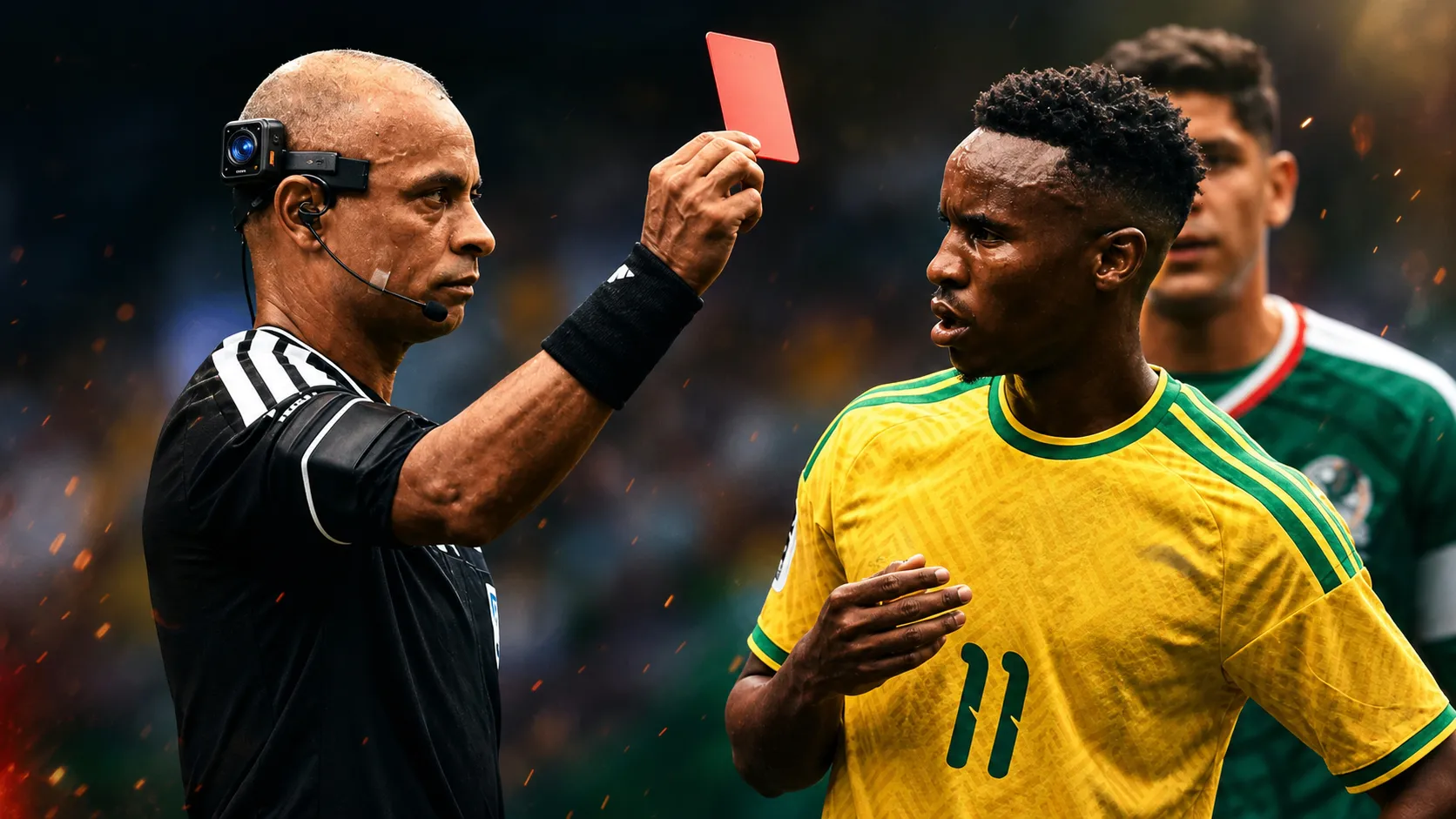
Match officials at the 2026 World Cup will wear head-mounted cameras, marking a first for the tournament.
FIFA has confirmed that referee body cameras will be used at the 2026 World Cup, with the footage captured from the official’s own viewpoint and enhanced by real-time stabilisation software to reduce blur caused by movement. The technology is designed to give broadcasters and audiences angles never previously available during the competition, while also helping FIFA review how key decisions were made.
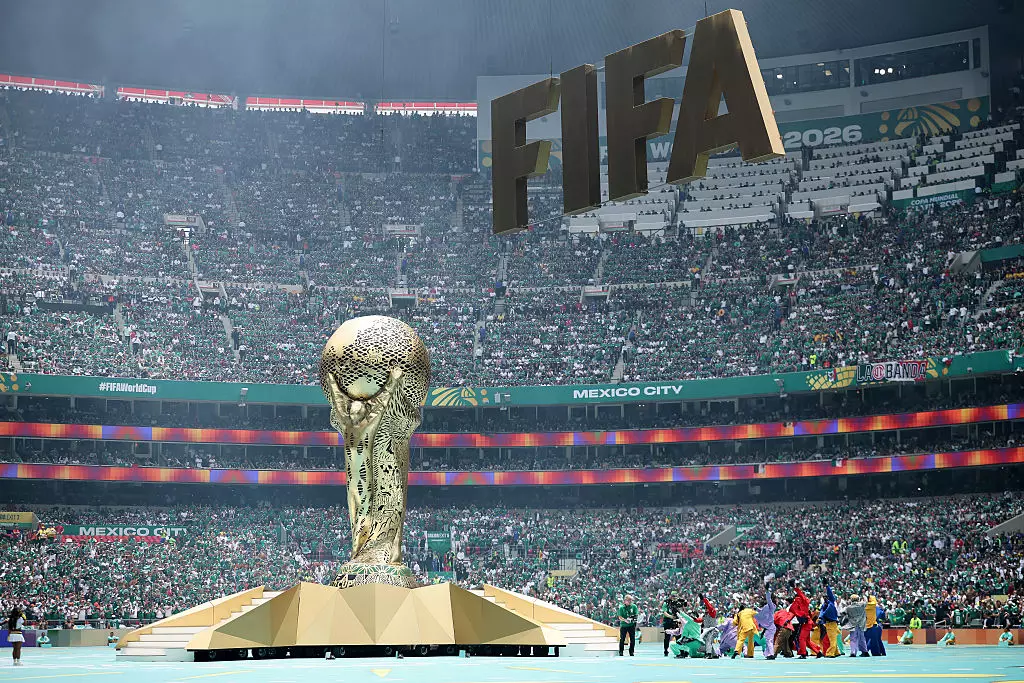
The cameras are attached to the referee’s communication system and form part of a wider officiating push at what will be the biggest World Cup ever staged. The 2026 tournament, hosted across the United States, Canada and Mexico, will feature 48 teams and 104 matches, with the competition running from 11 June to 19 July 2026.
The footage will not necessarily be shown live throughout full matches, but it is expected to feature at selected points in broadcasts, replays and post-match analysis during tournament coverage.
Pierluigi Collina, chairman of FIFA’s Referees Committee, said the idea is to give audiences “a new experience, in terms of images taken from a perspective, from an angle of vision which was never offered before.”
FIFA has also made clear that the cameras are not just being introduced for television. They are also intended to help evaluate and improve officiating.
As Collina explained: “Having the possibility to see what the referee sees is important iin the debriefing, to evaluate how the call was made by the referee, which was his view.”
That should allow referee coaches and match officials to review decisions with a clearer understanding of exactly what the referee could see at the time, instead of relying only on standard broadcast angles. FIFA has described that referee-view footage as a useful training and assessment tool as well as a broadcast innovation.
The concept has already been tested in professional football. MLS was one of the earliest leagues to experiment with referee cameras, using the technology at its 2013 All-Star Game.
In England, Jarred Gillett became the first Premier League official to wear one during a competitive top-flight fixture in May 2024, when Crystal Palace faced Manchester United. The footage from that match was approved for educational and documentary use rather than live broadcast.
FIFA then expanded the trials during the 2025 Club World Cup, where referee body cameras were used throughout the tournament, before moving ahead with their introduction at the 2026 World Cup.
The body-camera rollout also reflects a wider change in football’s Laws of the Game. Under the 2026/27 law updates approved by IFAB, competitions now have the option to allow referees to wear chest- or head-mounted cameras, provided the competition organiser supplies the equipment and controls the use of the footage.
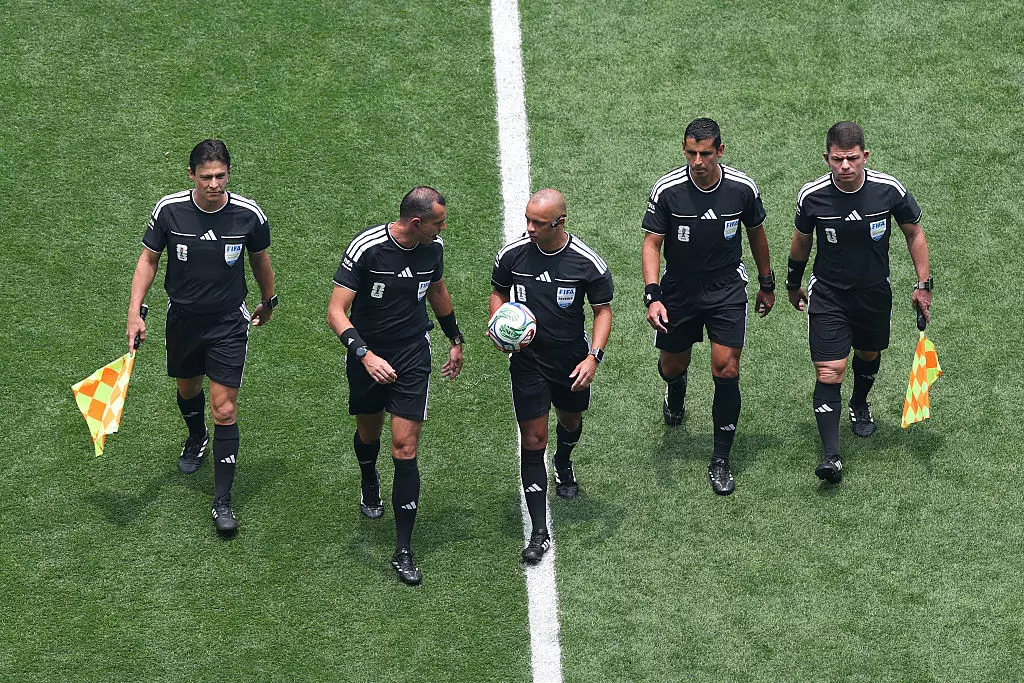
FIFA has already announced the officials for the tournament, selecting 52 referees, 88 assistant referees and 30 video match officials from 50 member associations. The governing body says the use of new technology, including referee cameras, is part of its attempt to prepare officials for the demands of a tournament that will stretch across the largest geographic footprint in World Cup history.
New rules for the FIFA World Cup 2026
The upcoming competition will also feature several law changes and tournament-specific adjustments aimed at reducing time-wasting, improving player behaviour and keeping matches moving. Some of them are likely to divide opinion.
Players being substituted must now leave the field within 10 seconds using the nearest point on the boundary line unless directed otherwise by the referee. If they fail to do so, the incoming substitute can be held back until the next stoppage, meaning their team may have to continue temporarily with 10 players. The measure is part of IFAB’s time-limited substitution protocol.
There will also be a new countdown for delayed restarts from throw-ins and goal kicks. Referees can begin a visible five-second countdown if they believe a player is wasting time. For throw-ins, failure to restart in time will mean possession goes to the opposition. For goal kicks, the restart is switched to a corner kick for the other team.
Another important change concerns VAR. For the 2026/27 Laws, video review has been widened to cover a clearly incorrect corner-kick award if the mistake can be identified from broadcast footage before play restarts. VAR protocol has also been clarified so that a clearly incorrect second yellow card leading to a red can be reviewed, along with situations where the wrong player has been cautioned or sent off. IFAB has separately clarified that VAR can intervene for clear attacking-team offences before the ball is in play at a corner or free kick if they directly affect a goal, penalty decision or disciplinary sanction.
One of the more controversial additions is an optional law aimed at tackling discriminatory abuse. Competitions can now adopt a rule allowing a player to be sent off for deliberately covering their mouth with a hand, arm or shirt to stop racist or other discriminatory language being detected. IFAB says the purpose is to create a stronger deterrent rather than rely only on post-match disciplinary action.
Not every widely discussed proposal has become a blanket automatic red-card offence, however. Some measures remain competition options or depend on how FIFA applies the updated Laws within its own regulations. In practice, that means the exact disciplinary consequences for protest actions or mass walk-offs will depend on the final tournament rules and how referees interpret the conduct under existing laws on dissent, unsporting behaviour and abandonment.
There is also a separate World Cup 2026 disciplinary tweak affecting suspensions. FIFA decided that single yellow cards in the final competition will be wiped after the group stage and then again after the quarter-finals, a move intended to stop players missing the latter stages of the tournament because of accumulated cautions.