


If Facebook suddenly stops loading while you are scrolling and you waste ages restarting your router before discovering the issue is actually widespread, Downdetector is well worth keeping saved in your browser.
Downdetector is a free service from Ookla that monitors outages in real time across more than 34,000 websites, apps, games, internet providers, and online platforms in 72 countries.
It spots trouble by combining user-submitted reports with broader online activity signals to detect when a problem is likely affecting the service itself rather than your own connection. The platform is used by hundreds of millions of people and processes tens of millions of problem reports every month, which is why it has become one of the first places many users check when major platforms start acting up.
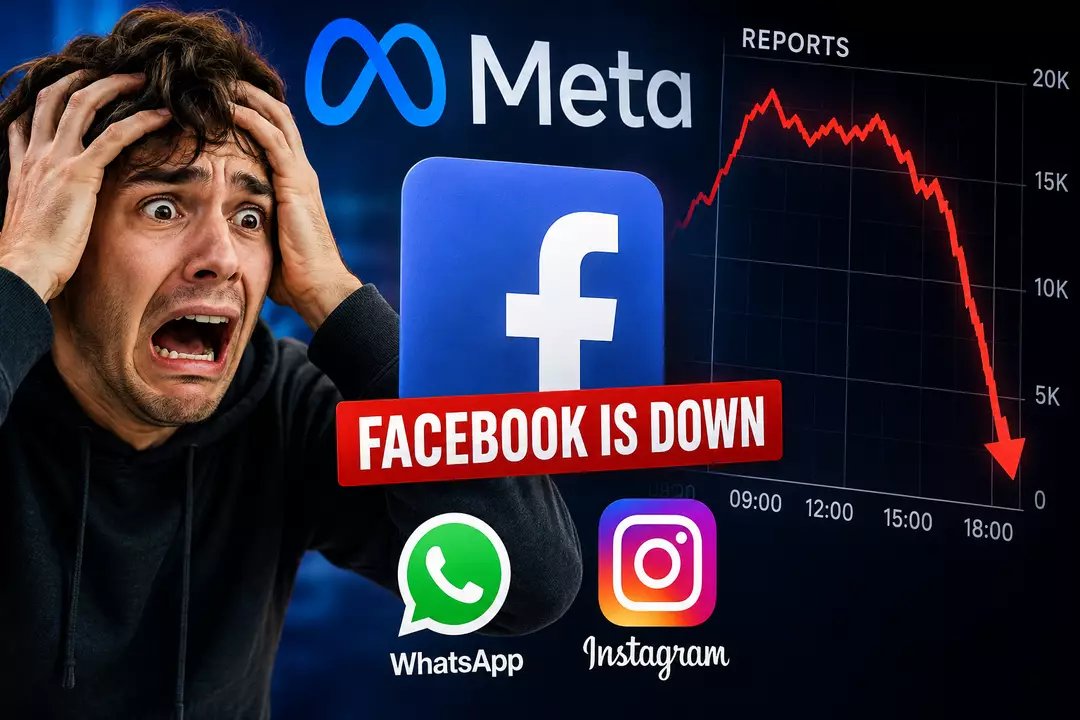
To use it, go to Downdetector.com and search for the service causing problems, whether that is Facebook, Instagram, WhatsApp, Netflix, your broadband provider, your mobile network, a gaming service, or something else. Each result page displays one of three labels: no problems, possible problems, or problems detected.
Those labels are not based purely on how many people are complaining.
Downdetector measures each service against a baseline created from average report volumes recorded at that same time of day over the previous six months.
Only when reports rise well above that usual level does the site mark it as an incident, meaning a small burst of complaints is not enough on its own to suggest an outage.
The information refreshes every four minutes to keep the status as up to date as possible.
Once you open a specific service page, there is more detail available. You can view a 24-hour graph of report activity, see which issues are being reported most often, such as login problems, app failures, server connection errors, or a complete outage, and check a live map showing where reports are coming from.
That map can be especially helpful if you are trying to figure out whether the disruption is nationwide, affecting just one region, or limited to your local area. It can also help separate a platform-wide outage from a problem with your own internet provider or mobile carrier.
If you want to contribute, you can file your own report from the service page.
Just press the report button, choose the issue type from the list, and your location is taken into account automatically.
Downdetector logs reports using your real location, so if you are travelling when a problem occurs back home, your submission should still be counted in the correct region.
It also limits the influence of repeated reports from the same person, helping prevent totals from being artificially inflated and keeping the figures more reliable.
One useful thing to remember is that Downdetector is best treated as an early warning system rather than a final verdict. A spike in reports usually means something real is happening, but it does not always explain the cause. Sometimes the underlying issue is with a cloud provider, an ISP, a regional routing problem, or a bad app update rather than the site people first notice failing.
That is why it can be worth cross-checking what you see with a company’s own status page or support account if one exists, especially for services such as Microsoft 365, Google, Slack, Discord, PlayStation Network, Xbox Live, or major banks and airlines.
For people who prefer to monitor patterns instead of waiting for the next outage to happen, the site also includes records of previous incidents for each service, which can be useful for spotting recurring downtime or repeated login and connection issues at certain times.
You can also receive push alerts through the Speedtest app, where notifications can be set for up to three services so you are alerted as soon as something goes down.
In short, if a major app suddenly will not load, messages stop sending, or a website starts timing out, Downdetector gives you a quick way to tell whether the problem is likely yours or part of a wider outage before you start rebooting everything in sight.