

FIFA has responded after a large number of seats appeared to be empty during an almost sold-out World Cup match in Guadalajara, Mexico, on June 12.
The governing body moved to defend the attendance total for South Korea’s opening-day victory over the Czech Republic after broadcast and stadium images seemed to show thousands of unoccupied seats. The issue quickly became a talking point because lower-tier tickets for some World Cup matches had been criticized as expensive, adding to broader concerns over access and affordability at the 2026 tournament.
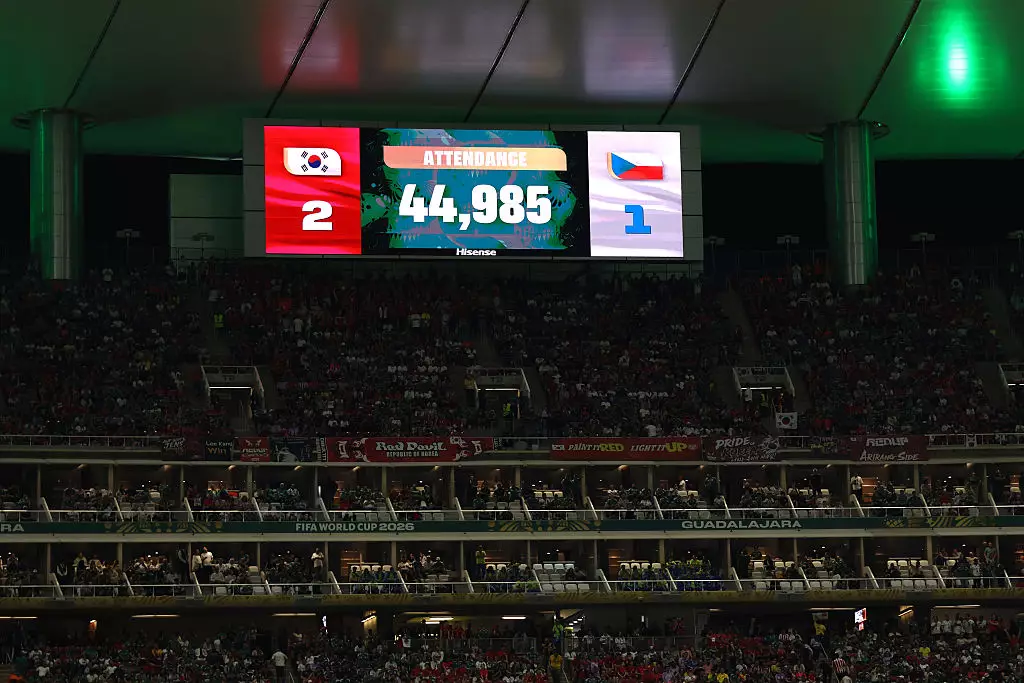
Although the official attendance was announced as 44,985 inside Guadalajara Stadium, formerly known as Estadio Akron, many observers questioned whether that number accurately reflected how full the venue looked during the game. FIFA confirmed this week that the stadium’s tournament capacity is 45,664, meaning the announced crowd was only a few hundred short of a sellout.
FIFA then issued an explanation, saying the apparent gaps could be down to spectators spending time away from their allocated seats during the match.
“Official attendance figures reflect the number of tickets scanned and spectators present within the stadium footprint, rather than visual assessments of seating occupancy at any given moment during the match.
“FIFA works closely with stadium authorities and ticketing teams to ensure all published figures are based on verified operational data.”
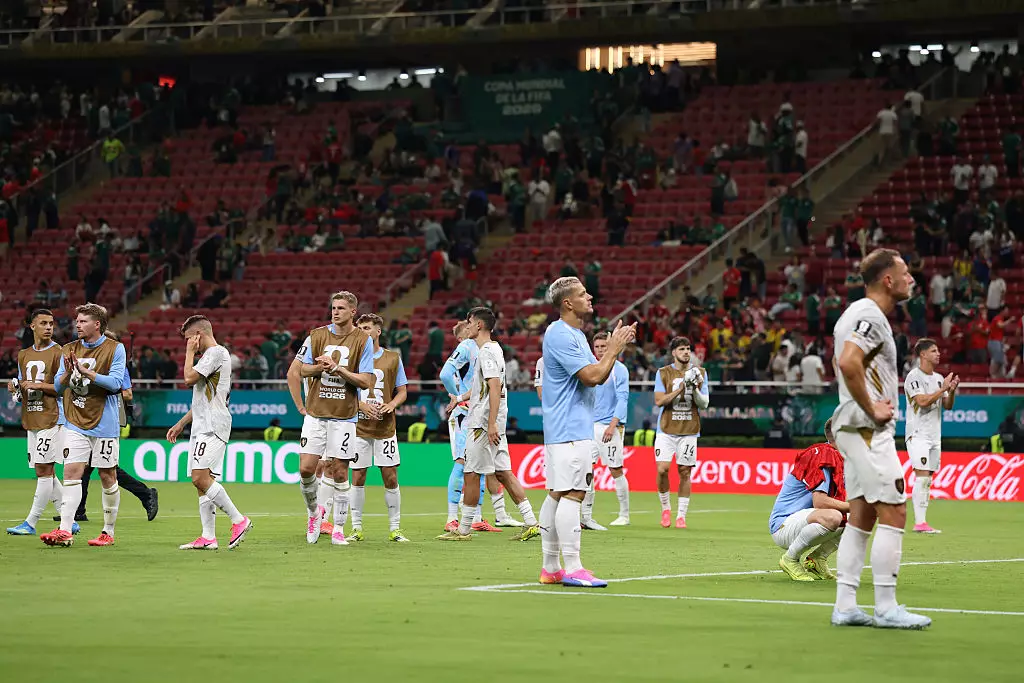
It later added that several ticketed fans could be seen standing in concourses rather than remaining in their assigned seats throughout the game, which FIFA said helped explain why television pictures did not match the official attendance count.
The debate has landed in the middle of the biggest World Cup in history. The 2026 tournament is the first to feature 48 teams and 104 matches, spread across 16 host venues in the United States, Canada and Mexico, with Guadalajara due to stage four matches in total.
In the lead-up to the competition, FIFA had already been under scrutiny over ticketing policies and resale. The governing body ran an official resale platform and has also used dynamic pricing for parts of the tournament, a system that has drawn criticism from supporters after prices rose sharply for some marquee fixtures.
Ticket costs have come under sustained criticism. The cheapest standard seat for the final was reportedly priced at $5,785, while some options were said to be listed in the five-figure range. In April, FIFA increased the top listed price for the World Cup final at MetLife Stadium to $10,990, while Category 2 seats were listed at $7,380 and Category 3 at $5,785 during a reopened sales phase.
For many supporters, however, the cost of entry has not been the only obstacle.
Travel expenses and hotel rates have also surged, prompting complaints that attending the World Cup has become unaffordable for ordinary fans. Those concerns have been magnified for supporters following teams across multiple host cities in a tournament that spans three countries and nearly six weeks.
Concerns have also been raised over in-stadium prices after a list showed that a one-liter bottle of water would cost $10.49.
That issue has become even more contentious because heat has emerged as one of the major off-field concerns of the tournament. Climate Central said in a June 3 analysis that climate change is increasing the likelihood of performance-impairing heat in 97 of the tournament’s 104 matches, using 28C as the threshold. Guadalajara is among the cities where hot conditions are expected to be a recurring concern for both players and supporters.
The backlash online has been sharp, with one fan arguing that the ‘USA doesn’t deserve to host any tournament’.
“Why should these necessities cost that much in this heat, they probably want to roast us all.”
FIFA has also reversed course on one disputed rule that had prevented fans from bringing refillable bottles into stadiums. The organization now says supporters may ‘bring with them one 20 ounce (560ml) soft, plastic disposable factory-sealed water bottle’.
That partial U-turn followed criticism from fan groups and renewed questions about whether tournament organizers were doing enough to protect spectators in extreme weather. Reusable bottles remain banned under the updated policy, but FIFA has said water pricing inside stadium footprints will remain consistent with other events held at each venue.