

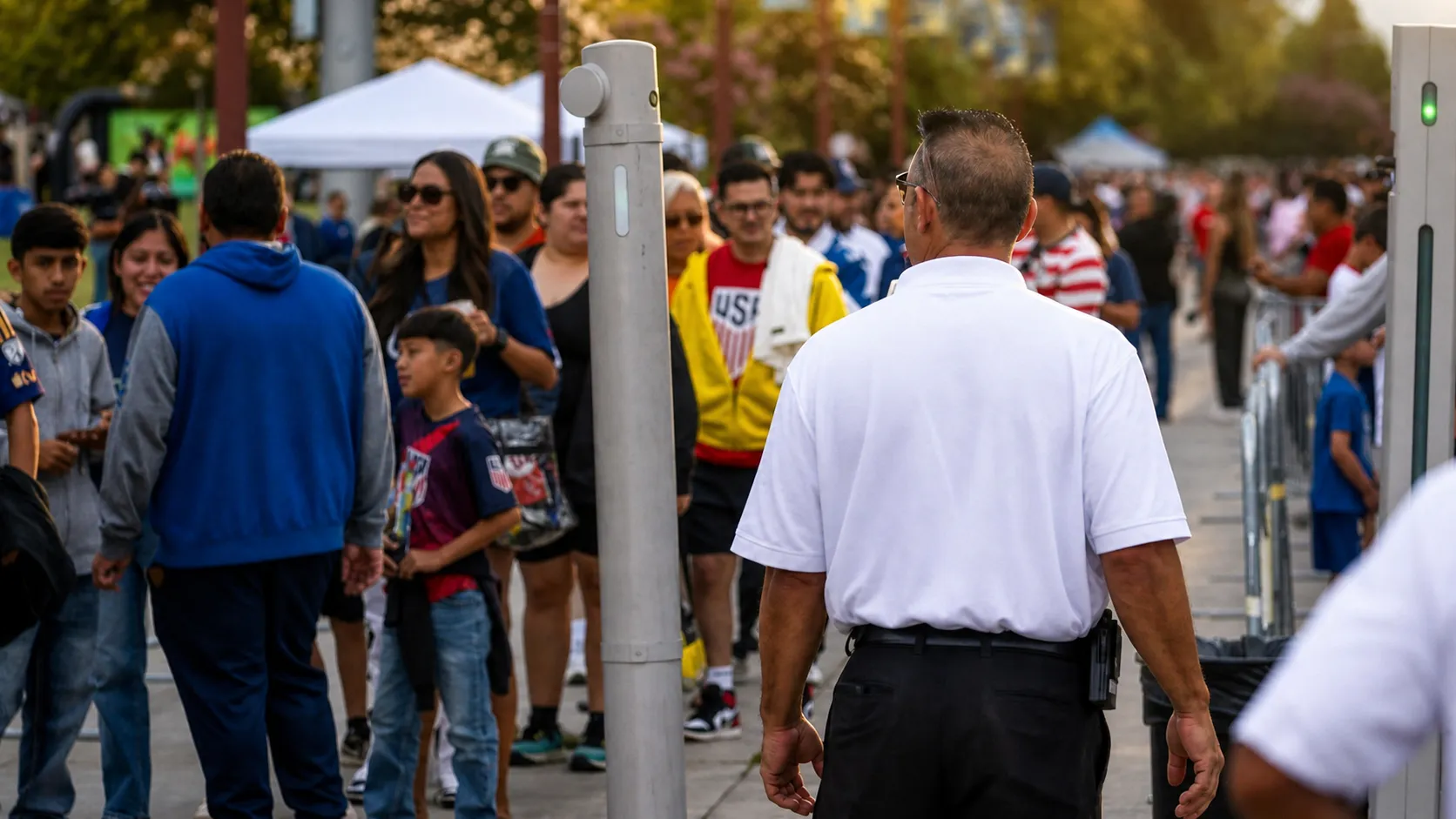
A security specialist has identified the main danger facing supporters at the 2026 World Cup, despite reports that the US government is investing heavily in protective measures before the tournament.
The 2026 FIFA World Cup is set to be the biggest edition of the competition to date, stretching across 16 host cities in the US, Canada, and Mexico and expanding to 48 teams and 104 matches.
It will also be the first men’s World Cup to be staged across three countries, with the final due to be played at MetLife Stadium in East Rutherford, New Jersey, on 19 July 2026.
That scale brings huge logistical and safety demands for organisers, with planning extending far beyond the stadium gates to transport systems, fan zones, airports, hotels, and city centres expected to be packed throughout the month-long tournament.
The White House has already established a FIFA World Cup 2026 task force, saying the event is expected to be one of the largest sporting occasions in history. On its official page, the administration says the tournament alone is projected to generate $40.9 billion in gross output in the US, create more than 185,000 jobs, and involve matches in 11 American host cities.
Back in March, Robert O’Leary of the US Department of Commerce said: “When President Trump established the White House task force he set out with a clear mission – to ensure the United States delivers a safe, welcoming and memorable World Cup.”

Even with that level of planning, one expert believes the greatest danger to ordinary matchgoers is not necessarily a sophisticated external threat, but the way large numbers of people move in and out of venues under pressure.
“The crowd’s movement puts fans at the greatest risk,” says Corey Pollard, a lawyer and the managing partner of Corey Pollard Law.
The expert added: “When so many elements come together – heat, drink, emotion, and confusion – any event can quickly turn into a dangerous situation.
“One person getting injured may be due to the fact that one exit has been blocked, there was a false alarm, everyone tried to rush to find conveyance, or they started pushing and shoving in a narrow area.”
That warning carries extra weight because FIFA has said the finalised match schedule was designed using technical analysis of venues that included average temperatures, cooling infrastructure, public transport, and security. June and July fixtures in parts of the US, Mexico and Canada will expose supporters to very different weather conditions, and extreme heat in some cities could add to the risk around queuing, congestion, and post-match travel.
“There are many different kinds of injuries that are predictable, thus precautions must be made to prevent them,” Pollard warned.
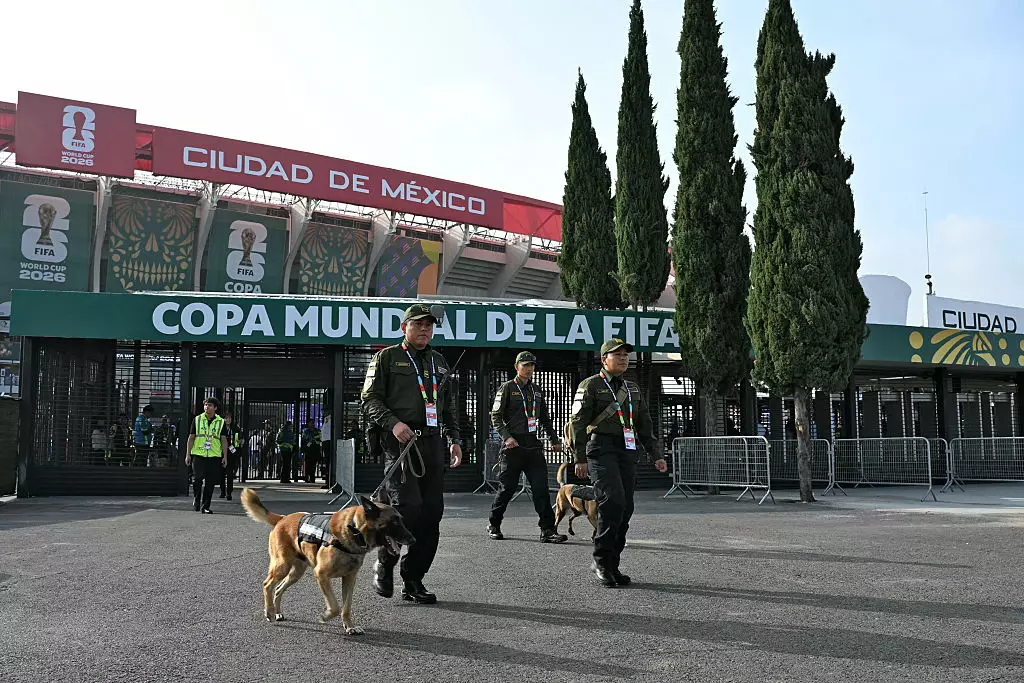
Explaining how venues and authorities typically prepare for major sporting events, Pollard said: “Security teams follow a multi-layered approach to get ready for these kinds of situations.
“The stadium exterior, ticket and screening locations, concourses, the seating bowl, the field, the exits, and the transportation system should all be considered.”
He also said that ‘crowd flow, medical response, evacuation, CCTV, and police’ all form part of the wider planning strategy.
“The staff needs to be taught about the plan, how to implement it, and what to do in case of any issues occurring,” he said.
For supporters, that means some of the most important safety decisions may be basic ones: arriving early, using the correct gate, keeping phones charged, staying hydrated, identifying exits before kick-off, and avoiding last-second surges toward transport hubs once full-time whistles blow.
For fans planning to attend in person, the cost of the trip could be another major hurdle, with accommodation, tickets, and refreshments all expected to be expensive.
Hotel prices in several host cities have already attracted attention, especially around high-demand fixtures involving the US men’s national team, with the combination of limited availability and event-driven demand likely to hit travelling supporters hard.
Supporters travelling to Los Angeles for the US opening game against Paraguay on 12 June are looking at about $710 for a two-night hotel stay.
Those following the US to Seattle for the 18 June group-stage match against Australia could still be facing hotel costs of around $660 for two nights, depending on location and availability.
Then there is the price of entry.
FIFA’s official ticketing process is still continuing in phases, but hospitality packages are already on sale through On Location, while resale and comparison sites have shown how expensive some matches may become on the secondary market.
SeatPick says the minimum price currently listed across World Cup 2026 tickets on its platform is $150, while the average listing is $1,771, underlining how quickly costs can climb for major fixtures.
High-demand US group games have been among the most closely watched on resale sites, with prices shifting constantly depending on opponent, location, and remaining inventory.

Food and drink inside stadiums may add even more to the bill.
Prices seen at a recent warm-up match between England and New Zealand at Raymond James Stadium in Tampa, Florida on Saturday (6 June) may offer a preview of what supporters could face during the tournament itself.
A large beer was listed at $18.75, while a single bottle of water cost $7.50.
Separate reporting on the same game said premium beers were priced at $18 and domestic beers at $16.75, reinforcing concerns that in-stadium costs at US venues could be a major talking point throughout the tournament.
According to Football Ground Guide, a standard meal and a beer at Los Angeles’ SoFi Stadium – where the USA will play its first group match against Paraguay – will cost $32.24.
At Seattle’s Lumen Field, where the US are scheduled to face Australia, the same combination is priced at $26.88.
With 104 matches spread across three countries and millions of journeys expected between stadiums, airports, and city centres, organisers may spend vast sums on security infrastructure – but Pollard’s warning suggests that for many supporters, the most immediate danger could still be the simplest one: getting caught in the wrong crowd at the wrong moment.