

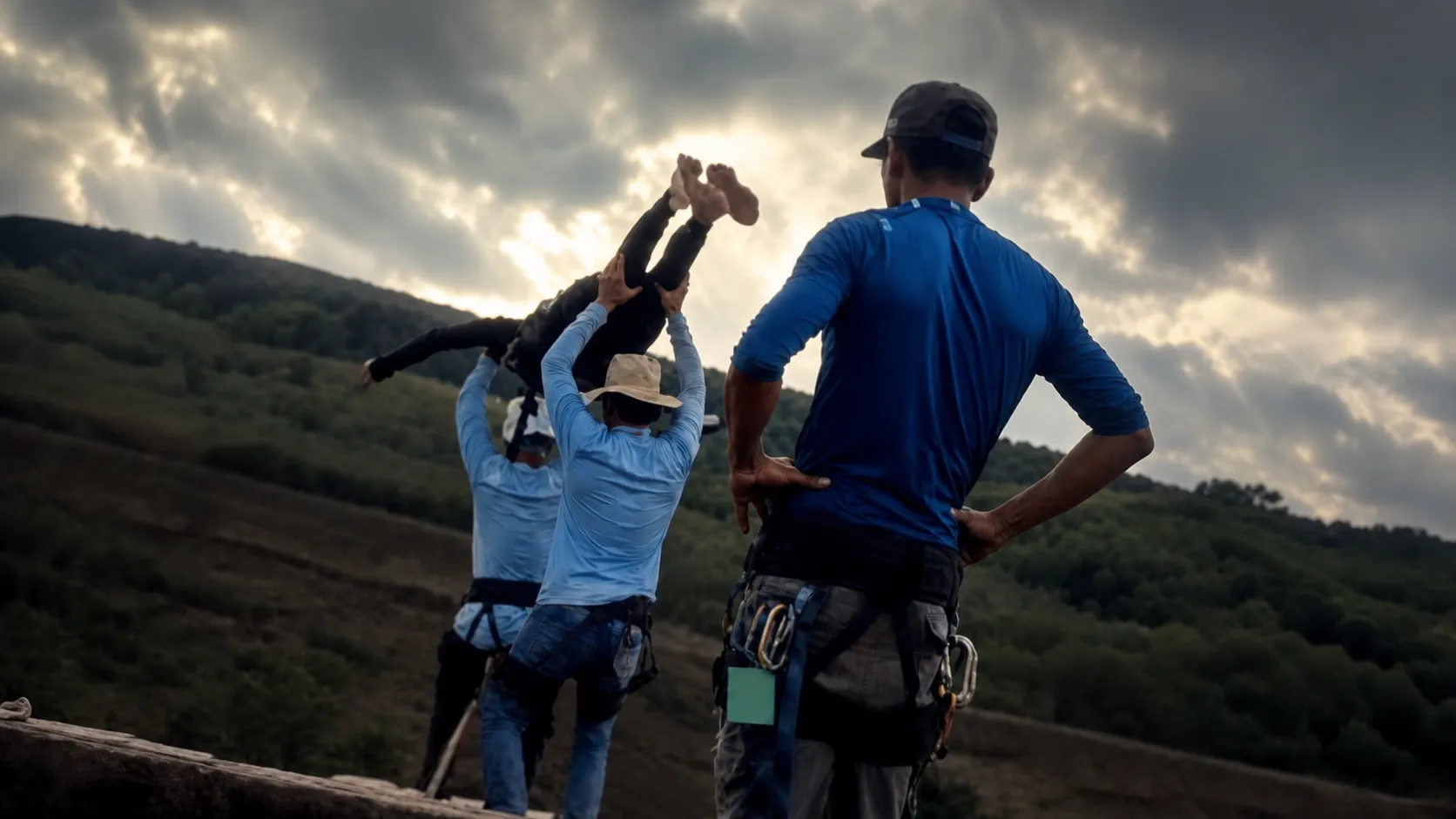
Three employees of a Brazilian rope-jumping company have gone before a judge after a young woman was thrown from a 130ft bridge before her safety rope had been secured, and their lawyer has now spoken publicly about how they are coping.
Maria Eduarda Rodrigues de Freitas, 21, who worked as a model and in a gym, died after what was meant to be a rope-jumping session from Ponte do Esqueleto, or Skeleton Bridge, in Limeira, in São Paulo state, on Saturday, June 13, 2026.
Police say the activity was not the same as traditional elastic-cord bungee jumping. Rope jumping uses climbing-style ropes that create a pendulum swing, while bungee jumping uses an elastic cord and a more vertical rebound.
Footage of the incident shows staff carrying her in a horizontal Superman-style position before throwing her from the bridge. The safety rope can still be seen on the platform behind them.
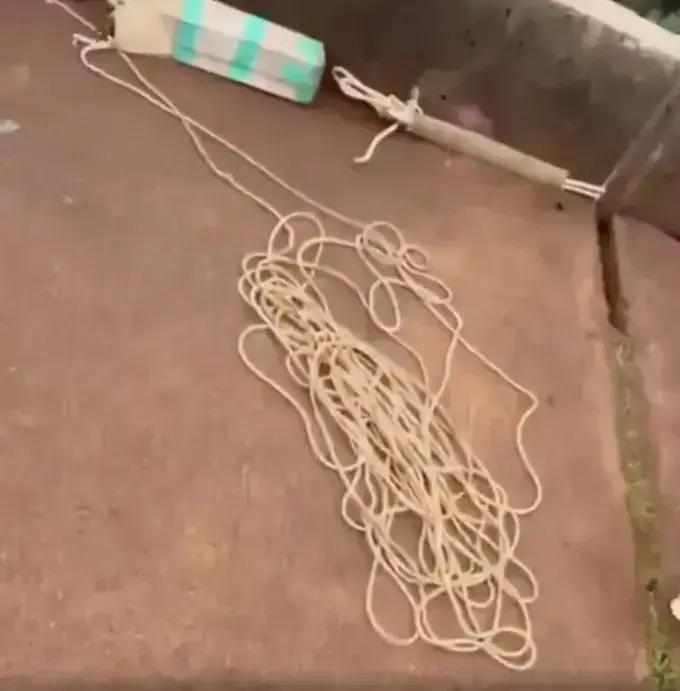
Witnesses at the scene reacted in horror as she fell.
“the rope people, the rope”
A nurse who happened to be nearby ran to help Maria Eduarda as she suffered catastrophic injuries.
“She was breathing heavily. Her pupils were dilated, her pulse was weak. I even talked to her,” nurse Rayza Dias said.
“I told her, ‘Nobody dies on my shift.’ Even though I wasn’t on my shift.”
Three men were later detained on suspicion of homicide with eventual intent. Local reports identified them as Maicon Fernandes Cintra, 42, Luis Felipe Feliciano Egoroff, 32, and Vitor de Freitas Gonçalves, 27. They were escorted to court, appeared before a judge and were then held in custody.
Investigators say the men admitted they could not explain exactly what happened and that they did not remember who was responsible for fastening the rope or carrying out the final safety check before the jump. Police also say the victim was not attached to any safety equipment when she was launched.
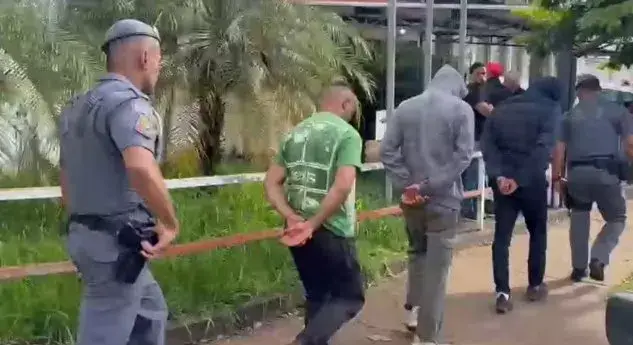
Luis Felipe told police he was paid only £26.50 per jump. He also said there were no set roles among the team during jumps, and that safety inspections were done together. When investigators asked who had carried out the final check before Maria Eduarda jumped, he replied:
“I can’t remember.”
Maicon Fernandes Cintra is said to have given officers the same response.
The men’s lawyer, Rafael Gomes dos Santos, later defended them and described their condition after the incident.
“They are in a state of shock,” he said.
“They cannot explain what happened because they have been doing this for years. Nothing like this has ever happened.”

In the lead-up to the jump, Maria Eduarda had shared upbeat posts about the experience on social media.
She posted pictures from the venue, including images featuring representatives of the private company behind the event. Alongside one photo showing an Entre Cordas banner, she wrote:
“Who was the crazy person who let me jump off a bridge?”
The event appeared to involve the bungee operator Entre Cordas as well as an associated instructor brand, Ih Voei, with workers reportedly wearing clothing marked with both names.
Before the fatal incident, Entre Cordas had promoted the attraction on Instagram as “a jump to the extraordinary”
The page was removed after Maria Eduarda’s death.
Following her daughter’s funeral, Maria Eduarda’s mother, Valdenia, shared a message of grief online.
“That damned rope took you away from me forever,” she wrote online.
“My beloved daughter, you are gone and all that remains here is pain and longing. I will love you forever.”
Ponte do Esqueleto, or Skeleton Bridge, was originally part of Brazil’s Federal Railway Network and has been abandoned for around three decades. Despite that, it continues to attract visitors looking for extreme sports experiences, and it has been the scene of other serious accidents.
O Tempo reported that one businessman said the bridge sees around 500 visitors each month.
In an earlier tragedy, 39-year-old Kelly Stefani de Oliveira Alves, a mother of one, was cycling across Skeleton Bridge with her husband when she reportedly lost her balance after her foot touched a low wall.
She fell 15 metres along with her bicycle and died at the scene, leaving behind a seven-year-old son.
After that accident, Brazil’s Ministry of Management and Innovation in Public Services (MGI) requested that the bridge be shut and that warning signs be installed to keep people away.
Even so, activities at the location later resumed.
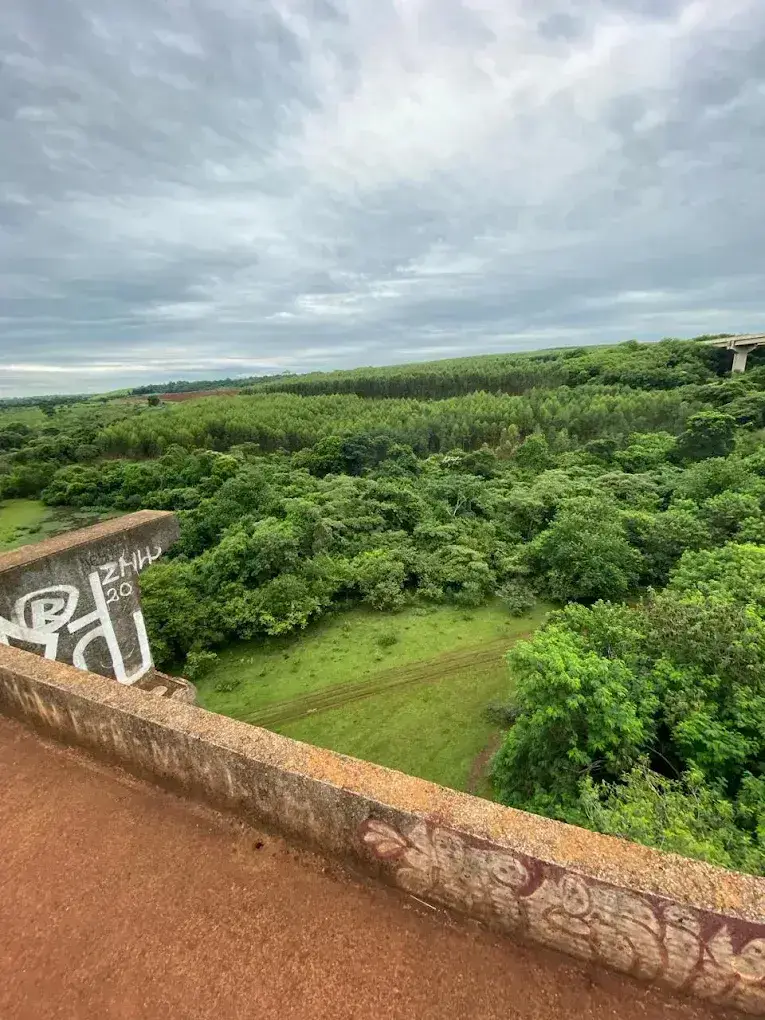
Authorities are now also examining whether the group behind the jump was operating without a formal company structure or the necessary authorization to run the activity at the site.
Police say the case is being treated as homicide with eventual intent, a classification used when someone is accused of taking an action while aware it could result in death.
There have also been reports of two women falling from Skeleton Bridge and suffering major injuries.
One was taken to Santa Casa de Limeira hospital in critical condition, while the other sustained multiple fractures across her body.