


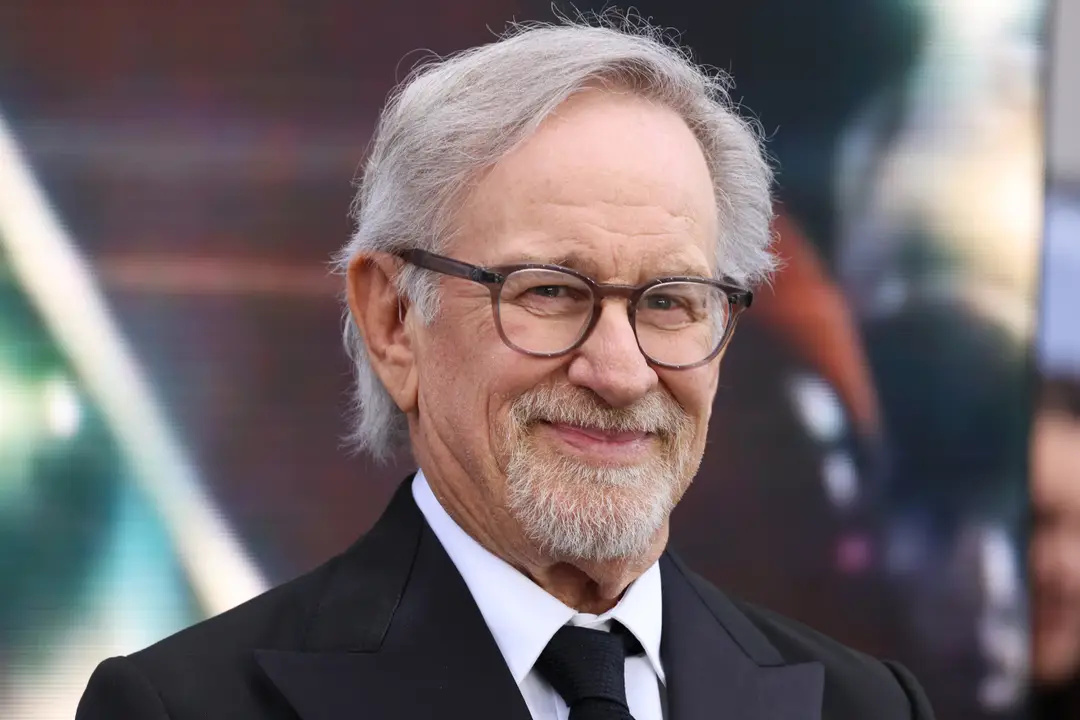
Steven Spielberg has once again said he believes extraterrestrials may already have visited Earth, but the scientific consensus remains far more cautious: there is still no credible evidence that aliens have come here.
The acclaimed filmmaker, whose work includes one of cinema’s most famous alien stories in E.T., has long been fascinated by the idea that life beyond Earth may be more than a distant possibility.
Spielberg, now 79, has been speaking to the press while promoting his new film, Disclosure Day, which opened in the US on June 12, 2026.
During a conversation with CBS News, he made it clear that he believes alien life may already have made contact with our world.
“I absolutely think that they have been here, and they are here. And who knows, maybe they’ve always been here,”
He added that this belief is
“based on the circumstantial evidence of everything that I’ve gathered throughout my whole life, everybody I’ve listened to and every documentary I’ve ever watched and all the testimonies in Congress that I’ve heard.”
Spielberg’s comments arrived amid renewed public interest in UFOs, or UAP as they are increasingly called, after a series of government disclosures and hearings kept the subject in the headlines. A recent CBS News poll also found that many Americans believe extraterrestrial life exists, and a notable minority think it may already be here.
Following Spielberg’s remarks, several scientists offered a more measured response: they said the idea cannot be dismissed as impossible in a cosmic sense, but they stressed that possibility is not the same as evidence.
One astrophysicist said that, in principle, alien visitors are not ruled out by physics alone. If an advanced civilisation existed for billions of years, it could theoretically have reached Earth in a very different era, when the planet would have looked nothing like it does today.
But that same expert also noted that any such claim would require evidence, and that no artefact, signal or verified trace has been found on Earth that proves extraterrestrial visitation.
That is where mainstream science remains firmly sceptical. NASA says it has not found any credible evidence of extraterrestrial life, and that there is no evidence that UAP are extraterrestrial. The agency continues to support the search for life elsewhere in the universe, but says extraordinary claims require extraordinary proof.
In science fiction, alien arrivals are often made possible through faster-than-light travel. In real-world physics, however, that remains unsupported.
An astronomer explained that the known laws of the universe create a major obstacle for any civilisation attempting interstellar travel. Even with highly advanced technology, the distances between stars are vast, and nothing with mass is known to be able to travel faster than light.
“The speed of light appears to be the ultimate speed limit in the Universe. Nothing with mass can accelerate up to or beyond it, so even the most advanced spacecraft would take a long time to cross interstellar distances.
“This means that visiting other worlds is not just an engineering challenge, but limited by fundamental physics.”
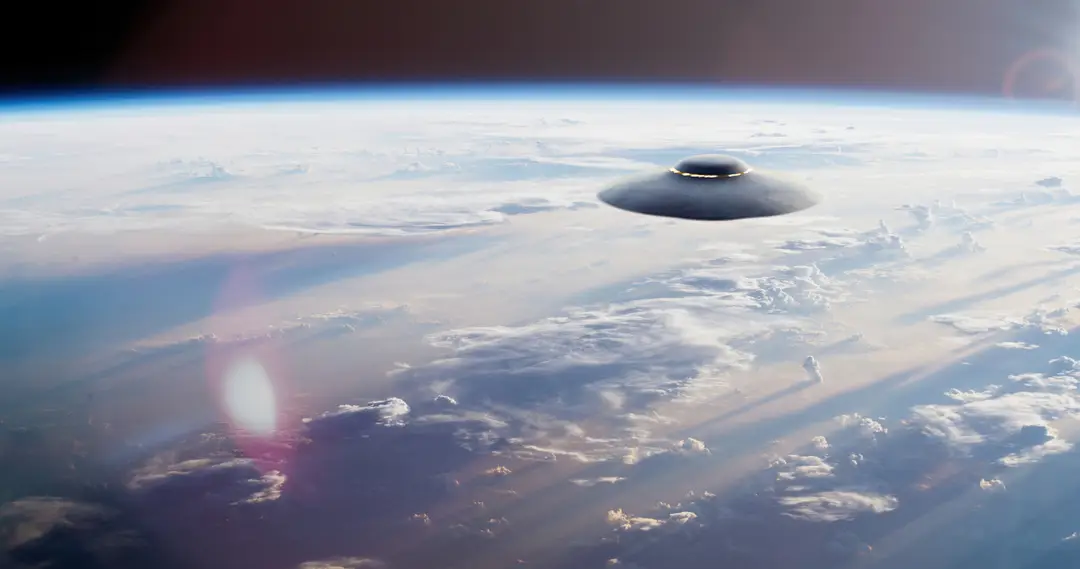
Spielberg has spoken publicly before about his long-held fascination with the possibility of alien life.
“I’ve been a believer since I made Close Encounters 50 years ago.
“But I would always say, ‘Until I’ve seen a UAP or a UFO with my own eyes, I’m not going to categorically state that life from out there has come here’.
“But I’ve changed that. I’m now willing to change my mind because of the circumstantial evidence which is overwhelming.”
For now, scientists say the debate remains open in the broadest sense: the universe is large enough that life elsewhere is plausible, but there is still no verified proof that aliens have visited Earth.