

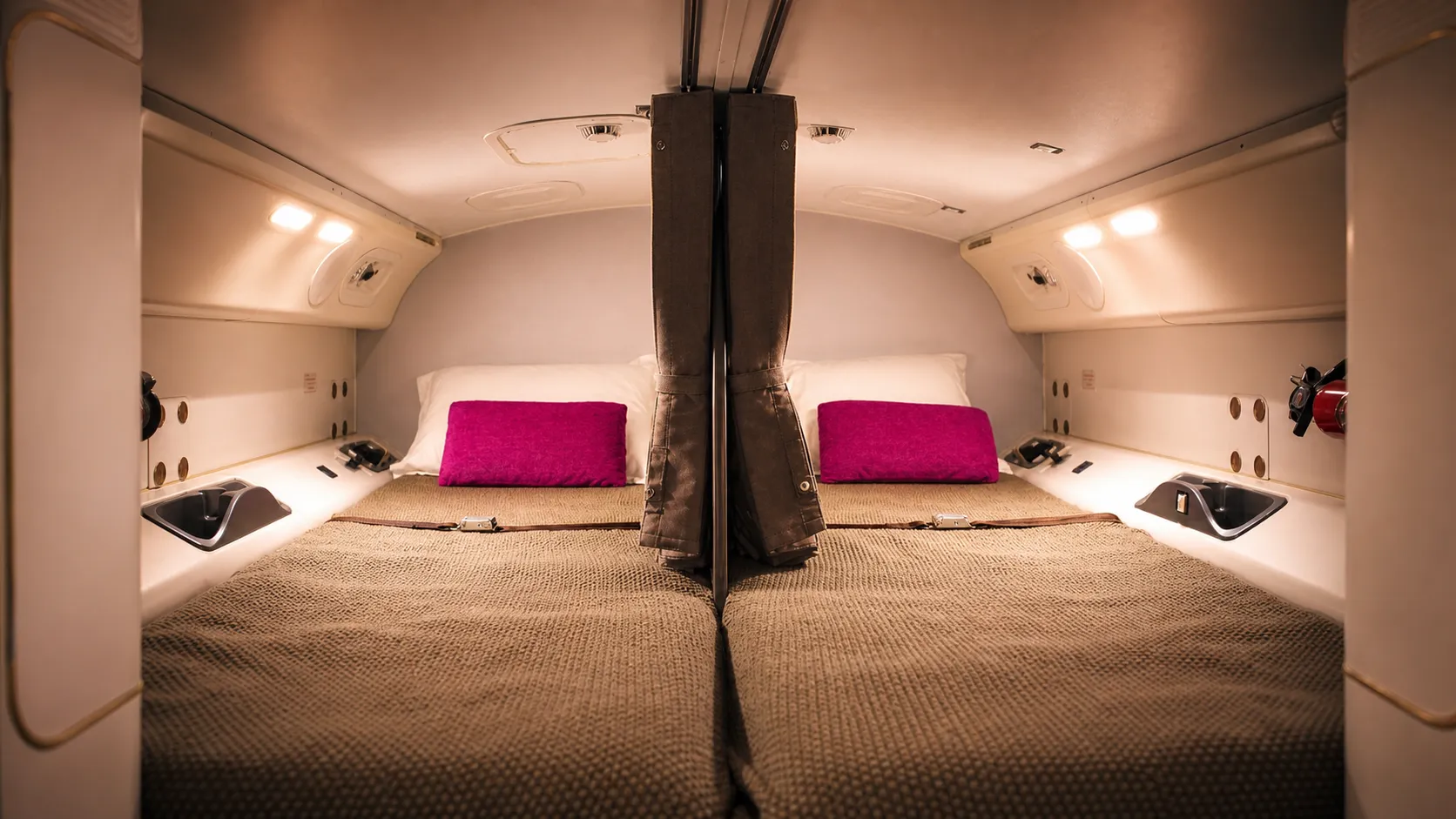
Passengers trying to rest on a flight usually have to make do with a cramped seat, but cabin crew on long journeys can head to a hidden sleeping space often compared to a ‘coffin’.
It sounds dramatic, but for flight attendants it is a normal part of working ultra-long-haul routes.
Kris Major, a British flight attendant with experience on both short and long-distance services, has spoken about the tucked-away rest areas used by crew during lengthy trips.
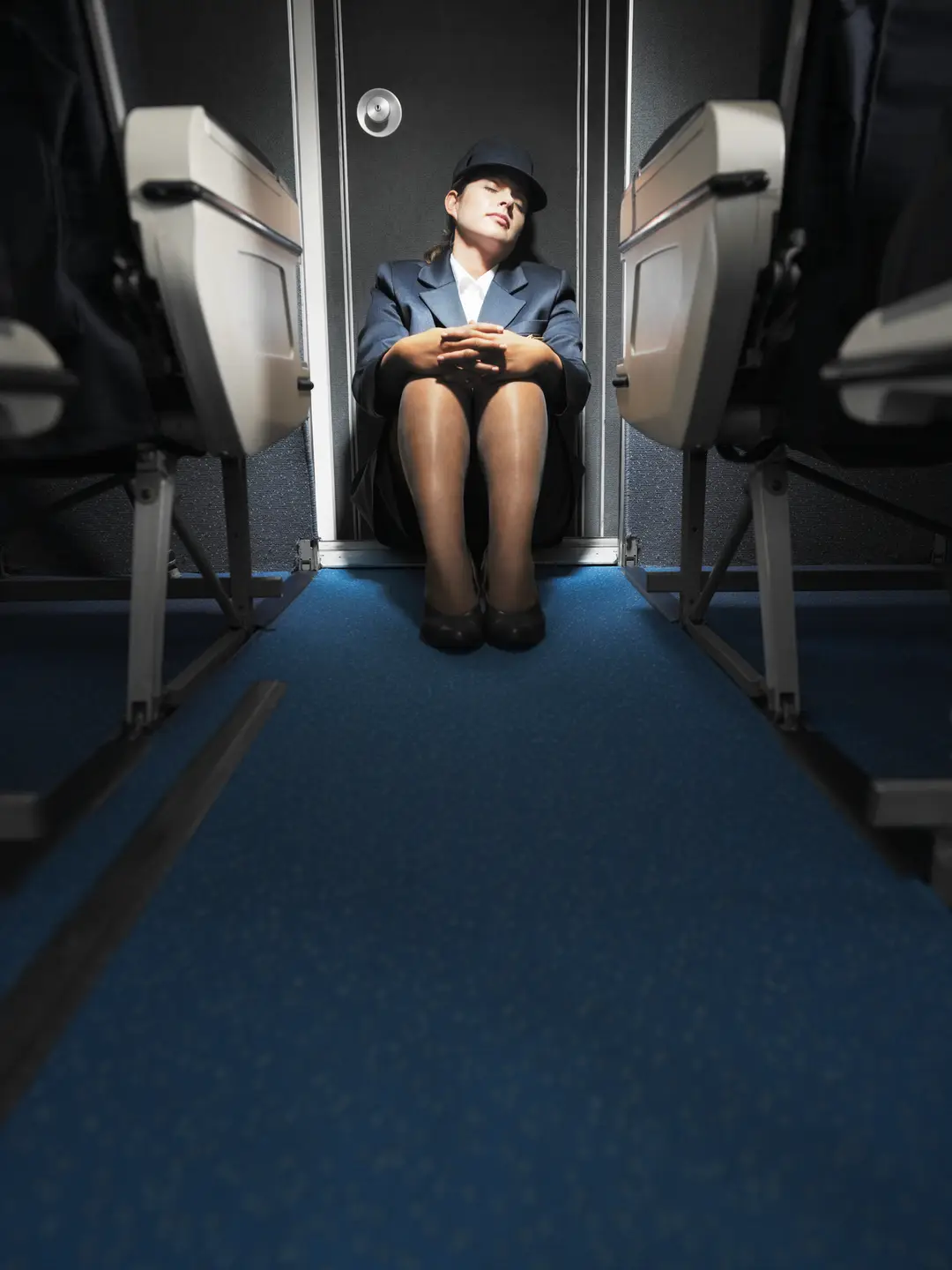
While most travelers simply board, fly, and try to get some sleep before landing, airline staff can be working demanding schedules with limited downtime between duties. In the U.S., flight attendants are also covered by rules that require at least 10 consecutive hours of scheduled rest between duty periods, but onboard rest bunks are a separate part of managing fatigue on very long flights.
That makes proper rest onboard especially important, particularly during flights that stretch well into double-digit hours.
So where do crew members sleep when they need a break in the middle of a journey?
Major said there is a dedicated rest space onboard, and the setup can feel a little eerie because of how enclosed it is.
Speaking to CNN Travel, he described the crew rest compartments found on aircraft, explaining that their design varies depending on the plane itself. On newer long-haul aircraft, these spaces are often built above the main cabin; on some older or differently configured jets, they can be tucked into lower-deck modules or other hidden sections of the fuselage.
“If we’re going somewhere over, say, 13 hours, we need to have good rest areas,” said Major.
He said crew members are generally given about 90 minutes to sleep so they can continue working effectively and safely.
“You need at least one sleep cycle scientifically to be of any use, to keep your ability to operate safely, your decision making processes, your communication skills,” the attendant said.
Major referred to the bunks as ‘technically coffins’, adding that although he can sleep in them without much trouble, not everyone finds them comfortable.
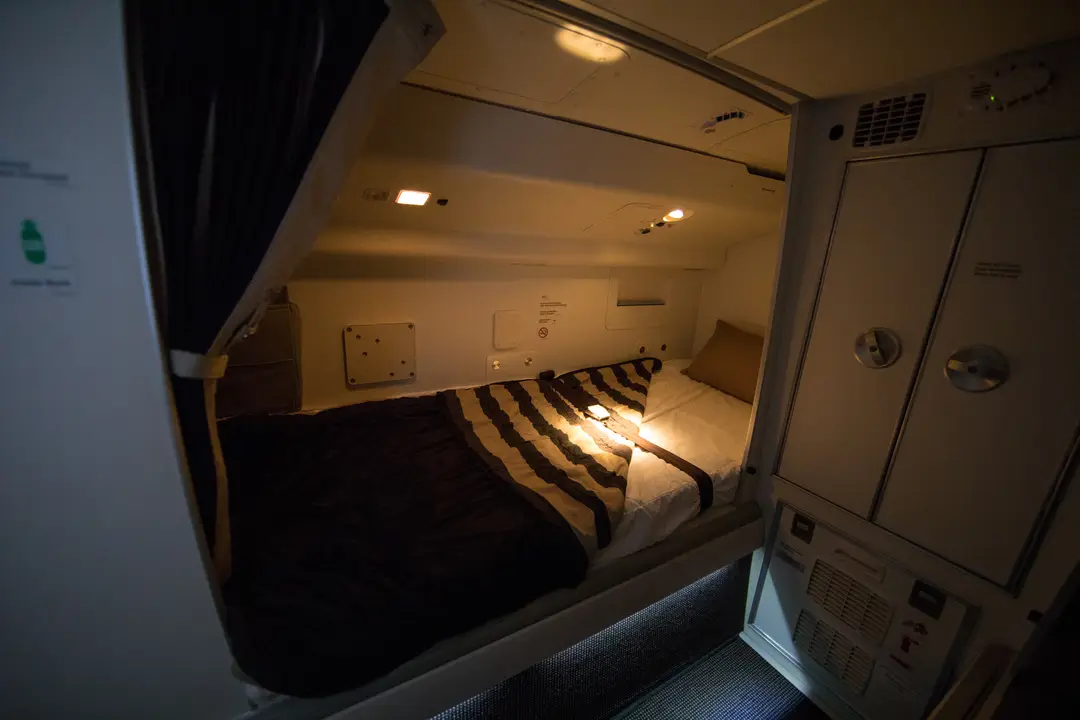
“There are some crew that really struggle with the bunks, they’re not pleasant,” said Major, that’s because sometimes, they’re cramped, long, thin, and separated by other bunks with a small piece of fabric.
He went on to explain just how tight the spaces can be.
“You push yourself right in, so they’re long and thin, because they’re up in the aircraft, so there’s not a lot of space. They are like what you’d imagine you’d see on a submarine,” he revealed.
The rest setup is not just about the bed itself either.
Major said crew can change out of their uniform and into more comfortable clothes for sleeping, such as a T-shirt and lounge pants.
As a senior flight attendant, he also has a simple system to show where he is resting if something urgent happens.
“So that if there’s any emergency whilst I’m in the bunk, they know exactly which one I’m in, even though there’s usually one designated for the senior,” Major said.
On many aircraft, these crew rest areas are built to meet strict certification standards for noise isolation, lighting, ventilation, and emergency access. Depending on the aircraft, they may contain bunks, seats, or a combination of both, and they are typically kept out of passenger view behind locked or discreet access doors.
That hidden design is part of the reason the spaces have such a mysterious reputation. But for cabin crew, they are less a novelty than a necessity — helping staff stay alert, make good decisions, and keep passengers safe on the longest flights in the sky.