

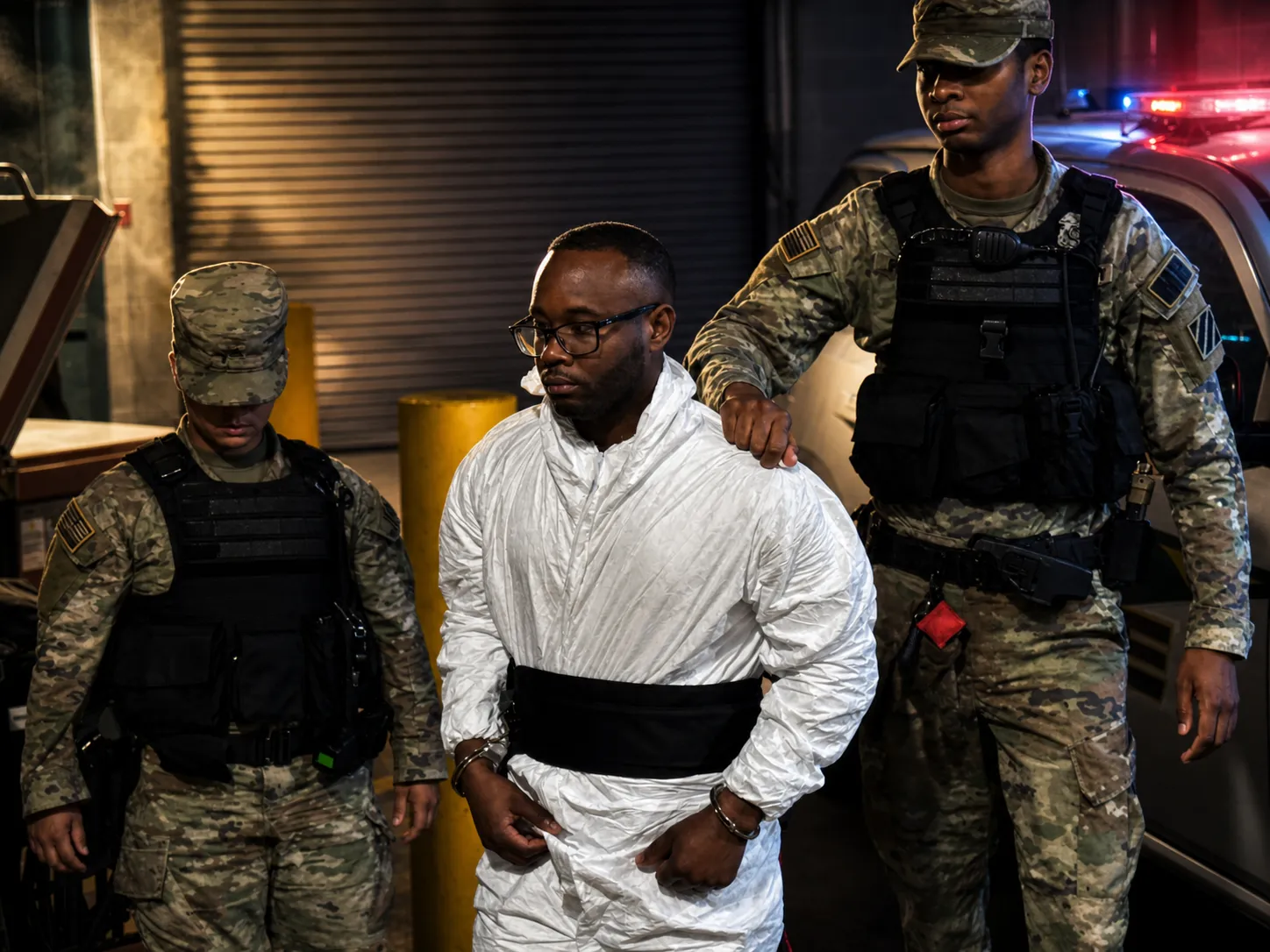
A military judge at Fort Stewart on Tuesday sentenced Army Sgt. Quornelius Radford to life in prison with the possibility of parole for a shooting rampage at the Georgia base last summer that left five people wounded, according to local news reports.
The punishment followed last week’s court-martial, where Radford, 29, was found guilty of attempted murder. In addition to the life sentence, he was given a dishonorable discharge and demoted to the rank of private.
Prosecutors said Radford deliberately targeted leaders in his supply unit when he used his personal handgun to open fire in August. The victims included four fellow soldiers and his then-fiancé, Raekwon Smith. Smith testified that he was shot after following Radford onto the base because he feared Radford was suicidal.
Earlier in March, Radford had admitted carrying out the attack by pleading guilty to aggravated assault and domestic violence charges. Even so, he maintained that he did not mean to kill anyone, prompting Army prosecutors to continue pursuing attempted murder charges.
Testimony at trial described Radford, a supply sergeant assigned to the 2nd Armored Brigade of the 3rd Infantry Division, moving through two offices and a conference room while shooting four soldiers. Fellow soldiers subdued and disarmed him before military police took him into custody.
Army prosecutors urged the judge to impose a sentence of life without parole. Defense attorneys asked for leniency, arguing that Radford was in the midst of a mental health crisis when the shootings happened and noting that he had accepted responsibility.
One defense lawyer read a statement from Radford apologizing individually to the victims, saying he was thankful they survived and asking for forgiveness.
Medical testimony during the trial detailed the severity of the injuries. A doctor from the Army hospital at Fort Stewart said one soldier was shot in the face, another in the chest, and that other victims suffered gunshot wounds to the back and abdomen.
During the sentencing phase, victims told the court they are still dealing with both physical and emotional effects from the attack. Two of those wounded have since left the Army.
Radford chose to have his case decided by a military judge rather than a panel of soldiers.