

A federal judge in San Francisco on Tuesday vacated Trump administration policies that allowed immigration arrests at courthouses nationwide and expanded how long some detainees could be held in short-term facilities, striking down a practice that emerged after President Donald Trump returned to office in 2025.
In his 71-page decision, U.S. District Judge Casey Pitts said the administration abandoned a long-standing policy against arrests at immigration courts without adequately explaining the change. He wrote that the shift stemmed “not from merely unreasoned decision-making but a complete lack of decision-making,” and said officials did not grapple with the “chilling effect” such arrests could have on whether people show up for their hearings.
Pitts pointed to the Administrative Procedure Act, the 1946 law requiring federal agencies to justify their actions. “For 80 years, Congress has commanded federal agencies to think before they act,” he wrote. He added that the statute “does not require an agency to make the choice that a reviewing court might deem preferable. But it demands that an agency at least provide sound reasons for following its chosen course.”
The ruling marks the second major legal setback for courthouse-arrest policies in recent months. In May, a federal judge in New York blocked immigration court arrests only within that state. Pitts’ order goes further by vacating the policies nationwide.
The case was brought by Carmen Aracely Pablo Sequen, a Guatemalan asylum-seeker who was arrested after a routine hearing at the San Francisco immigration court. The judge also took issue with a separate policy that allowed detainees to be held in short-term cells for up to 72 hours, rather than the 12-hour limit that had previously applied.
The administration condemned the decision. James Percival, general counsel for the Department of Homeland Security, said the judge had overstepped his authority.
“When a judge sentences a defendant, the defendant is taken into custody. If an alien is ordered removed by an immigration judge, the same should happen. A district judge ordering otherwise is naked judicial activism in service of an anti-American, open borders agenda,” Percival wrote online.
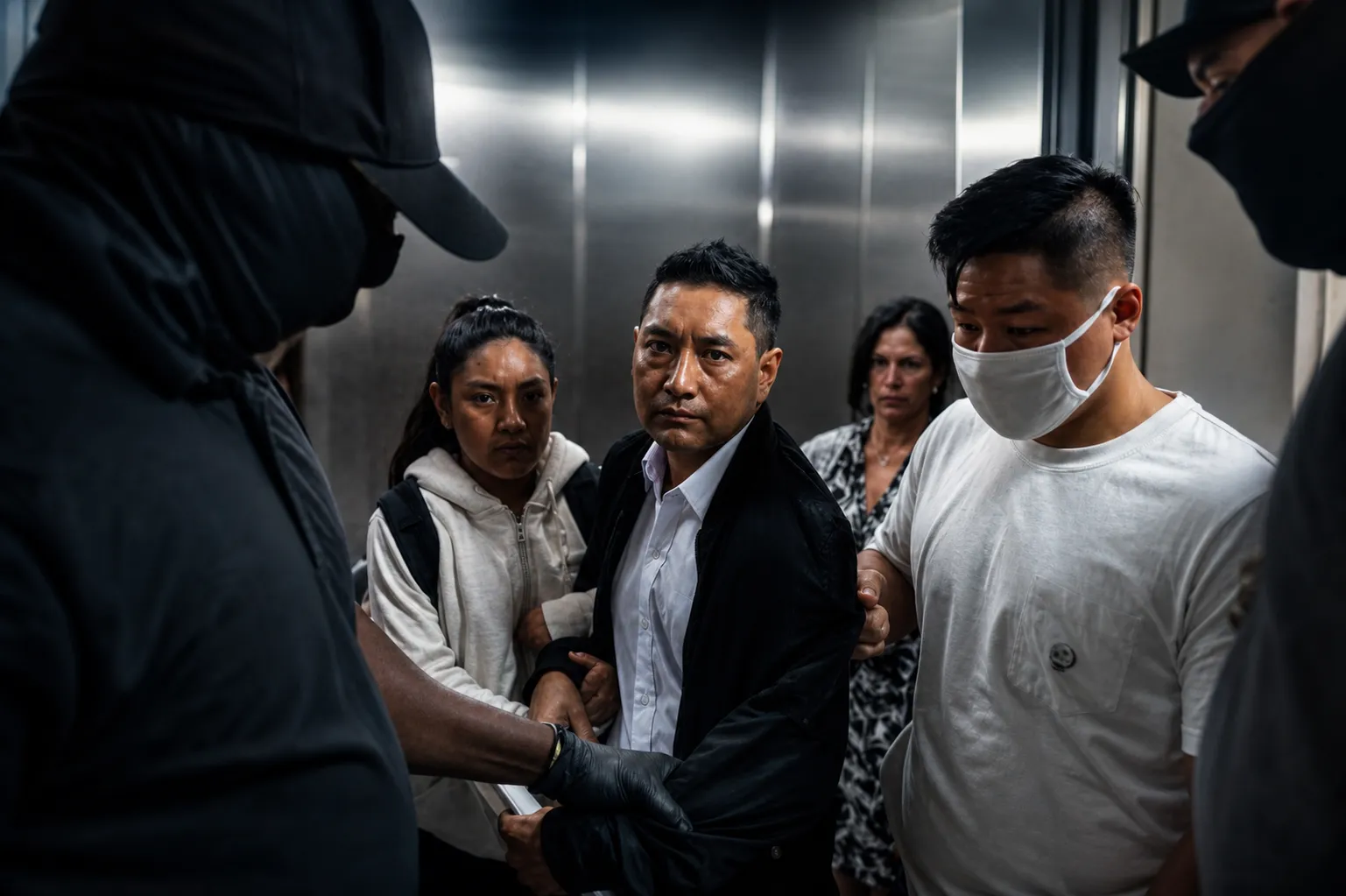
After Trump took office, immigration hearings around the country increasingly ended with government lawyers dismissing cases, a move that then allowed plainclothes agents waiting in courthouse hallways to make arrests in coordination with Department of Homeland Security attorneys.
Pitts, an appointee of President Joe Biden, also criticized the government for the way the arrests were carried out and said some detainees were kept in nearby holding cells beyond the 12-hour limit that had applied under earlier policy.