

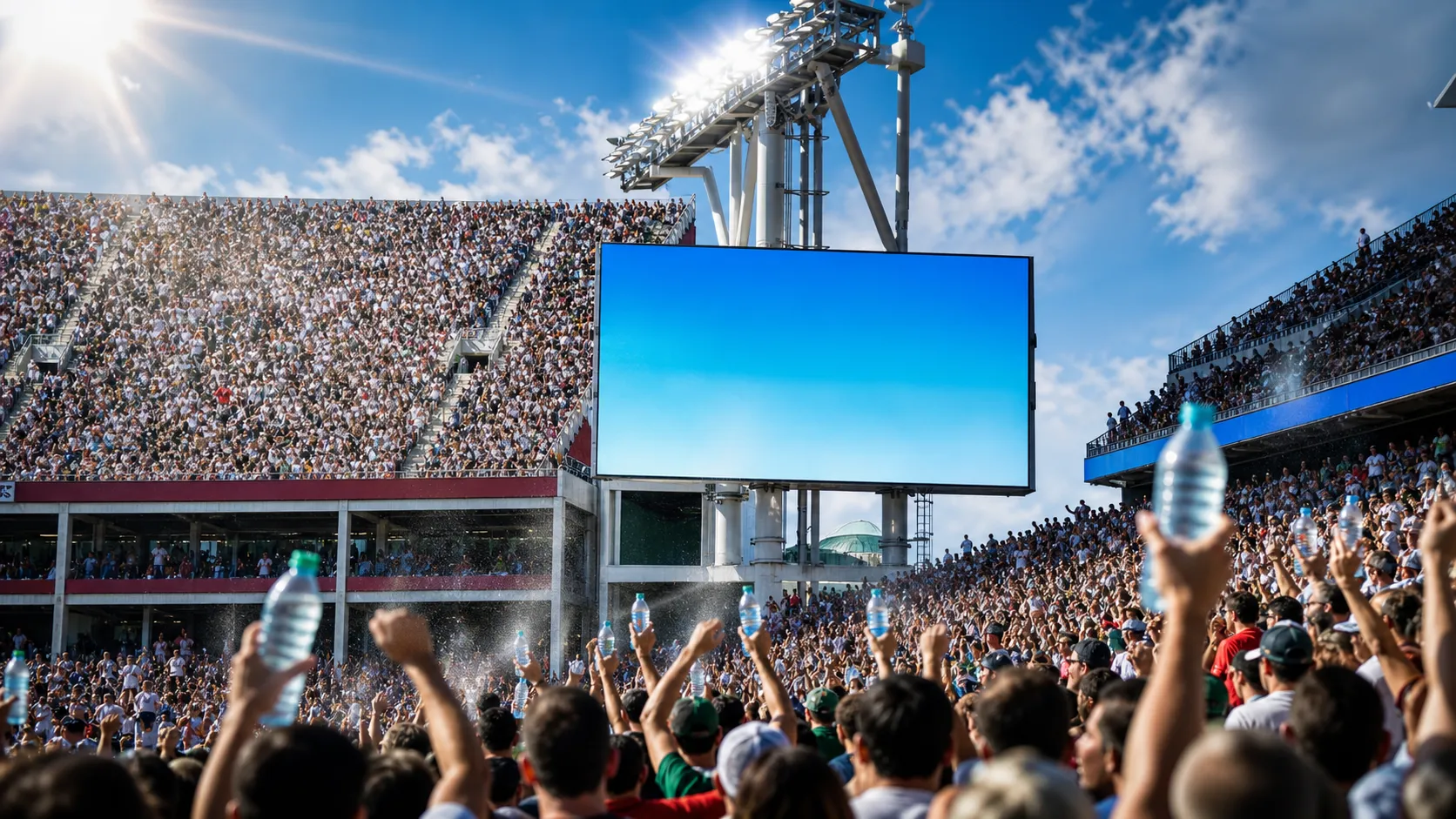
FIFA has defended the use of mandatory hydration breaks at the 2026 World Cup, saying they are about player welfare rather than money, even as some fans continue to boo the stoppages in stadiums.
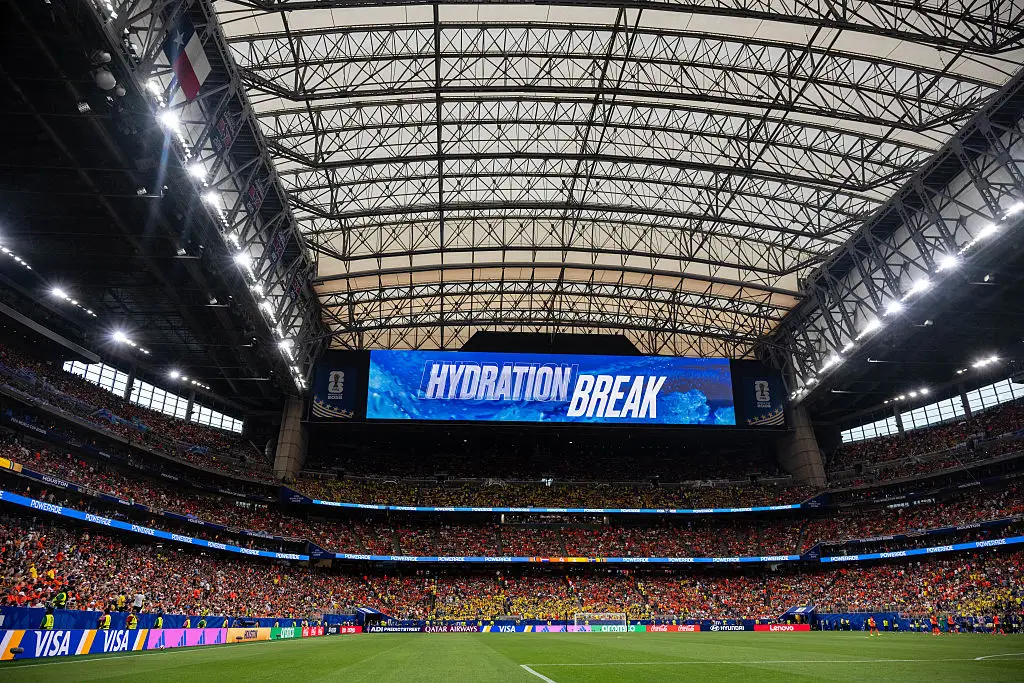
The three-minute pauses are being used in both halves of every match, regardless of venue or weather conditions, after FIFA said the tournament’s schedule and venues made a standardized approach necessary.
Supporters have already shown their frustration at several games, with boos heard when referees signal for the breaks, while coaches have warned that the interruptions can disrupt rhythm and momentum.
England boss Thomas Tuchel is among those to have said the stoppages make it more difficult for players to “build momentum”.
Inside stadiums, some fans have responded by booing when referees call for the breaks, and attention has now turned to what broadcasters may be earning during those short intervals.
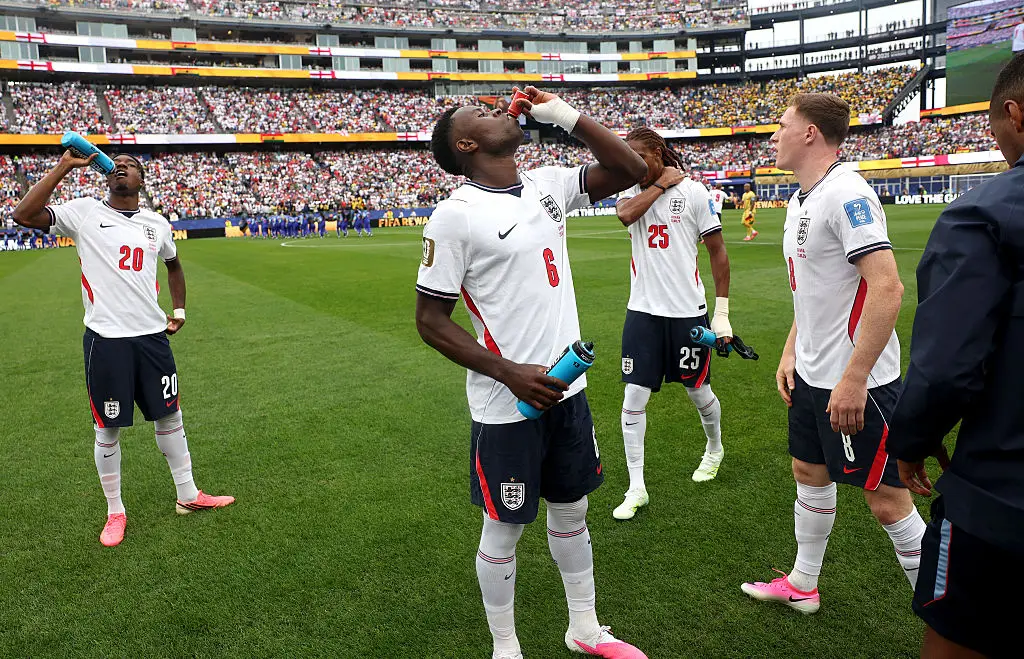
In the UK, ITV and the BBC have used the breaks for studio analysis, but in some other countries the stoppages have been used as ad inventory, creating a new commercial opening during live play.
FIFA announced the policy in advance of the tournament, saying the breaks would be imposed in every match to ensure equal conditions for all teams, with no temperature threshold required.
In a statement, FIFA president Gianni Infantino said:
“This is not a financial issue for us. For us, it is purely a sporting matter.
“The main reason is the heat, but we also have to understand that in a competition like the World Cup, played over 39 days, with teams potentially playing eight matches in those 39 days, having a moment to rest is extremely important.”
He added:
“We want to ensure equal conditions for everyone and that’s why these breaks are implemented in every match.”
The 2026 tournament has also arrived alongside a fresh set of IFAB law changes designed to reduce time-wasting and speed up restarts.
Under the updated laws, a substituted player must leave the field within 10 seconds of the substitution being signalled, and if they do not, the substitute must wait until the first stoppage after one minute has elapsed following the restart.
Referees can also use a five-second visual countdown if a team is delaying a throw-in or goal kick. If the countdown expires, possession changes: the throw-in goes to the opposition, or a corner is awarded instead of the goal kick.
Any injured outfield player who needs treatment on the pitch must leave the field and remain off for one minute after play restarts, although there are exceptions for situations covered by the Laws of the Game that do not require an injured player to leave.
VAR has also been expanded. It can now be used for clearly incorrect second yellow cards, mistaken identity involving cards, and, in some competitions, clearly wrongly awarded corner kicks if the mistake can be corrected immediately without delaying the restart.