

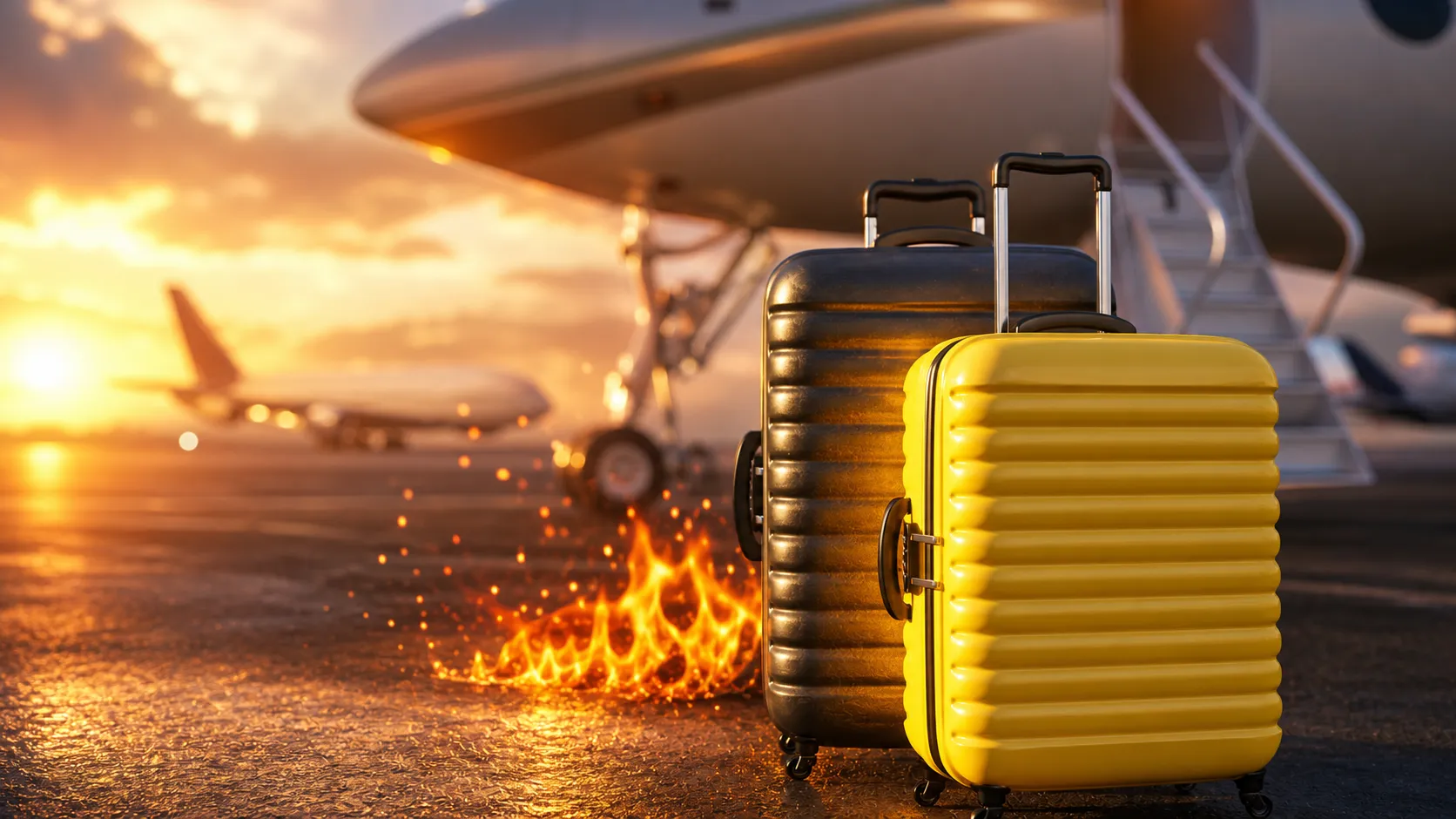
Air safety officials have issued a fresh alert for summer passengers after new figures suggested that more than 100 million rechargeable lithium batteries are being packed the wrong way each year, creating a serious fire hazard on commercial flights.
With the busiest holiday travel period approaching, the UK Civil Aviation Authority has launched its latest battery-safety push, “Batteries are included,” to remind passengers and businesses that lithium batteries need to be packed and shipped correctly.
The regulator says the campaign is aimed not only at travellers, but also at the freight forwarders, handling agents and operators responsible for getting battery-powered goods into the air safely.
Official guidance warns that lithium batteries are generally safe when handled properly, but can overheat, catch fire or even explode if damaged, abused, poorly manufactured or packed incorrectly.
Reports linked to lithium batteries have also remained a concern in aviation safety monitoring, with the CAA highlighting incidents involving incorrectly packed, marked, labelled, misdeclared or undeclared batteries in both passenger baggage and freight.
Authorities say the amount of personal technology people now travel with has turned ordinary suitcases into a major onboard fire concern facing aviation.
On average, each passenger travels with multiple lithium-powered devices, including mobile phones, tablets, laptops, vapes and power banks, meaning a large aircraft can be carrying thousands of batteries on a single journey.
We’ve launched a campaign highlighting the threat posed by over 100 million incorrectly packed batteries.
Power banks and vapes must be taken with you into the cabin.
Packing them incorrectly risks delays, or worse, an in-flight fire. pic.twitter.com/2aeo2MZyFf
— UK Civil Aviation Authority (@UK_CAA) June 26, 2026
Although air travel remains one of the safest ways to cover long distances, the growing number of power banks, e-cigarettes and other battery-powered items being carried by passengers has created a major challenge for cabin crews and airlines.
When a lithium-ion battery is damaged, short-circuits, or becomes too hot, it can quickly enter a dangerous condition known as “thermal runaway.”
In that state, the battery can produce extreme heat in a matter of seconds, reaching temperatures above 600°C, while also releasing toxic and flammable gases that may ignite nearby batteries in a rapid chain reaction.
“Rechargeable lithium batteries, such as power banks and vapes, can bring a fire risk that could be completely uncontrollable if packed away inside checked baggage,” safety experts warned in the campaign launch.
If one of these devices catches fire in the cabin, crew members can respond straight away using specialist firefighting and containment equipment.
But when a power bank or vape ignites inside checked luggage in the cargo hold, the fire may burn unnoticed among clothes and other combustible materials, making it much more difficult for onboard suppression systems to control.

The CAA says passengers should never put spare lithium batteries or power banks in checked baggage, and should carry spares in their hand luggage instead. It also advises travelers to protect battery terminals from short-circuiting and to follow airline-specific limits on power banks and larger battery packs.
Current UK guidance says power banks are for cabin baggage only, and batteries or devices with lithium cells should be packed carefully to prevent accidental activation or damage. Airlines may also impose extra restrictions, so passengers are being told to check the rules before they fly.
Officials are urging travelers to follow packing rules carefully this summer to avoid confiscated bags, disruption at airports, and potentially dangerous incidents in the air.
“The best outcome is always prevention, which starts when passengers pack their bags,” industry heads emphasized, urging every holidaymaker to double-check their zippers before heading to the terminal.