

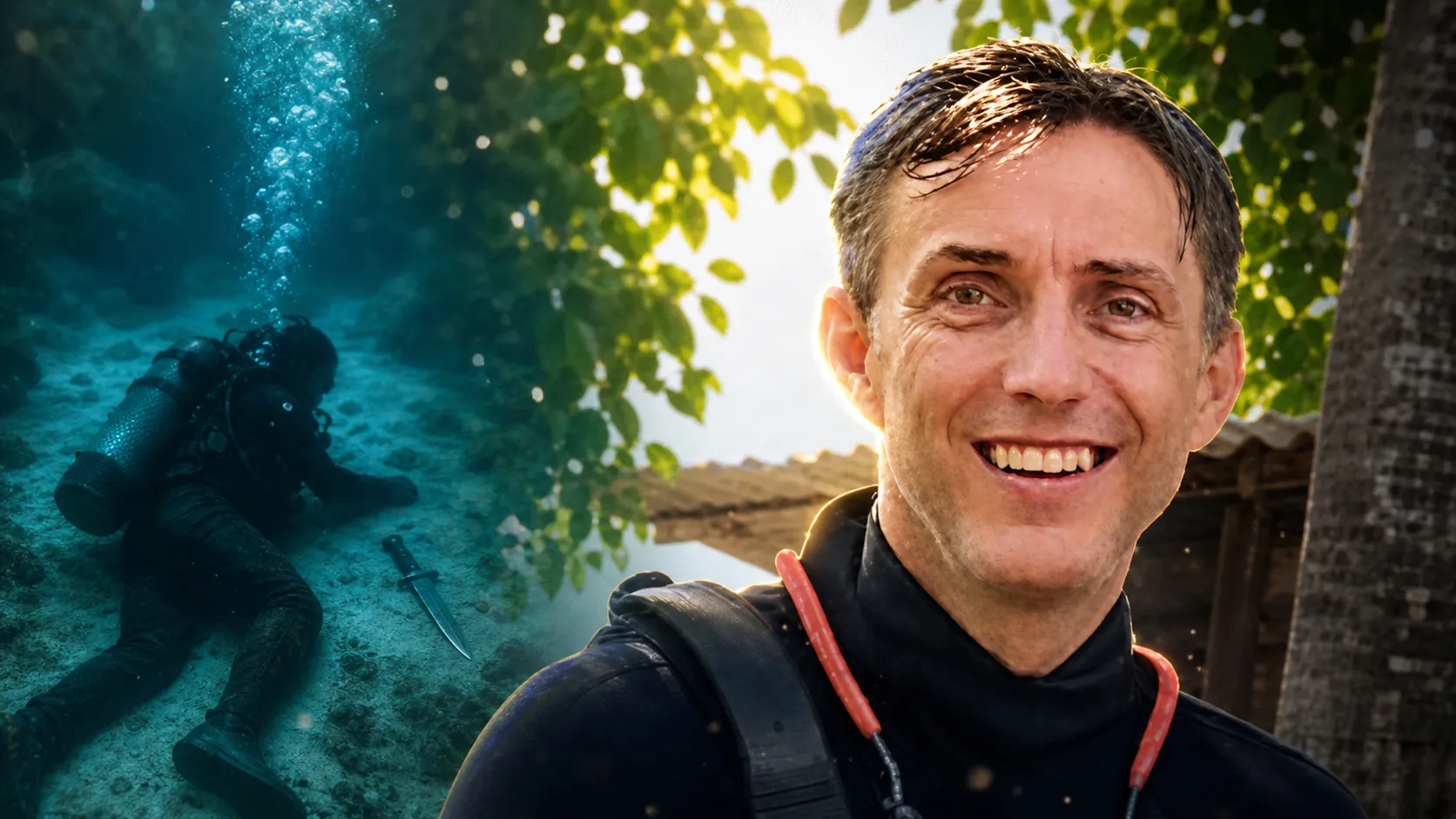
Dan Frolec expected a diving break in Croatia with friends to be an unforgettable adventure. Instead, it became the start of a nightmare that left him in a foreign jail under suspicion of murder and facing a possible 40-year sentence.
The chain of events began with a rough circle sketched onto a nautical map.
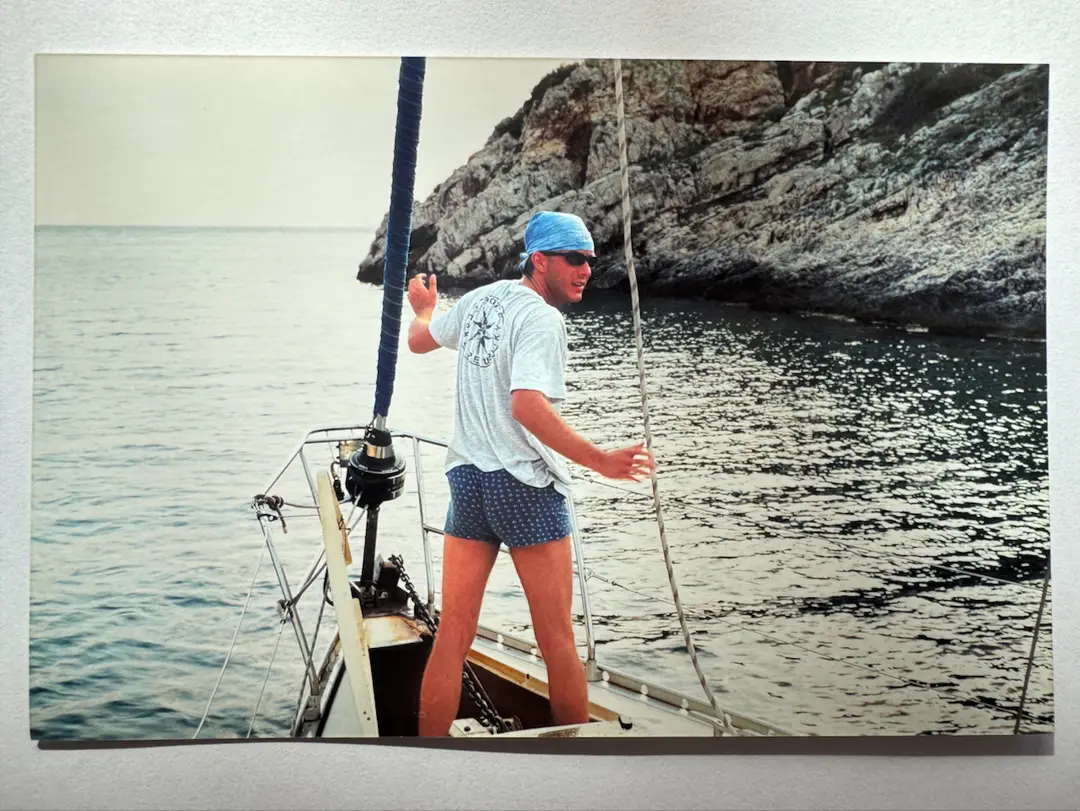
In 2002, Dan was sailing and diving around Croatia with fellow members of his Prague diving club when the boat’s captain drew attention to a strange mark on the chart. It highlighted an isolated, uninhabited cove called Poganica, on the island of Šolta, where he had recently noticed an opening in the seabed measuring roughly two by three metres at a depth of about ten metres. No one knew what it led to.
“We got all excited.”
The group headed to the bay, ate, and chose to spend the afternoon investigating the site underwater.
Four divers entered the water to take a closer look. Another member of the group, Michael, stayed on the surface at first, snorkelling nearby. Dan described him as a reserved man with a dry sense of humor. About 10 minutes later, Michael returned to the boat enthusiastic about what he had seen: the hole appeared to open into a cave. The others were still underwater, so he picked up a torch and air tank and went back in after them.
No one aboard had any reason to think that decision would end in disaster.
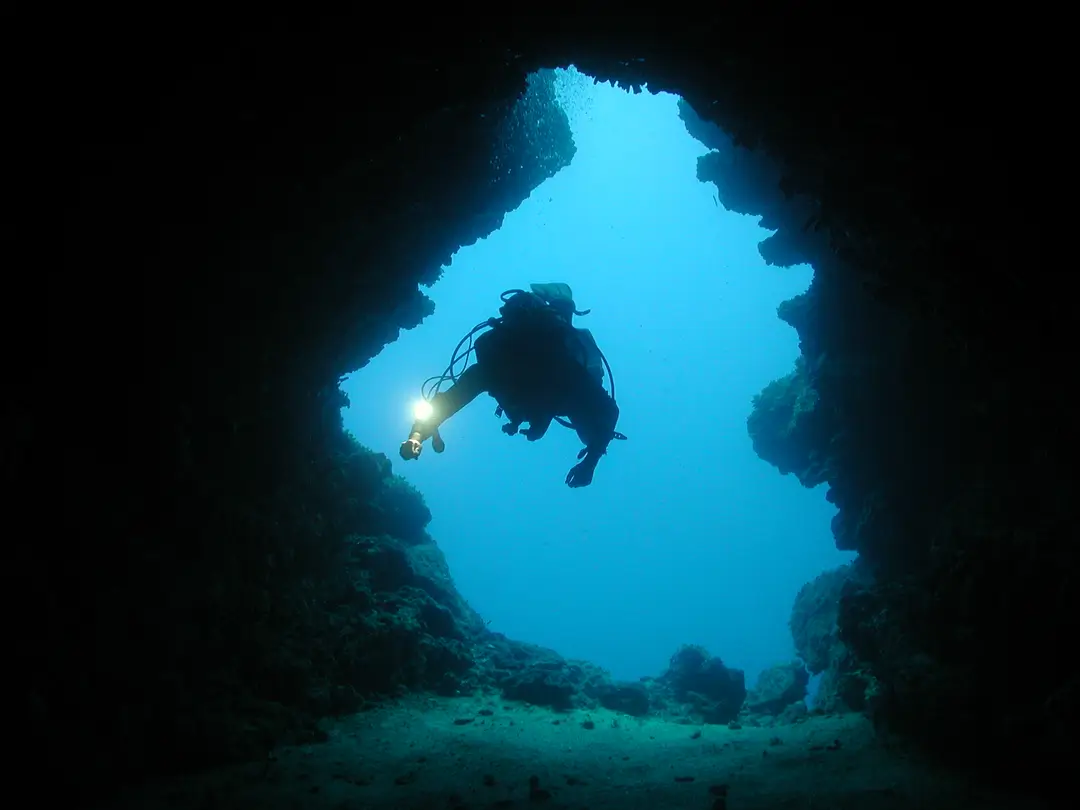
The problem was that their timing was just slightly off. When the four divers surfaced about 40 minutes later, they explained that the cave system was far too dangerous to explore with the equipment they had. Inside was a vertical shaft dropping to 22 metres, which then opened into two large chambers extending beyond 50 metres.
Tom, the club’s cave diving instructor, had decided they needed to turn back immediately. It was not somewhere to continue without specialist training and gear.
Dan then asked where Michael was. None of the others had seen him.
Later, the group worked out what had likely happened. Michael had arrived at the cave entrance only four minutes after the others had already begun leaving. He probably assumed they were still inside and continued alone, carrying only a basic torch, no guide rope, and enough air for around an hour.
Dan and Tom put their equipment back on and returned to the cave to search for him.
Dan remained at the entrance in darkness for what he would later call “the longest 40 minutes of my life,” staring up at the faint light from the surface while Tom searched deeper within the system. Tom eventually came back on his own.
Dan called out: “If there is any divinity, Michael needs your help.”
There was no reply.
The coastguard said they would not be able to reach the group until the following morning, leaving everyone to spend the night awake and anchored in the bay.
When Croatian officials arrived the next day, they brought a commander, a captain, and two navy divers. Tom warned them straight away that the scuba equipment they had was unsuitable for cave diving. He explained that cave conditions demand a very different setup: twin tanks, duplicate computers, specialist lighting, and a guide rope to navigate through the silt and darkness.
The warning was ignored, and the divers went in anyway. Only one of them made it back out.
“It was so sad,” Dan says. “The Croatian diver had two kids. Completely avoidable.”
Now there were two dead men connected to the cave, including a navy diver.
Dan and the others were instructed to sail to Split and give statements at a police station. He assumed it was a standard part of the investigation. In his mind, they were simply witnesses to a tragic accident.
That assumption did not last long.
After spending a night sleeping on the floor of the station, Dan and his friend Ivo were separated from the others. The atmosphere had changed dramatically. Both men were connected to a polygraph machine.
At first, the questions seemed ordinary. Then they took a shocking turn: did they know how Michael had died, did they know he had been stabbed, was it their knife, and had they killed him?
“We were like, what the hell is going on?” Dan says.
It was the first time they had even learned Michael’s body had been recovered, and suddenly the police were suggesting he had died from a knife wound.
Investigators took blood samples and clipped their fingernails. A state prosecutor then informed Dan and Ivo that they were suspects in Michael’s murder. Dan did not pass the polygraph, something he attributed to being terrified and under immense pressure. Both men were handcuffed, taken before a judge, and sent to jail while the investigation continued. Under Croatian law, suspects could be held for as long as six months without being formally charged.
“I faced 40 years in prison,” Dan says. “It was a very strange and frightening feeling. I had to convince myself that this option was not on the cards.”
Back home, the news hit hard. Dan’s girlfriend, Jarka, had only recently started dating him when she received a call from the Czech consul saying he had been arrested on suspicion of murder. She immediately went to tell his parents, despite never having met them before. Before she could even finish arriving at their home, Dan’s image had already appeared on the evening news.
Inside the jail, things got even worse when the next day’s newspaper arrived. Dan and Ivo were featured prominently on the front page, identified by name and accused of killing their friend. Local reporting pushed a sensational theory that the group had been involved in a gay love triangle and that Michael’s death was the result of a relationship dispute.
“We were not gay. I mean, there’s nothing wrong with that. But we were not gay,” Dan says. “And also, that was the only motive they came up with. Why would we? We were just a group of friends.”
Dan later came to believe the murder allegation also served another purpose: it diverted attention away from questions about how the authorities had handled the cave search and the death of their own diver.
“If there was somebody accused of murder, that kind of turns the situation,” he says. “Otherwise it’s a tragic accident and what else can be done?”
What eventually led to his release was careful, detailed forensic evidence. A new lawyer built a case showing that the version of events proposed by police did not fit the physical facts.
One key point involved Michael’s eardrums, which were still intact. Had his body been taken underwater after death, the pressure changes would have caused them to rupture because a dead diver cannot equalize. Michael’s dive computer data was also crucial, as it recorded his movements and indicated that he had been alive inside the cave, apparently searching for an exit, for about 40 minutes before he ran out of air.
In the end, the judge accepted that Michael had most likely used his own knife during his final moments of panic and suffocation.
After five weeks in custody, Dan and Ivo were freed. The Croatian government issued an apology, and the case never reached trial.
Dan now lives in Bali with Jarka, who later became his wife, and their two children. Diving remains part of his life. Both of his children dive as well. In fact, after everything that happened, he went to Florida to qualify in cave diving because he could not shake the helplessness he had felt while waiting outside that cave as Tom searched alone.
Even so, he no longer actually dives in caves. He says having children changed that calculation.
He also turned the experience into a book. During his imprisonment, he kept a journal in a children’s notebook featuring Cinderella on the cover. For years, the story stayed largely within that notebook and among friends who kept telling him it sounded like a film. After years of hesitation, he began writing the book in 2023, and The Cave: The True Story of Two Mysterious Deaths in an Underwater Labyrinth was launched in January 2026.

“I found out that we cannot always influence what happens to us,” he says. “But how we manage our mind, how we deal with our emotions, that is actually under our control. I couldn’t leave the cell. I was facing 40 years. But I could still look outside and see the blue sky and be happy about it.”
Michael was an only child, and Dan says that fact has stayed with him. While others eventually continued with their lives, Michael’s mother endured a permanent loss.
“For all of us, life moved on,” he says. “But for her, life changed forever.”
Dan Frolec’s book about the ordeal is available now by clicking here.