


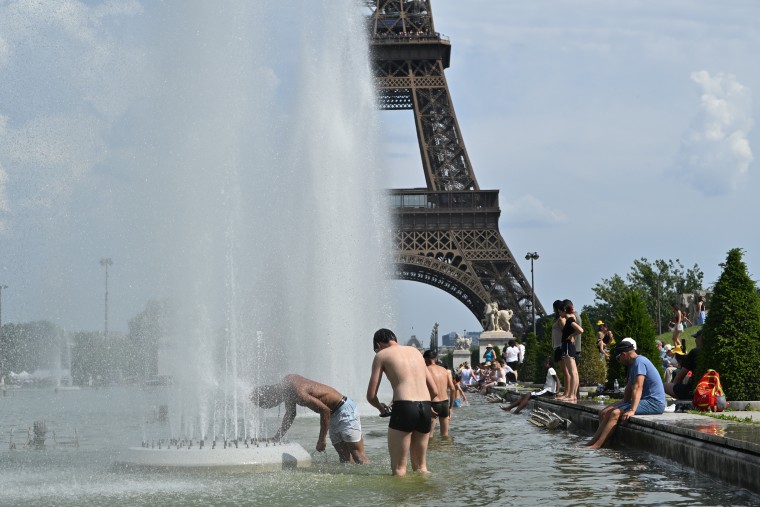
France recorded approximately 1,000 additional deaths during a record-breaking heatwave that baked western Europe last week, its public health agency announced Sunday. The deaths far exceeded the nation’s typical mortality rate, representing a stark toll from extreme temperatures that shattered long-standing records across the continent.
Public Health France said the excess deaths occurred since June 24, when the country experienced some of its most severe heat conditions. The agency cautioned that the figure was preliminary and likely to rise as more information became available about deaths occurring at home and in residential care facilities. Comparing typical mortality rates from April and May, when France averaged 900 to 1,000 deaths per day, the spike during the three-day peak of the heatwave was severe. There were more than 1,200 deaths on Wednesday, escalating to more than 1,400 deaths each on Thursday and Friday.
The mortality toll was most acute in areas placed under red heat alerts, particularly the Île-de-France region encompassing Paris and its suburbs. The increased deaths were concentrated among vulnerable populations, with 85 percent of the fatalities involving people aged 65 and above. The surge was especially pronounced in deaths occurring at home rather than in hospitals, highlighting how the heat trapped residents in poorly air-conditioned buildings, a widespread condition across Europe where centralized residential cooling remains uncommon.
Across all of Europe, the death toll was even more severe. The World Health Organization reported Sunday that more than 1,300 excess deaths had been recorded since June 21, when the record-breaking heatwave began its assault on the continent. WHO Director-General Tedros Adhanom Ghebreyesus warned that heat stress is often called the “silent killer,” stressing that European homes, workplaces and schools were fundamentally not built to withstand such extreme temperatures.
The extreme temperatures set numerous records across the continent. France recorded its hottest day ever on June 24, when the national average temperature reached 30 degrees Celsius (86 degrees Fahrenheit), surpassing previous records set in July 2019 and August 2003. The southwestern town of Pissos recorded temperatures of 44.3 degrees Celsius (111.7 degrees Fahrenheit), while Paris hit 40.9 degrees Celsius in a record high for the capital. The United Kingdom recorded its hottest June day on record, with temperatures reaching 37.3 degrees Celsius (101 degrees Fahrenheit) in Suffolk. Germany set new nighttime temperature records, with the village of Kubschütz in eastern Saxony recording temperatures that did not drop below 29.4 degrees Celsius (84.9 degrees Fahrenheit).

The extreme heat was driven by a powerful high-pressure system known as a heat dome, which trapped stagnant, dry Saharan air over western Europe and created what meteorologists described as an Omega block—a weather pattern that locks extreme heat in place for extended periods. Temperatures in affected regions climbed 5 to 12 degrees Celsius above seasonal averages, an extraordinary departure from normal June conditions.
The impact extended far beyond health statistics. The heatwave disrupted schools, with thousands of institutions across France and Britain closing or modifying schedules. Iconic attractions in Paris, including the Eiffel Tower and the Louvre museum, restricted visiting hours or closed early. Rail services were curtailed or cancelled across multiple countries as heat caused rail warping and track damage. In France, nuclear power plants reduced output by approximately 7 percent of total demand as high water temperatures limited cooling capacity. Power outages struck thousands of homes in northern France, while demand for electricity surged as residents sought relief through air conditioning.
The crisis also saw unusual consequences. A professional soccer player, Ligue 2 footballer Kenzo Kies, aged 21, drowned in the Rhône River while seeking relief from the heat. Dozens of people drowned in French waterways over the week as citizens, warned not to swim in unsupervised areas, nonetheless sought refuge in rivers and lakes. In Spain, more than 400 deaths may have been linked to temperature between June 24 and 27, according to the country’s Daily Mortality Monitoring System.
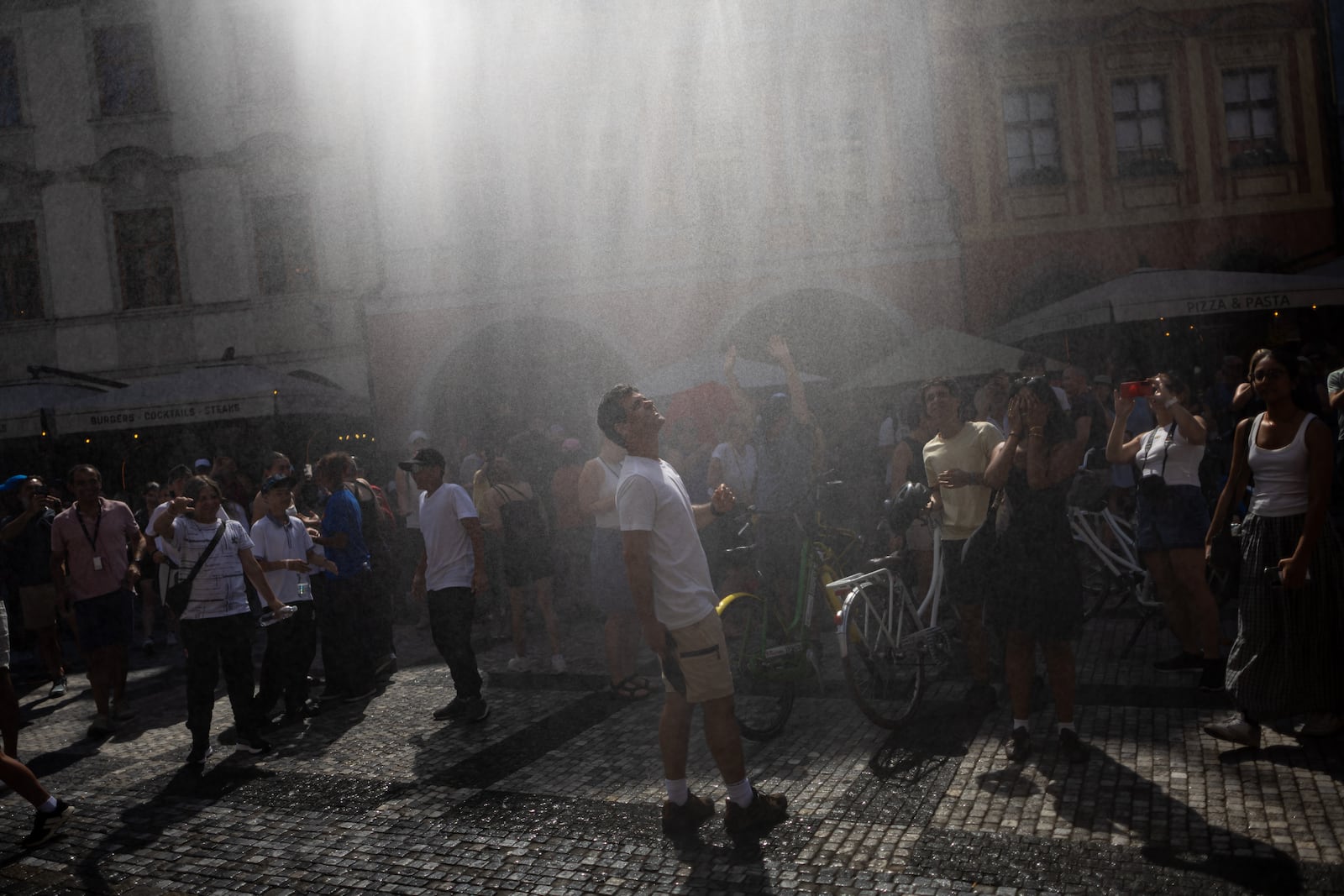
Scientists attributed the severity of this heatwave to human-induced climate change. A study from the World Weather Attribution collaboration found that the extreme heat and humidity would have been virtually impossible 50 years ago and is now 200 times more likely than it would have been just 20 years ago. The analysis stressed that climate change is the primary driver, making what was once a once-in-a-generation event increasingly common. Europe is warming at roughly twice the global average rate, making it the world’s fastest-warming continent.
Authorities across Europe took emergency measures to protect citizens. Paris banned alcohol consumption in public in certain zones to reduce strain on emergency services. Cooling shelters were established in multiple cities. Some construction companies adjusted work hours to avoid peak heat periods, while farmers introduced night shifts for harvesting to protect both workers and fields from fire risk.
The WHO chief warned that the phenomenon of once-in-a-generation heatwaves is now occurring nearly every year across Europe. He called on European nations to implement heat health action plans focused on preparedness, prevention and stronger health system responses as climate change continues to make such events more frequent and intense.