

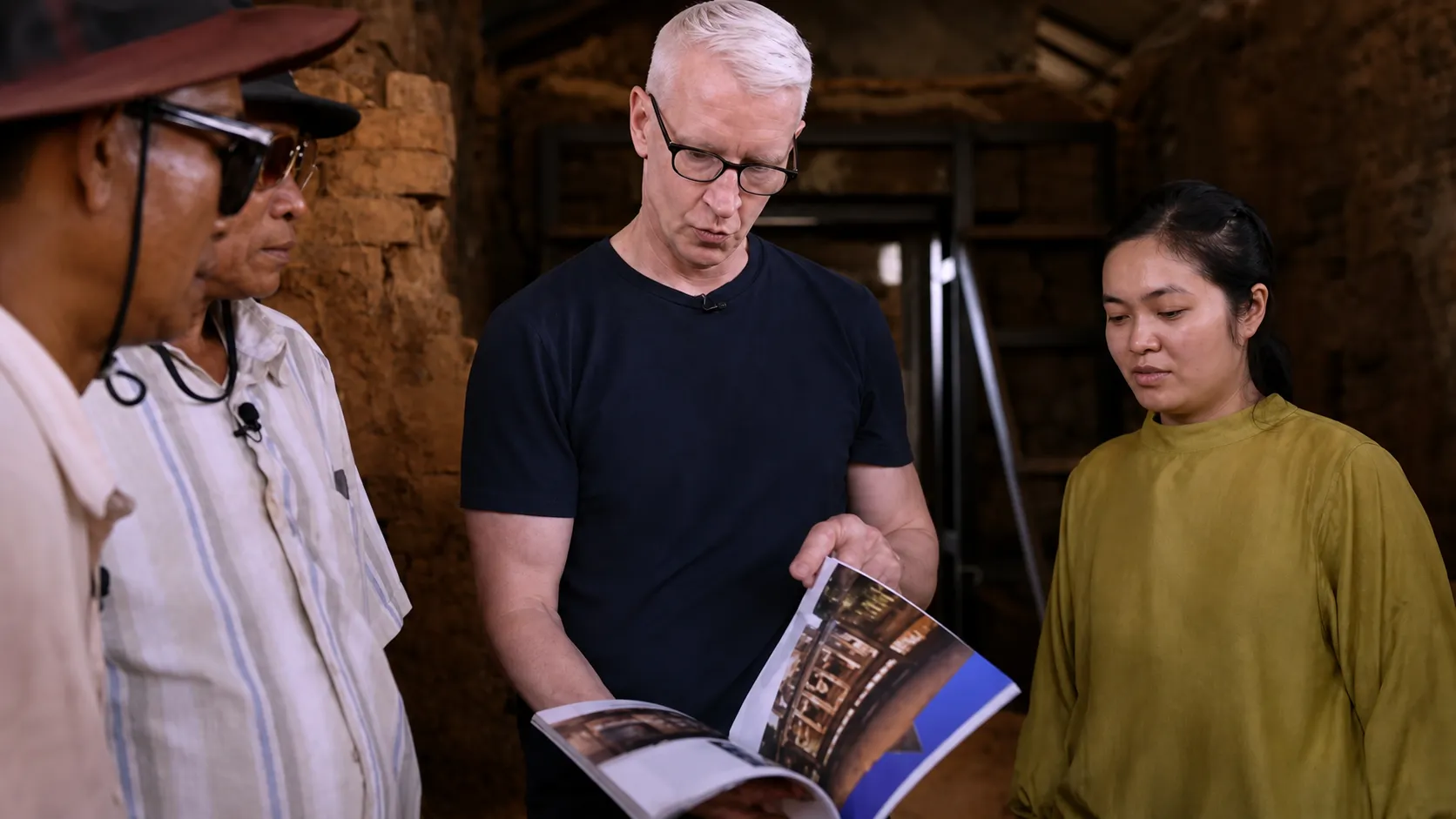
A recent episode of CBS’ 60 Minutes revisited the long-running effort to identify, recover, and repatriate Khmer antiquities looted from Cambodia, including sacred artifacts that former Cambodian looters recognized in a 2008 issue of Architectural Digest and said they had taken part in stealing.
The large-scale plundering of Cambodian art from ancient temple sites has long been described as one of the biggest cultural theft operations ever uncovered. The looting stretched across decades, with activity especially severe during the years of war, instability, and weak border controls from the 1970s through the 1990s.
Investigators and Cambodian officials say British dealer Douglas Latchford played a central role in that trade, moving stone, bronze, and gold treasures into private collections and museums while also retaining some pieces himself. Latchford was indicted in 2019 on charges including wire fraud conspiracy, smuggling, and trafficking looted Cambodian antiquities. He died in 2020 before the case could go to trial.
Since then, Cambodia has continued to recover major pieces tied to the illicit trade. In recent years, dozens of antiquities linked to Latchford and other traffickers have been returned from the United States, the United Kingdom, and museums and collectors abroad, including large repatriations in 2023, 2024, and 2026.
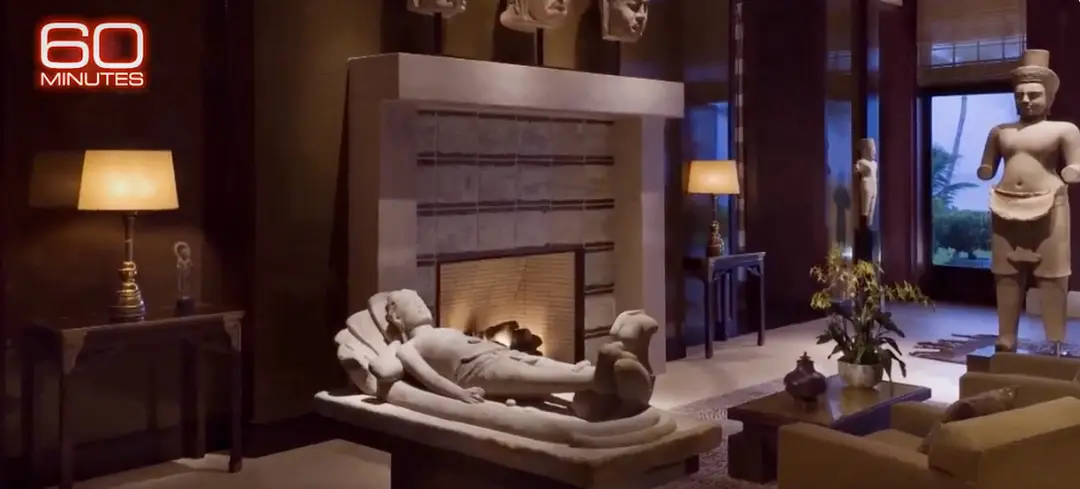
Among the objects later traced were Cambodian antiquities found inside a Palm Beach mansion owned by the late billionaire George Lindemann and his wife, Frayda. The collection reportedly included a statue of a mythical army commander along with several other pieces believed to have been stolen.
George Lindemann, who died in 2018, had served as CEO of Southern Union Company, a business focused on fossil fuel infrastructure and pipelines.
During the program, Brad Gordon, an American attorney working with the Cambodian government to locate missing antiquities, spoke about how open the trade once was.
“The one thing that I’m always struck by is how many people witnessed it and have been silent and continue to be silent to this day.”
According to the broadcast, the Lindemanns hosted gatherings at the property and are believed to have spent roughly $20 million assembling the collection with Latchford’s assistance. The segment also underscored how difficult the recovery effort has been, even as Cambodian officials and investigators have gradually matched objects in Western collections to temple sites and excavation records back home.
60 Minutes correspondent Anderson Cooper traveled to Koh Ker, a remote archaeological site in northern Cambodia dating back to the 10th century, where he met men who had once looted artifacts from the area.
They were then shown photographs of the Lindemanns’ home as featured in Architectural Digest, and that is when they made a startling admission.
Upon seeing an image of a reclining statue of the Hindu god Vishnu, the former looters said they had helped remove it.
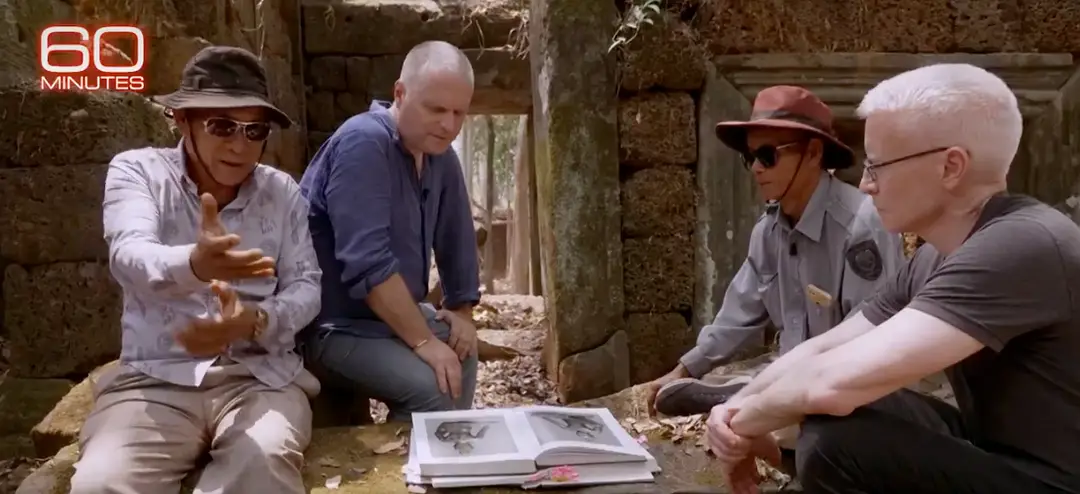
Remarkably, the statue had been unearthed from the very ground where they were standing, around 30 years earlier.
As the segment continued, the men also pointed out other statues and artifacts they said they had stolen after being shown books published by Latchford. One of those pieces was the Bodhisattva at Ease, which they said they located using metal detectors.
The latest repatriations have strengthened the Cambodian government’s case that more objects remain hidden in plain sight in museums, galleries, and private homes. Officials say the ongoing work is not only about returning art, but also about restoring historical memory and repairing damage caused by decades of looting tied to war, poverty, and the international antiquities market.
Frayda Lindemann did not agree to an interview with the program.
Latchford was indicted in 2019 on charges that included wire fraud conspiracy, smuggling, and trafficking looted Cambodian antiquities. He died the following year before the case could go to trial.