

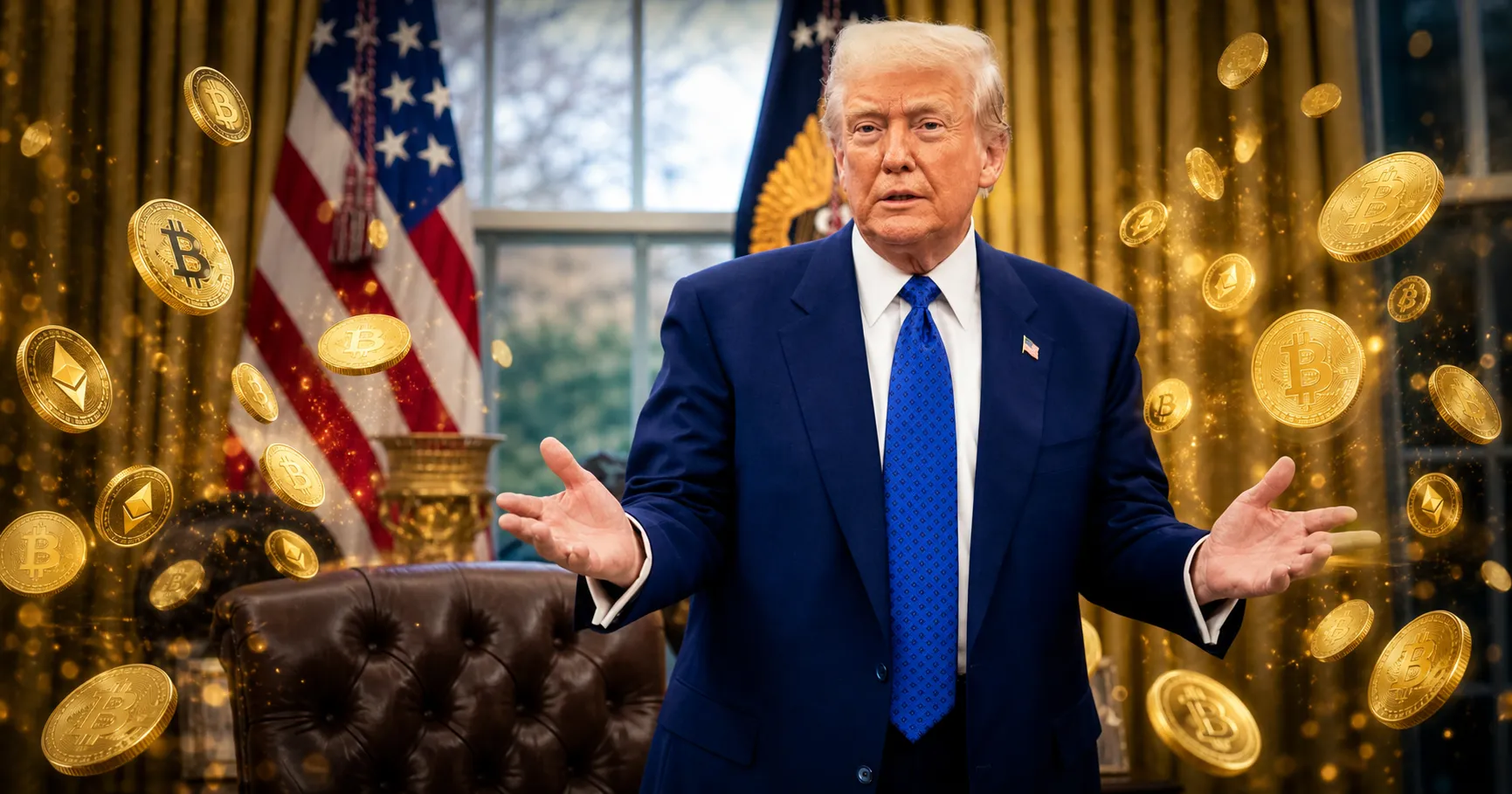
President Donald Trump took in nearly $1.2 billion from his crypto businesses during 2025, according to a federal financial disclosure filed Monday, showcasing how rapidly his digital asset ventures have eclipsed much of his traditional real estate empire that took decades to build.
The filing reveals that more than $500 million of that amount came from World Liberty Financial, the decentralized finance company that Trump and his sons co-founded, which sells governance tokens and operates a stablecoin. Another $635 million came from royalties tied to the $TRUMP meme coin, which the president launched just days before his second inauguration in January. The remainder came from various other crypto-related transactions and equity sales.
What makes this income surge particularly striking is its timing. These ventures were mere startups when Trump took the oath of office for his second term. The new enterprises have now generated more revenue than much of his vast property portfolio that accumulated over decades. For perspective, Trump’s golf courses, membership clubs, and hotels brought in approximately $290 million in the same period, significantly less than his crypto earnings.
The rise of Trump’s crypto empire was fueled by major investments from billionaire crypto investors and Trump’s own regulatory moves since returning to office. The president has moved swiftly to dismantle federal crypto enforcement, taking actions that have directly benefited the industry while boosting his own ventures.
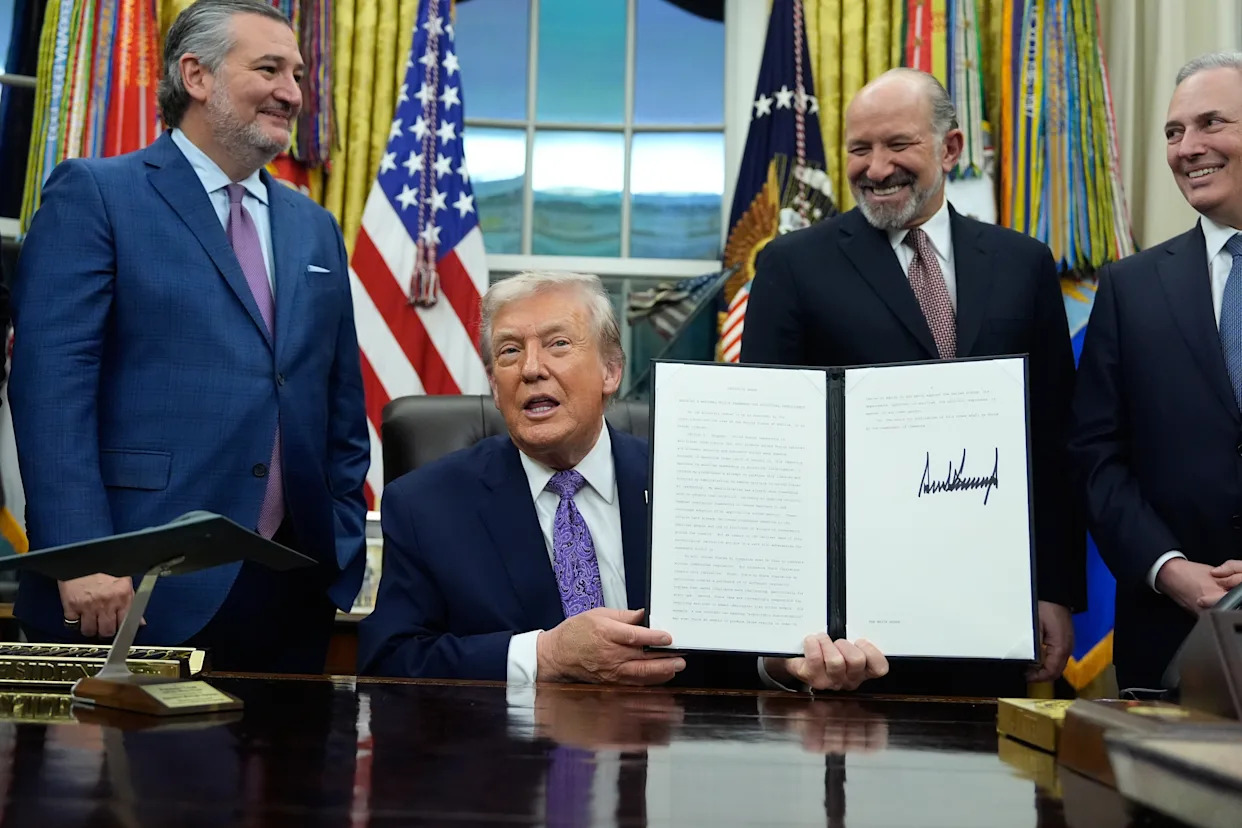
In April, the Trump administration disbanded the National Cryptocurrency Enforcement Team, which had been established to combat illicit uses of digital currencies. The Justice Department instructed prosecutors to cease crypto enforcement efforts, pivoting instead to focus on terrorism and fraud. The Securities and Exchange Commission, meanwhile, has terminated approximately 60 percent of its cryptocurrency-related enforcement actions since January, dismissing high-profile cases against major exchanges including Coinbase and Binance.
These regulatory reversals have extended beyond enforcement. The administration has allowed major crypto firms to skirt state regulators through special federal banking licenses. Federal authorities have granted some crypto companies slimmed-down national banking charters that come with minimal oversight and immunity against a wide range of state regulatory actions—a move that shocked state regulators accustomed to their traditional oversight role.
World Liberty Financial, co-founded with Trump’s sons Eric and Donald Jr., has become the centerpiece of the family’s crypto strategy. The company issued governance tokens that promised holders a stake in the platform’s future, though they carry no guaranteed profit share. Trump personally holds approximately 15.75 billion of these governance tokens and receives 75 percent of net revenue from token sales. A major portion of World Liberty’s gains came from a 2025 deal in which the venture sold tokens to a company then known as Alt5 Sigma, providing the Trump family with roughly $500 million despite Alt5’s share price subsequently collapsing by more than 90 percent.
Foreign investment has also played a key role in fueling these ventures. Four days before Trump’s inauguration, a company controlled by Abu Dhabi’s deputy ruler purchased a 49 percent stake in World Liberty Financial, routing $187 million to Trump family entities. That same UAE entity later directed a $2 billion investment into World Liberty’s stablecoin, USD1.
Yet while Trump and his family have profited enormously, retail investors have fared far differently. Independent blockchain analysis shows that the vast majority of retail buyers who invested in Trump-linked crypto projects have suffered significant losses. According to multiple analyses, approximately one million retail investors lost a combined $2.3 billion on Trump-related crypto ventures, while the Trump family profited by the same amount.
The $TRUMP meme coin illustrates the lopsided nature of the outcomes. While Trump received $635 million in royalties from the coin, roughly 80 percent of the token supply remains held by Trump-aligned entities under a multi-year vesting schedule. The coin surged to a peak above $72 shortly after launch but has since declined more than 96 percent from that all-time high. Most retail investors who bought after the peak have been unable to escape their positions, as trading restrictions have limited their ability to sell.
Bloomberg analysis found that 58 wallets made more than $10 million in profits from $TRUMP—totaling roughly $1.1 billion in gains—while approximately 764,000 wallets lost money. Among the early winners were politically connected insiders and crypto industry leaders who were able to sell before the price collapsed.
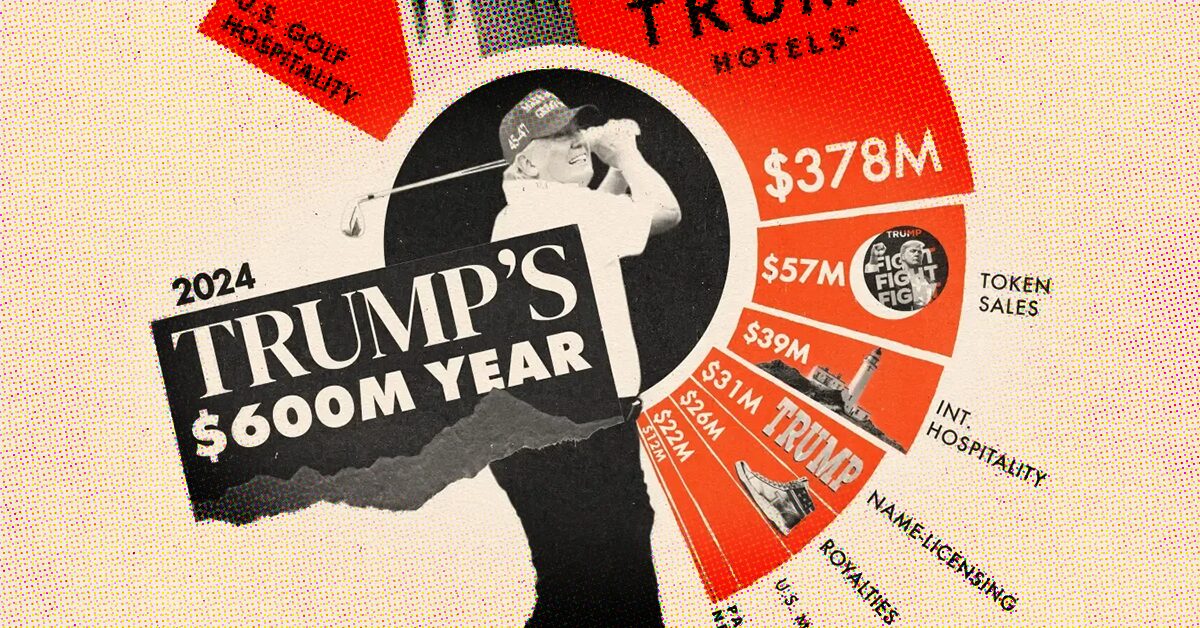
The scale of Trump’s disclosed crypto income has triggered fresh scrutiny from ethics watchdogs and Democrats over potential conflicts of interest. Critics have raised concerns that Trump is using his presidential powers to enrich himself and his family through ventures directly linked to his personal financial interests. The administration maintains that Trump’s assets are managed through a trust overseen by his son Donald Trump Jr., with a spokeswoman stating there are “no conflicts of interest.”
Yet the timing and trajectory of Trump’s crypto enterprises suggest deep entanglement between policy and profit. The president has been explicit about his pro-crypto agenda, signing an executive order in January 2025 to establish a Strategic Bitcoin Reserve and a U.S. Digital Asset Stockpile. He appointed a White House AI and Crypto Czar tasked with advancing digital asset policies. These moves have coincided with a dramatic reversal in how the federal government treats the crypto industry—shifting from enforcement-focused regulation to an industry-friendly approach that has directly benefited Trump’s own investments.
Broader crypto ventures linked to the Trump orbit have aggregated more than $2.3 billion in profits, according to recent analyses. The meme coin represents roughly a quarter of that total. Beyond the newly launched meme coins and World Liberty Financial, the Trump family has also invested in companies like American Bitcoin, a family-backed mining venture.
The financial disclosure report itself totals 927 pages and provides rare insight into the president’s sprawling financial empire during an election year and the early months of his return to office. The filing shows Trump’s growing pivot from traditional real estate to digital assets as a wealth-generating enterprise—a dramatic diversification that has transformed his portfolio in less than two years.