


The Supreme Court struck down longstanding federal restrictions on how much political parties can spend in coordination with federal candidates on Tuesday, delivering a significant victory to Republicans in a decision that intensifies the flow of money into American politics just months before the midterm elections.
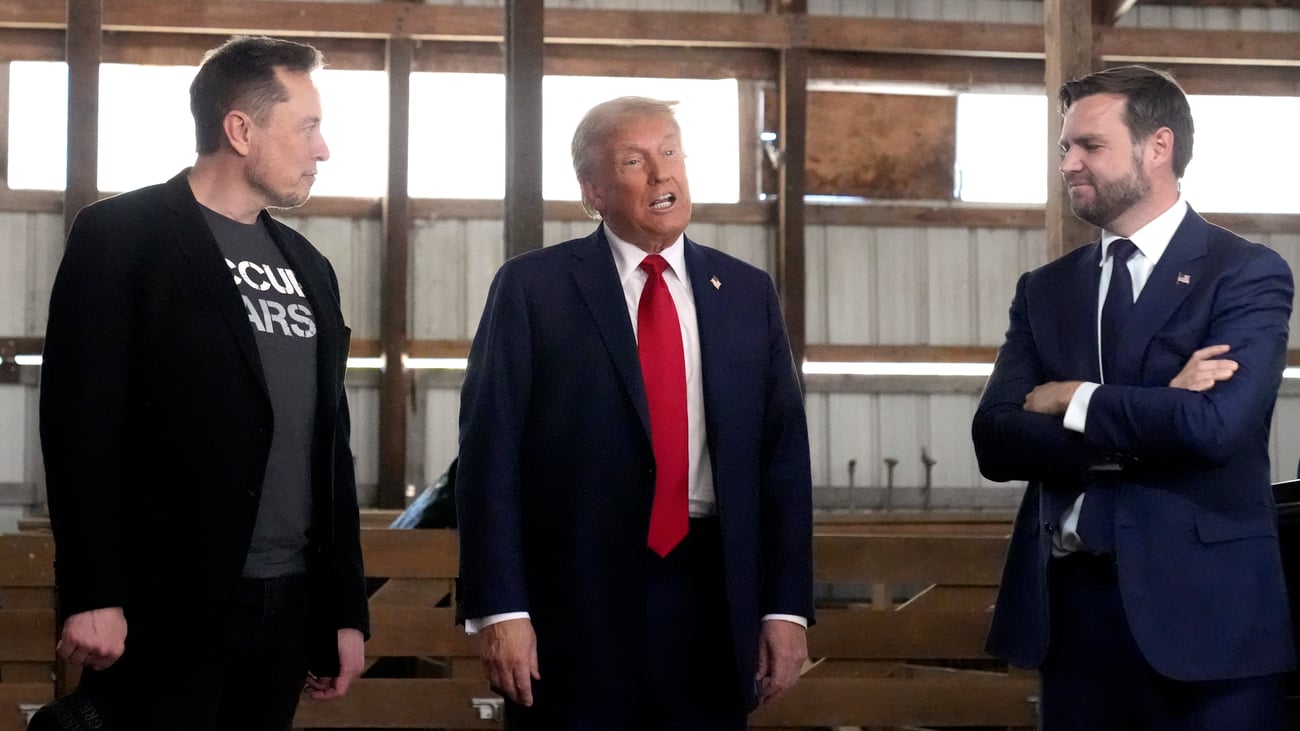
In a 6-3 decision split along ideological lines, the conservative majority ruled that caps on coordinated party expenditures violate the First Amendment’s protection of free speech. The case, National Republican Senatorial Committee v. Federal Election Commission, emerged from a 2022 lawsuit filed by then-Senate candidate JD Vance, now Vice President, along with former Representative Steve Chabot of Ohio and Republican party committees challenging restrictions that had been in place for more than 50 years.
Justice Brett Kavanaugh wrote the majority opinion, joined by Chief Justice John Roberts and Justices Clarence Thomas, Samuel Alito, Neil Gorsuch, and Amy Coney Barrett. “In short, constitutional text, history, and precedent establish that the political-party coordinated-expenditure limits violate the First Amendment,” Kavanaugh stated in the opinion. He added that the decision treats all political parties equally and allows them to participate more freely in the political process while coordinating more closely with their candidates.
The decision dismantles a cornerstone of campaign finance law enacted in the wake of the Watergate scandal. The Federal Election Campaign Act had restricted how much party committees could spend working directly with candidates, though they could make unlimited independent expenditures without coordinating with candidates. Before the ruling, party committees in the 2026 election cycle could spend between $65,300 and $130,600 in coordination with House candidates and between $130,600 and $4 million with Senate candidates, depending on the state.
The limits were originally designed to prevent wealthy donors from circumventing contribution caps by channeling unlimited funds through political parties to candidates. Under current law, individuals can give only $7,000 directly to a candidate but can contribute $44,300 to a political party. The restrictions attempted to prevent parties from effectively serving as conduits for larger donations.
Kavanaugh argued that the restrictions had become unjustified in light of the court’s more recent campaign finance precedents. He likened the 2001 decision upholding the limits to a “three-legged stool where all three legs have already been knocked out” by subsequent Supreme Court rulings. The majority concluded that even though the limits were designed to prevent circumvention of contribution limits, other safeguards—including earmarking rules and disclosure requirements—were sufficient to prevent corruption without restricting parties’ political speech.
The ruling continues a two-decade trend of the Supreme Court dismantling campaign finance regulations. It follows the 2010 Citizens United decision allowing unlimited independent spending by corporations, a 2014 ruling eliminating aggregate donation limits, and a 2022 decision striking down restrictions on using post-election contributions to repay candidate loans. Republican lawyers and the Trump administration’s Justice Department argued that the spending limits were outdated and violated free speech protections. The Federal Election Commission, under the Trump administration, declined to defend the law and joined Republicans in urging the court to strike it down.
Republican leaders celebrated the decision as a free speech victory. In a joint statement, National Republican Senatorial Committee Chair Senator Tim Scott and National Republican Congressional Committee Chair Representative Richard Hudson declared it “a decisive First Amendment victory and a major win for the integrity of our political system.” They pledged to “fully support our candidates and put them in the strongest possible position to win in 2026 and beyond.” President Trump posted on social media that it was “A BIG WIN FOR REPUBLICANS and, more importantly, The First Amendment!”

The ruling is likely to provide immediate advantages to Republicans, who entered the midterm campaign with substantial financial advantages. The Republican National Committee reported having more than $125 million available in early June with no unpaid bills, while party committees have substantially more cash on hand than their Democratic counterparts. A memo from the National Republican Senatorial Committee following the ruling urged candidates to now lean on the party to absorb costs for polling, television and radio advertising, and direct mail.
Three liberal justices dissented, with Justice Elena Kagan warning that the decision would enable corruption. “The majority invalidates Congress’s restriction of coordinated expenditures, thus enabling a party to serve as an alternative checking account for a campaign,” she wrote. She expressed concern that without limits, donors could contribute up to half a million dollars to a party to cover candidate expenses, far exceeding the $7,000 they could give directly. Kagan wrote that the system resulting from the decision would be “increasingly unable to stop political corruption, and thus to preserve our institutions’ democratic legitimacy.”
Democratic leaders condemned the ruling. The Democratic National Committee Chair Ken Martin, along with Senate and House Democratic campaign committee leaders, called it “a win for billionaire donors and special interests who want more influence over the GOP agenda and an invitation for corruption.”
The timing of Tuesday’s decision amplifies its impact, coming just months before the November midterm elections when campaigns are accelerating and political advertising spending peaks. Political observers expect the ruling will generate a flood of new campaign commercials as party committees move to coordinate directly with candidates and take advantage of lower television advertising rates that broadcasters must offer candidates close to Election Day.
Supporters of the spending limits had argued the restrictions were necessary to prevent quid pro quo corruption and stop wealthy donors from skirting individual contribution limits. Republicans countered that the restrictions served only to weaken political parties compared to outside groups like Super PACs, which can raise and spend unlimited funds but cannot coordinate with candidates. Kavanaugh’s opinion reflected this reasoning, suggesting that limiting party spending subordinated traditional political organizations to outside entities.
The decision represents the third time in as many days that the Supreme Court overruled a prior precedent, signaling an aggressive posture from the conservative majority toward reexamining established law.