

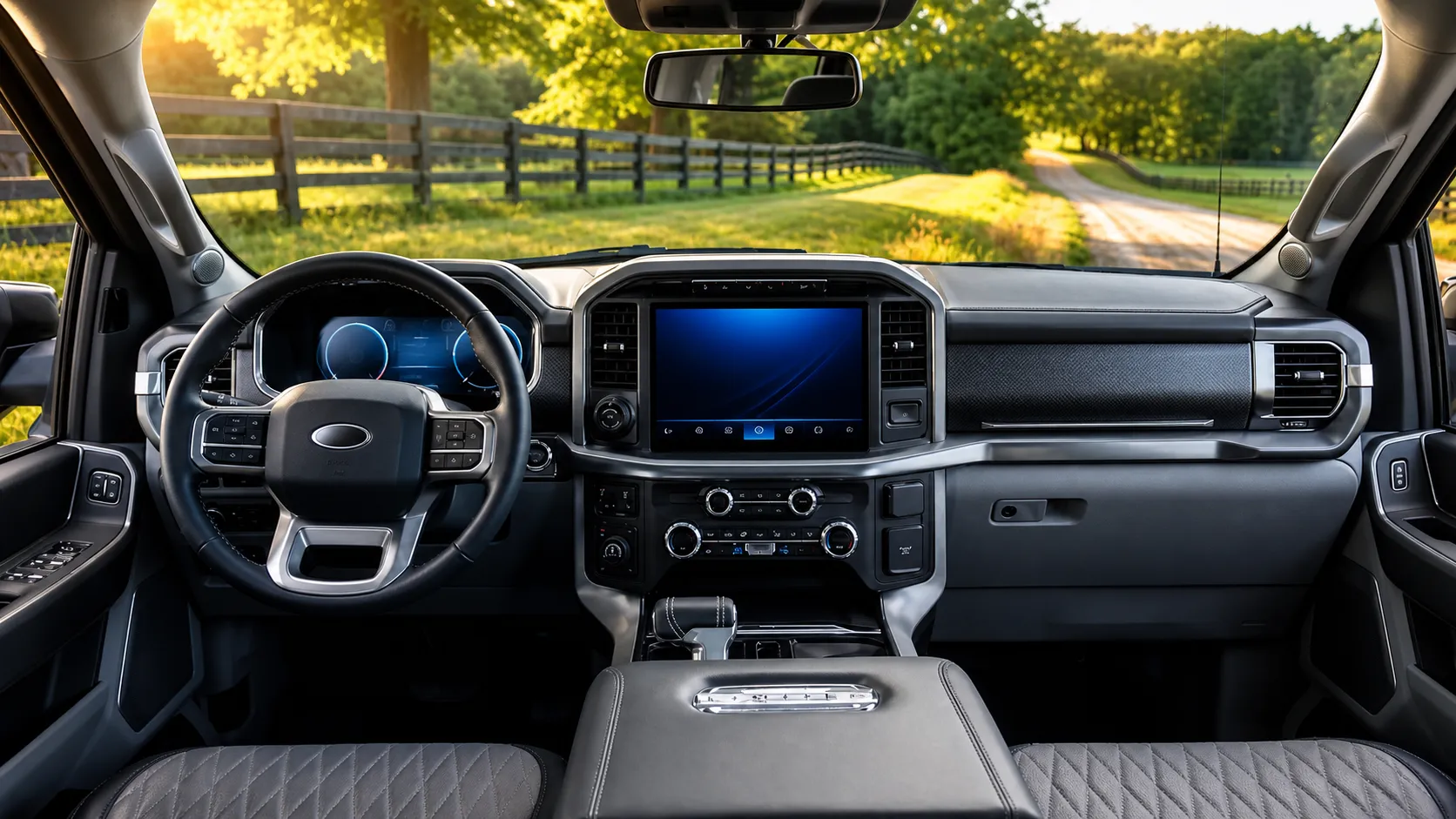
Ford Motor Company announced a major safety recall affecting more than 741,000 vehicles in the United States due to a transmission defect that could allow vehicles to roll away even after being shifted into park. The recall impacts certain model year 2018-2021 Ford and Lincoln vehicles equipped with park-by-wire technology and 10R80 transmissions, affecting popular models including the F-150 pickup truck, Explorer, Expedition, Lincoln Navigator and Lincoln Aviator.
The defect centers on a mechanical component inside the transmission called the parking pawl, which is designed to lock the transmission and prevent vehicles from rolling once they are shifted into park. According to the National Highway Traffic Safety Administration, affected vehicles may experience temporary engagement of the transmission parking pawl while the vehicle is still in motion when certain gear shifts are commanded by the transmission. This engagement can damage park system components, potentially reducing the transmission’s ability to hold the vehicle securely in park.
The underlying cause involves a physical blockage inside the transmission that alters fluid pressure, causing the transmission’s computer to incorrectly engage the mechanical parking pin even though the vehicle continues moving. When the parking pawl is forced into position while the vehicle is in motion, the impact can grind down, bend or completely shear off the component. Once the parking pawl fails, the transmission loses its physical ability to support the vehicle’s weight, creating a rollaway hazard the next time the vehicle is placed in park.
Federal regulators warn that if transmission park system damage occurs, the ability of the transmission park feature to hold the vehicle may be affected, especially if the parking brake is not applied. This condition increases the risk of unintended vehicle movement, which can cause crashes and injuries.
Ford is aware of the danger firsthand. The company has already received 24 allegations of property damage and nine alleged injuries related to the defect, including two claims involving emotional injuries connected to incidents involving unintended vehicle movement. Despite these incidents, the timeline for repairs extends well into 2027, leaving owners to manage the risk for many months.
Vehicle owners will receive interim notification letters beginning August 3 and concluding August 7, 2026, alerting them to the safety risk. However, the company does not anticipate the remedy being fully available until April 2027, meaning owners will need to wait several months before they can have their vehicles repaired. Ford will then send remedy notification letters in phases throughout the second quarter of 2027 as repair parts become available.
When the remedy is available, owners can bring their vehicles to Ford or Lincoln dealerships for repairs at no cost. Dealers will update the Powertrain Control Module software to the latest version and inspect the transmission for park system damage. If damage is found, dealers will replace the damaged transmission components as needed, all free of charge.

Safety officials strongly recommend that owners use the parking brake every time they park their vehicles until the recall repairs have been completed. The parking brake operates independently from the transmission’s park system, providing a crucial secondary safeguard if the transmission fails to hold the vehicle in place.
Drivers can check whether their specific vehicle is included in the recall by visiting the National Highway Traffic Safety Administration website or calling Ford customer service at 1-866-436-7332. Owners can also contact the National Highway Traffic Safety Administration Vehicle Safety Hotline at 1-888-327-4236 for more information.
The recall carries recall number 26S48 and represents Ford’s continued focus on addressing safety concerns affecting its vehicle lineup. This is the latest in a series of major recalls issued by the automaker affecting hundreds of thousands of vehicles in 2026, as the company works through various mechanical and software-related issues.
Modern vehicles rely on sophisticated software to manage major mechanical functions including transmission operation. When software behaves unexpectedly, the effects can eventually become mechanical failures. This recall illustrates how automotive engineering continues to evolve, with the interaction between software and hardware becoming increasingly important in vehicle safety and performance.