

Two years after a devastating shark attack inspired Alabama to become the first state to establish a real-time shark alert system, the groundbreaking concept has now expanded to the national level. President Trump signed Lulu’s Law into federal legislation last Friday, creating a nationwide alert system that will warn beachgoers of shark attacks through their mobile phones, much like the emergency notification system used for AMBER Alerts.
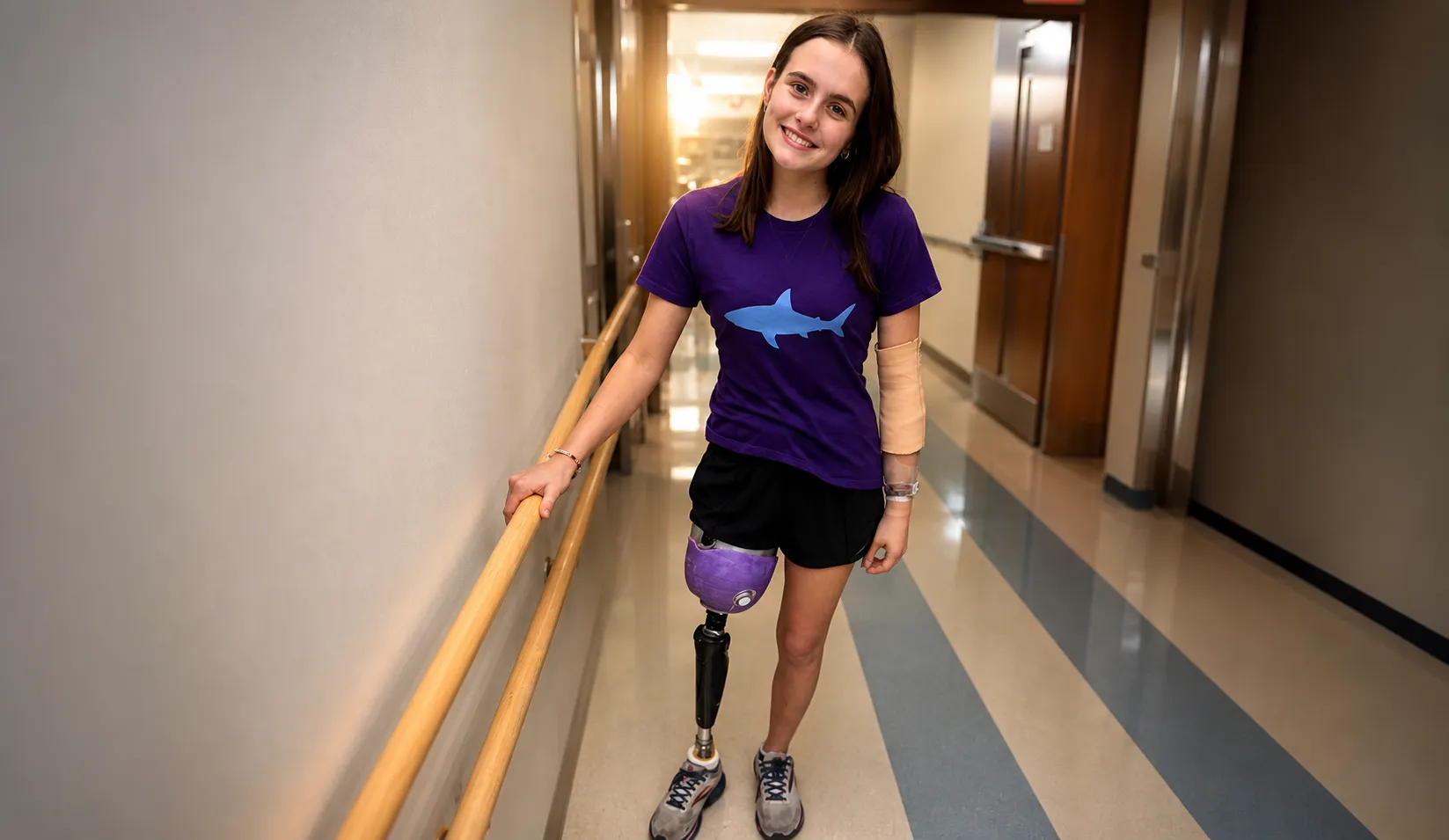
The law emerged directly from a tragic incident on June 7, 2024, when multiple shark attacks struck Walton County off the Florida Panhandle in a compressed geographic area. Lulu Gribbin, a teenager from Mountain Brook, Alabama, was attacked while swimming with friends, losing her left hand and a portion of her right leg. Just 90 minutes earlier and approximately four miles away, Elisabeth Foley, a mother vacationing with her family from Virginia, was attacked and lost her hand.
Gribbin’s family had been unaware of the earlier attack on Foley. Had they known, Gribbin would not have entered the water that day, a detail that became central to her advocacy. As Gribbin told lawmakers, “Ninety minutes before me, there was another shark attack a couple miles down the coast.” This nearly tragic coincidence set in motion a two-year legislative effort that would reshape coastal safety nationwide.
Following the attacks, Alabama lawmakers moved swiftly to pass state-level legislation. Gov. Kay Ivey signed the Lulu Gribbin Shark Alert System Act into law in May 2025, making Alabama the first state with such a system. The state-level alert began operating in April 2026, sending notifications exclusively for confirmed shark attacks to residents in Baldwin and Mobile counties. The system operates through geofenced wireless emergency alerts, similar to AMBER Alerts, that reach cellphones in affected areas when the Department of Conservation and Natural Resources receives confirmation of an unprovoked attack.

The federal push came when U.S. Senator Katie Britt and U.S. Representative Gary Palmer introduced Lulu’s Law at the national level in March. The legislation directs the Federal Communications Commission to classify shark attacks as events eligible for the FCC Wireless Emergency Alerts system, expanding the capability nationwide. The Senate passed the bill unanimously in July 2025, and the House overwhelmingly approved it in May 2026 with a 401-6 vote, demonstrating remarkable bipartisan support for a measure many considered a straightforward public safety tool.
The federal law was sent to the President on June 15 and signed on June 26, 2026. The FCC now has 180 days from the bill’s enactment to issue an order enabling shark attacks to trigger emergency alerts on mobile devices.
Both Gribbin and Foley have become advocates for the alert system. Foley said that if the law had existed at the time of the attacks, she believes Gribbin would not have been hurt. “If the law had been in place, I do believe that Lulu would not have been attacked,” Foley stated. She emphasized that her hope is the alerts will prevent other families from experiencing similar trauma.

Gribbin has become a public figure in this effort, visiting the Alabama Statehouse to urge lawmakers to support the measure. She compared the shark alert system to the AMBER Alert system, explaining that it works by sending notifications when shark attacks occur. Her advocacy continued at the federal level, with her story and resilience inspiring congressional action.
Gribbin’s parents, Ann Blair and Joe Gribbin, expressed their gratitude in a statement: “Ever since that fateful day at the beach, our daughter Lulu has worked to spare other families from going through what we experienced, or worse.”
The federal law also represents an important endorsement from leaders across the political spectrum. Senator Britt praised the achievement, saying, “This bill signing is the result of two years of working around the clock to help ensure we protect beachgoers across our nation.” She credited Gribbin’s strength and perseverance, noting, “We would not be here today without Lulu’s courage, perseverance, and advocacy to protect future beachgoers.”
Despite the attention to shark attacks following these incidents, experts note that such attacks remain statistically rare. According to the Florida Museum of Natural History, there were 47 unprovoked shark bites worldwide in 2024, including four fatalities. In the United States, Florida has historically accounted for a significant portion of attacks. Experts also emphasize that while sharks are commonly found in Gulf waters, they rarely interact with the public because they typically remain far from shore.
Nevertheless, the timing of Lulu’s Law comes as beachgoers prepare for peak summer season. Foley offered reassurance to those planning beach vacations, saying, “Do not be scared to go into the water, please, the likelihood of being attacked by a shark is so, so minuscule, so enjoy your vacation, and don’t live in fear.”