

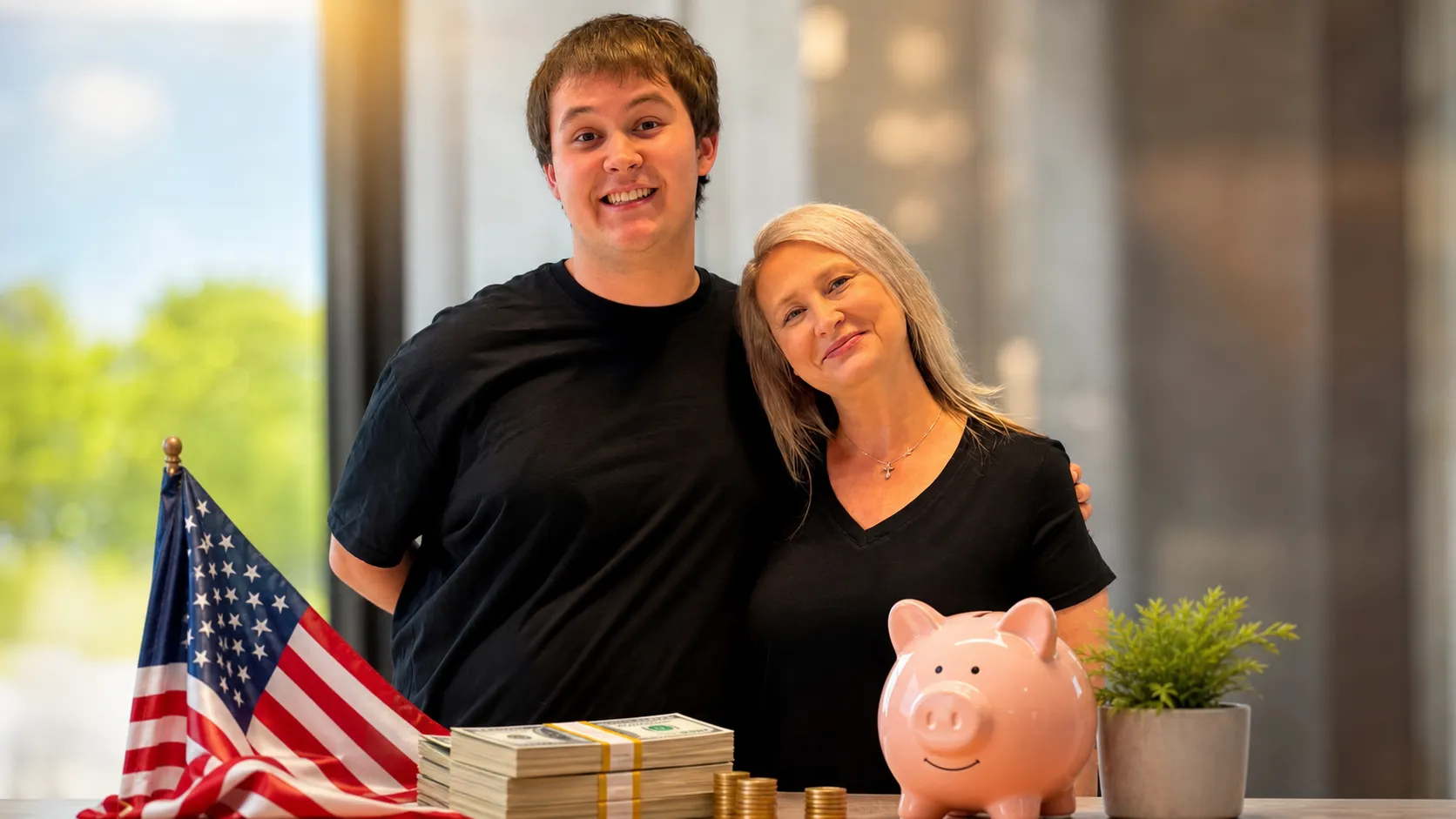
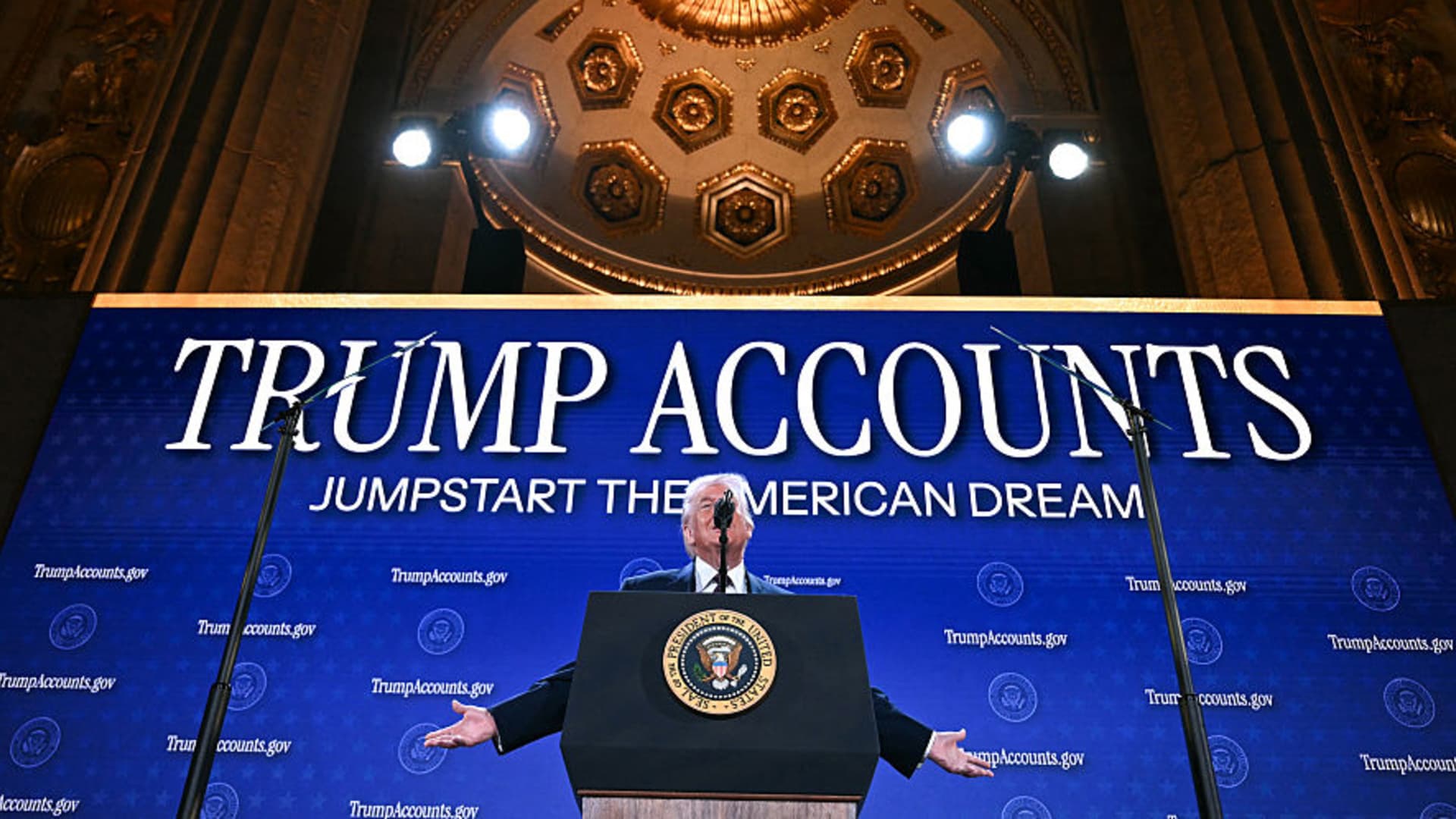
Trump Accounts, a new tax-advantaged savings program for children, officially launch July 4, marking a significant expansion in government-sponsored child investment accounts. Starting today, the U.S. Department of the Treasury will begin depositing $1,000 into eligible children’s accounts, while families can start making contributions to jumpstart long-term wealth accumulation for the next generation.
The program represents the first federal child savings accounts in the United States. Babies born between January 1, 2025, and December 31, 2028, qualify for the $1,000 federal seed deposit, provided their parents or guardians open an account on their behalf. However, the deposits are not automatic—families must actively enroll by submitting IRS Form 4547 to receive the government contribution. Treasury Secretary Scott Bessent described Trump Accounts as “the most important government benefit for young people since the GI Bill.”
The accounts function as custodial traditional individual retirement accounts, structured differently from traditional IRAs because they do not require the child to have earned income. Parents, grandparents, relatives, employers, charitable organizations, and government entities can all contribute to a child’s account. Families and individuals can collectively contribute up to $5,000 per year, while employers can add up to $2,500 annually—an amount counted toward the overall limit. These contributions grow tax-deferred until the child reaches age 18, when the account converts to a standard traditional IRA.
Enrollment numbers have been substantial even before the official launch. As of mid-June, more than 6 million children had been signed up for Trump Accounts, with approximately 1.4 million eligible for the $1,000 pilot program contribution. However, that represents only about 39% of potentially eligible newborns, suggesting significant opportunity for additional enrollment.
Beyond the federal $1,000, additional funding sources have emerged. Tech CEO Michael Dell and his wife, Susan, pledged $6.25 billion to provide a $250 supplemental deposit for children born between 2016 and 2024 who live in ZIP codes with median household incomes of $150,000 or less. Multiple companies have pledged to match the Treasury’s $1,000 contribution for children of their employees, further expanding available resources for eligible families.
The accounts are managed by Bank of New York Mellon in partnership with Robinhood, which developed the official Trump Accounts app. The app, launched in May, serves as the primary platform for families to activate, manage, and track account performance. All official account communications come from [email protected]; Treasury has warned families to ignore any text messages or phone calls about account activation, as scammers are already attempting to exploit the program.
Investment options within Trump Accounts are limited to low-cost index funds that track broad U.S. Stock market indices, such as the S&P 500. These investments must carry fees not exceeding 0.1% annually and cannot include leverage. This restriction ensures simplicity and cost-effectiveness during the growth period, though children gain more investment flexibility when they turn 18.
The growth projections promoted by the White House have generated considerable discussion among financial advisors. The official Trump Accounts website projects that a $1,000 initial deposit, without any additional contributions, could grow to $6,000 by age 18, $15,000 by age 27, and $243,000 by age 55, assuming historical S&P 500 average returns exceeding 10%. Accounts receiving the $1,000 deposit plus $5,000 annual contributions could reach substantially higher figures.
However, financial advisors caution that these projections assume favorable market conditions and consistent contributions that many families may not achieve. Certified financial planner Douglas Boneparth noted that reaching seven-figure balances by a child’s late 20s would require maxing out contributions for many years while earning “fairly strong, uninterrupted market returns.” Market analysts estimate more conservative returns of 3.1% to 6.7% annually over the next decade, which would significantly alter these projections. More plausible scenarios suggest a $1,000 initial deposit could be worth around $6,427 in today’s dollars after 55 years, accounting for inflation and taxes.
One key advantage of Trump Accounts is that contributions can be made before a child earns any income, unlike traditional IRAs. This allows money to compound over longer periods. Funds are generally inaccessible until age 18, when the account converts to a traditional IRA and follows standard withdrawal rules. After age 18, withdrawals are taxed as ordinary income, with a 10% penalty typically applying to withdrawals before age 59½ unless exceptions apply.

Enrollment barriers remain a concern for policymakers and researchers. Because the program requires families to actively opt in rather than providing automatic enrollment, participation rates may remain below potential, particularly among lower-income and immigrant families. Research from Maine’s similar child savings program showed participation jumped from 40% to near universal levels when the state switched to automatic enrollment. The Urban Institute and other organizations have cautioned that without broader awareness and outreach, higher-income families are likely to benefit disproportionately from the program, potentially widening wealth gaps over time.
The Trump administration is taking steps to reach vulnerable populations. First Lady Melania Trump launched a “Fostering the Future” program allowing state child welfare agencies to open accounts for foster children and contribute disability benefits and other assistance funds. About half of states have signed up to participate.
For eligible families, financial advisors generally recommend opening an account to claim the free $1,000 and any matching contributions available through employers or charitable organizations. The decision to open accounts for older children born before 2025 may depend on individual circumstances, as these children are ineligible for the federal $1,000 but may qualify for the Dell Foundation’s $250 deposit if they live in qualifying ZIP codes.
Parents can open Trump Accounts through the official app, available on iOS and Android, or through TrumpAccounts.gov. Activation emails are being sent in phases through July 4. Families interested in opening accounts can file IRS Form 4547 at any time during the year before their child turns 18.