

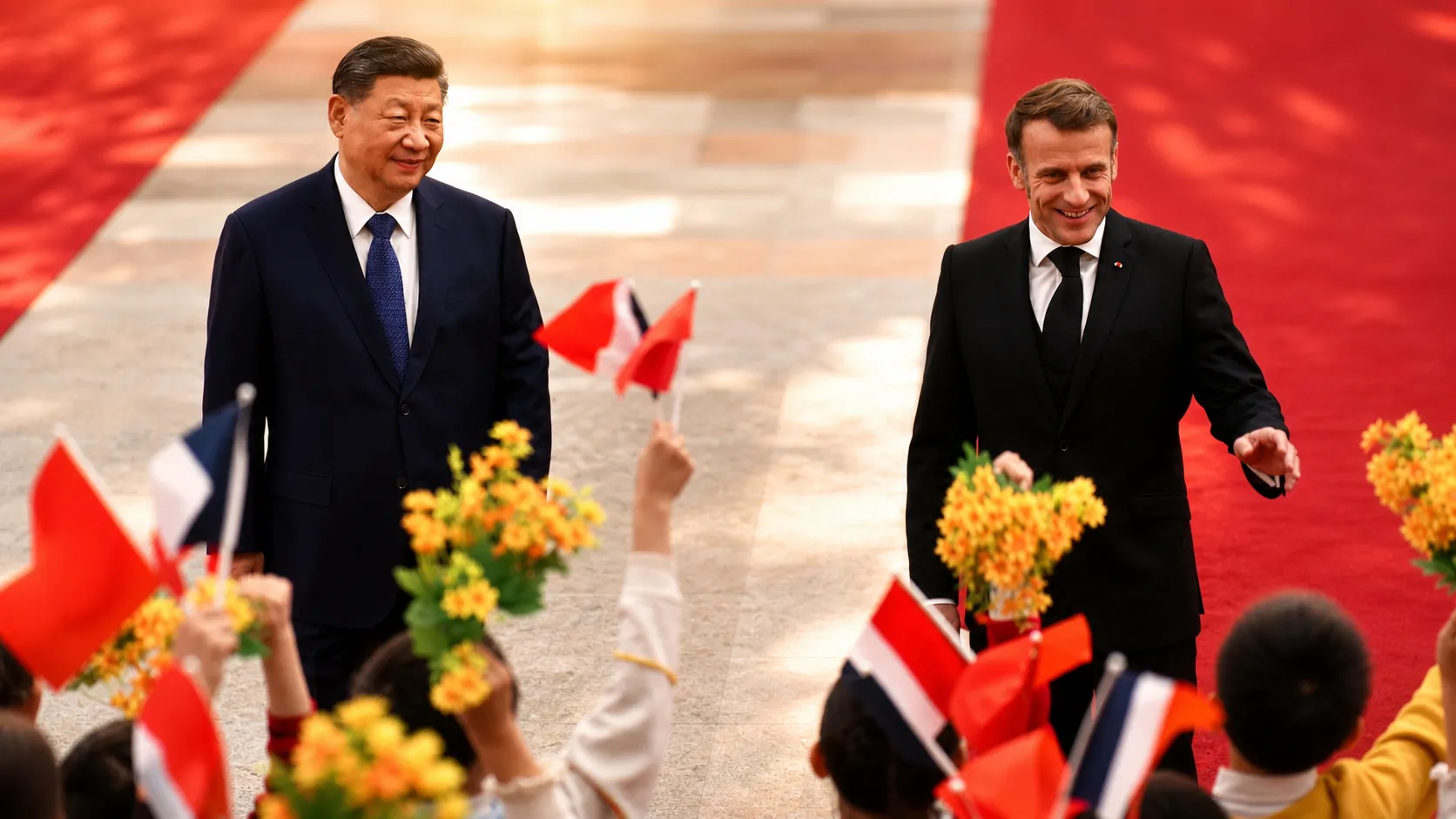
China and the European Union have launched a formal trade consultation mechanism following their first high-level ministerial talks in Brussels on June 29, with Beijing indicating that discussions will continue regularly each year and an autumn meeting already scheduled. The establishment of the consultation framework marks a significant shift in how the two economic powers plan to manage escalating trade tensions and disagreements that have threatened to derail their commercial relationship.
Chinese Commerce Minister Wang Wentao and European Commissioner for Trade and Economic Security Maros Sefcovic co-chaired the inaugural meeting of the China-EU Trade and Investment Consultation Mechanism, with both sides issuing a rare joint statement describing the discussions as comprehensive, in-depth and constructive. The agreement to establish this permanent institutional framework for regular consultations signals a shared determination by both Beijing and Brussels to pursue dialogue rather than open economic confrontation at a moment when trade tensions are running particularly high.
The meeting came amid deepening friction between the two trading partners. The European Union faces a record trade deficit with China that has grown to approximately 360 billion euros annually, creating pressure on European policymakers to take action against what Brussels views as unfair Chinese industrial practices. Meanwhile, Beijing has grown increasingly frustrated with European efforts to restrict Chinese companies’ market access through new trade defense measures, tariffs on electric vehicles, export controls on critical rare earth minerals and proposed legislation that could further limit Chinese investment and procurement opportunities.
The consultation mechanism identified four initial workstreams focused on resolving key disputes: trade and investment balancing, export controls, intellectual property rights and World Trade Organization reform. Both sides agreed to establish a joint monitoring mechanism to track trade flows and improve transparency, which will provide an early warning system to alert officials if imports surge beyond acceptable levels and trigger escalation to political discussions.
European officials made clear during the talks that progress must be achieved relatively quickly. Sefcovic told reporters that both sides had a mandate and an ambitious timeline to deliver what he termed “tangible results” before a follow-up ministerial-level meeting scheduled for October in Beijing. He warned that the European Union would be forced to take action should meaningful progress not materialize by autumn, emphasizing that the status quo was not acceptable to Brussels.
The October timeline carries significant political weight. It coincides with when one-year suspension of Chinese export controls on critical minerals expires, raising stakes for both sides to reach some accommodation before those restrictions potentially return to full force. The autumn meeting also follows European Council discussions in mid-June that tasked the Commission with developing new trade defense tools while simultaneously instructing it to continue dialogue with key trading partners.
Sefcovic stated that the European Union would focus the coming months on addressing the widening trade imbalance and other longstanding disputes, particularly concerning Chinese industrial overcapacity that has flooded European markets with cheap exports ranging from electric vehicles to steel and chemicals. He noted that China’s exports to the EU continue rising while European market share in China continues shrinking, a pattern that European industry increasingly views as unsustainable.
Beijing has made clear it views the consultation mechanism as the appropriate framework for resolving disputes, preferring dialogue to what it characterizes as unilateral trade restrictions. Chinese officials indicated that the mechanism allows both sides to manage immediate tensions while creating room for more favorable conditions to resolve deeper disagreements. However, Beijing has also signaled willingness to retaliate if the European Union imposes additional trade measures it views as unfair.
The establishment of the mechanism reflects a pragmatic recognition on both sides that their relationship, though strained, remains economically indispensable. China remains a vital market for European manufacturers, pharmaceutical companies and engineering firms, while European businesses continue to depend on China as a manufacturing base and source of critical components. Neither side has an interest in allowing current disagreements over electric vehicles, industrial subsidies and investment screening to spiral into an open trade war.
The consultation framework also provides both sides with a formal platform to raise longstanding concerns through sustained diplomatic engagement. For Beijing, regular ministerial-level discussions offer an opportunity to explain policy objectives and pursue negotiated outcomes before disagreements escalate. For Brussels, the mechanism creates an institutional avenue to address concerns regarding market access, regulatory transparency, intellectual property protection and investment conditions without relying exclusively on unilateral trade defense measures.
The June 29 meeting came weeks after China cancelled two high-level diplomatic meetings scheduled in Beijing without explanation, a move that had been widely interpreted as signaling Beijing’s displeasure over European trade policies and investigations into Chinese subsidies. The subsequent decision by both sides to agree to the consultation mechanism and schedule regular future talks represented a pivot toward engagement and away from the diplomatic tensions that had threatened to further damage relations.
European leaders remain divided over how aggressively to pursue trade restrictions against China. Germany, Europe’s largest economy, has traditionally preferred dialogue and opposed some EU tariffs on Chinese products, though even German companies are now facing severe competitive pressure from Chinese rivals. Smaller nations, particularly in Scandinavia, have also advocated for maintaining economic ties, while France and several other member states have pushed for tougher measures.
The European Union’s approach represents what officials describe as “de-risking” rather than full “decoupling” from China, seeking to reduce excessive dependencies in critical sectors without disrupting the commercial relationship that underpins European industry. This balancing act has become more challenging as global trade fractures along new security lines and geopolitical tensions continue to mount, particularly given uncertainty stemming from U.S. Trade policies under President Donald Trump’s return to office.