

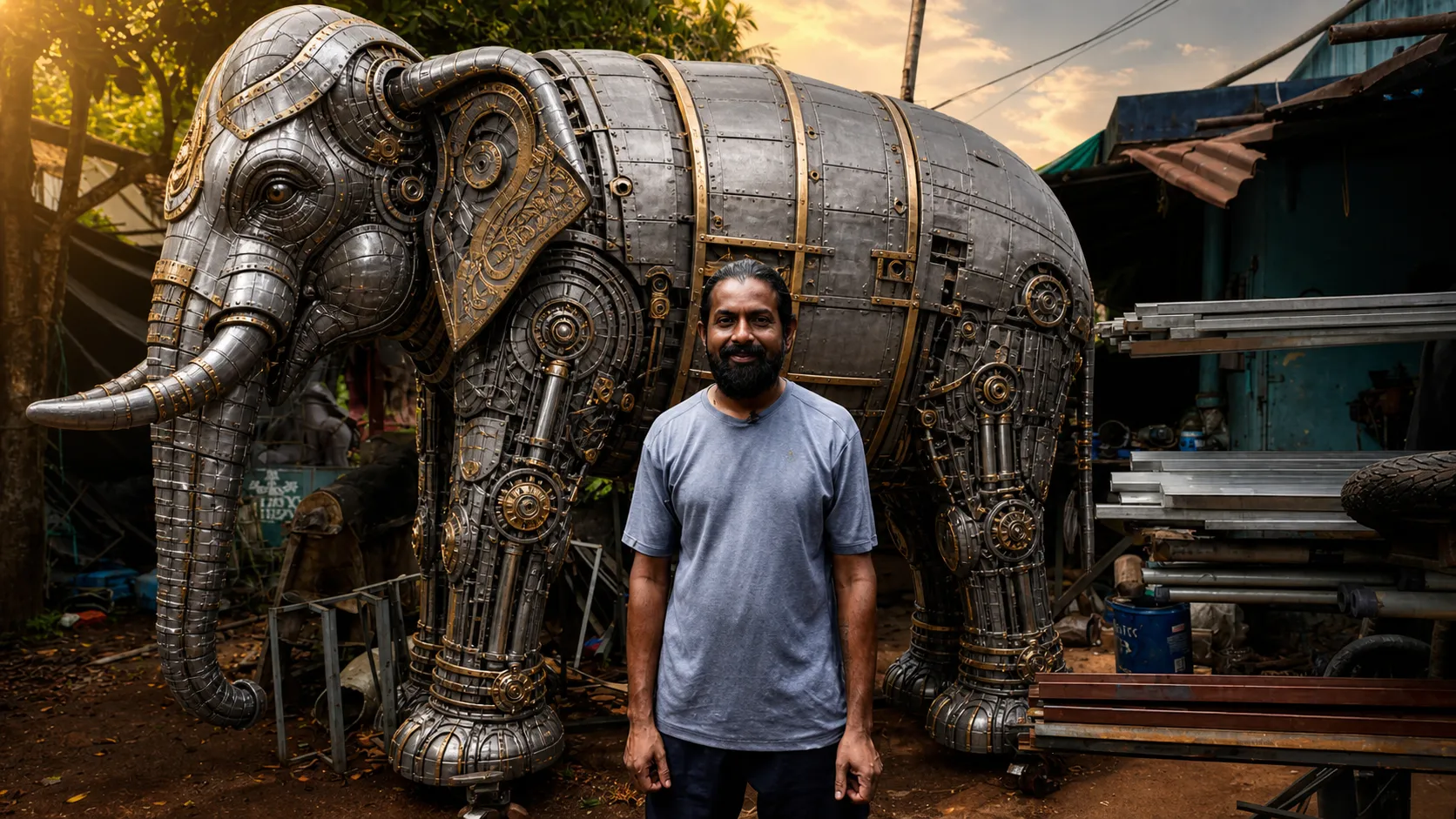
In Kerala’s temple festivals, a mechanical revolution is quietly reshaping centuries of tradition. Life-size robotic elephants with flapping ears, swishing tails and water-squirting trunks are increasingly replacing the live pachyderms that have for generations been central to Hindu religious ceremonies and public celebrations. The change is drawing cheering crowds to some temples while igniting fierce debate among those who view it as a betrayal of sacred cultural heritage.
The movement began when Prasanth Prakashan, a mechanical engineer and animatronics creator, caught the attention of animal welfare advocates after a viral video showed his robotic elephants at a Dubai festival in 2023. Animal welfare organizations, primarily PETA India and their collaborators, saw an opportunity to address longstanding concerns about elephant suffering while preserving temple traditions. That year, Prakashan’s first robotic elephant, named Irinjadapilly Raman, was installed at the Irinjadapilly Sree Krishna Temple in central Kerala.
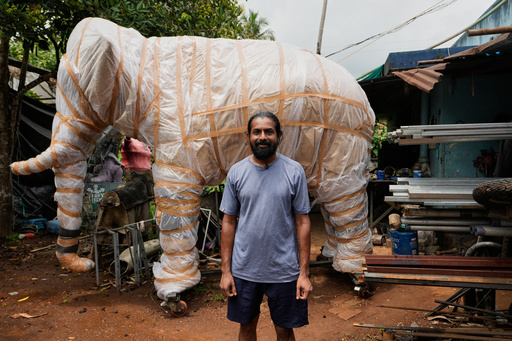
Prakashan’s creations are crafted from fiberglass, iron and rubber, with electric motors that move the head and eyeballs. Body parts are designed to be pliable in an attempt to mimic the grace of living animals. The robots stand roughly human height or taller and cost approximately $6,000 each. Yet their creator acknowledges the limitations. “You can’t create an original elephant just as you cannot duplicate a human,” Prakashan said. “But we try to capture the majestic animal’s essence as much as we can.”
Animal welfare advocates point to compelling reasons for the switch. Nine people died in 2024 from elephant rampages at Kerala temple festivals. Khushboo Gupta, vice president of policy at PETA India, emphasizes that the aesthetic appeal of live elephants does not justify the animals’ suffering. “These elephants are forced to stand there for hours in the heat, with large crowds, drums and fireworks. Any trigger could cause them to go on a rampage,” she said.
Temple officials have also embraced the change for practical reasons. When children approach the robotic version at temples, they can freely touch and hug the trunk without danger. Rajkumar Namboothiri, head priest at the Irinjadapilly Sree Krishna Temple, noted that tantric texts governing daily rituals in Kerala temples do not require live elephants. He believes the practice emerged centuries ago when elephants were part of kings’ cavalries and palaces. “They had trees and forests before. Now, we have concrete jungles, heat and noise. Elephants are tortured and abused. It’s not right,” Namboothiri said.
Since PETA and other nonprofits began their initiative, approximately 40 robotic elephants have been donated to temples across India. Some temples have rented the robots to festival organizers throughout the festive season, suggesting growing community acceptance.
Yet tradition-minded observers view the robots as a sacrilege. K. Mahesh, who rents out his real elephant for festivals about 45 days each year, remains unconvinced. “If you don’t believe elephants are sacred, what’s the point of a robotic elephant in a temple?” he asked. Many devotees have expressed concerns that festivals will lose their vitality and spiritual essence without live animals.
These concerns carry weight in a region where temple festivals are deeply woven into cultural identity. The Thrissur Pooram festival features around 100 elephants adorned in golden headgear and colorful silk caparisons. The Guruvayur Sree Krishna Temple houses nearly 50 elephants and conducts annual elephant races and feeding rituals. Some temple elephants have become celebrities, with one named Thechikkottukavu Ramachandran maintaining a Facebook following of nearly 150,000 fans.
However, the scale of elephant use reflects significant welfare concerns. Nearly 400 elephants remain in captivity in Kerala out of approximately 2,500 across India. Many are privately owned and rented out for profit, often for multiple festivals throughout the year. Experts have raised alarms about male elephants, which undergo musth—a condition marked by hormone surges up to 60 times normal testosterone levels—creating heightened aggression.
Some temple administrators see robotic elephants as a pragmatic compromise. K.I. Purushottaman, president of the Cheekamundi Sri Mahavishnu Temple in Thrissur, stated that their robotic elephant has brought peace of mind. “With a robotic elephant, we don’t have that fear of a fatal attack. That’s a big relief,” he said. P.C. Subhash, a temple devotee, supports tradition with live elephants in larger temples but believes robotic versions are more feasible for smaller temples, given steep costs and liability insurance requirements.
The robots themselves continue to evolve. Prakashan initially encased his elephants in rubber but has shifted to more durable fiberglass molds. One limitation remains: his elephants cannot yet walk, though he said they will eventually. “I’m working on it,” Prakashan said, smiling.
The shift reflects broader tensions between cultural preservation and animal welfare. While some see mechanical replacements as an innovative solution honoring both values, others argue that removing living elephants fundamentally hollows out the spiritual significance of rituals refined over centuries. As Kerala’s temple festivals continue to draw millions of devotees and tourists annually, the outcome of this technological intervention will likely shape how religious traditions evolve in India’s modern era.