

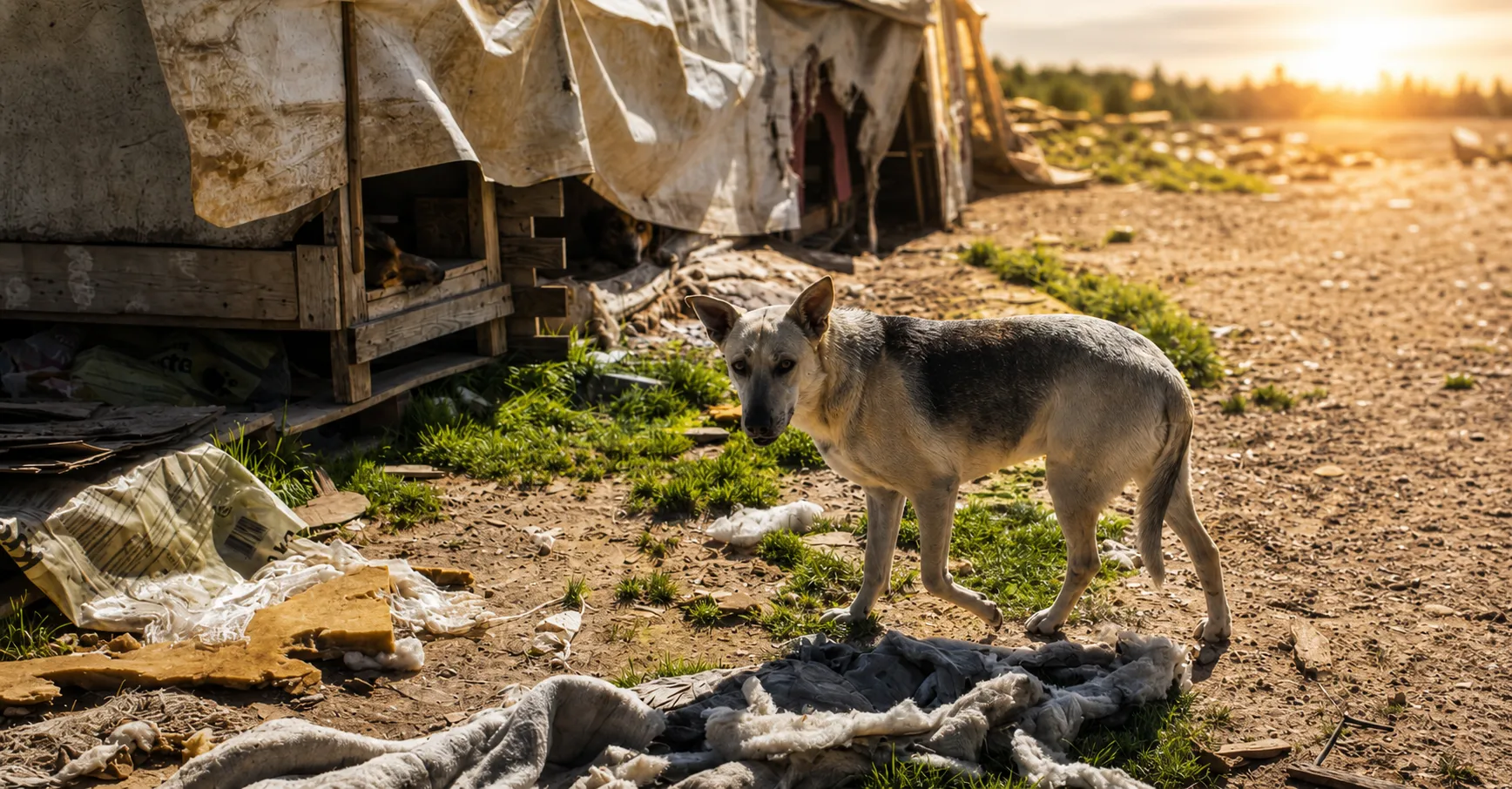
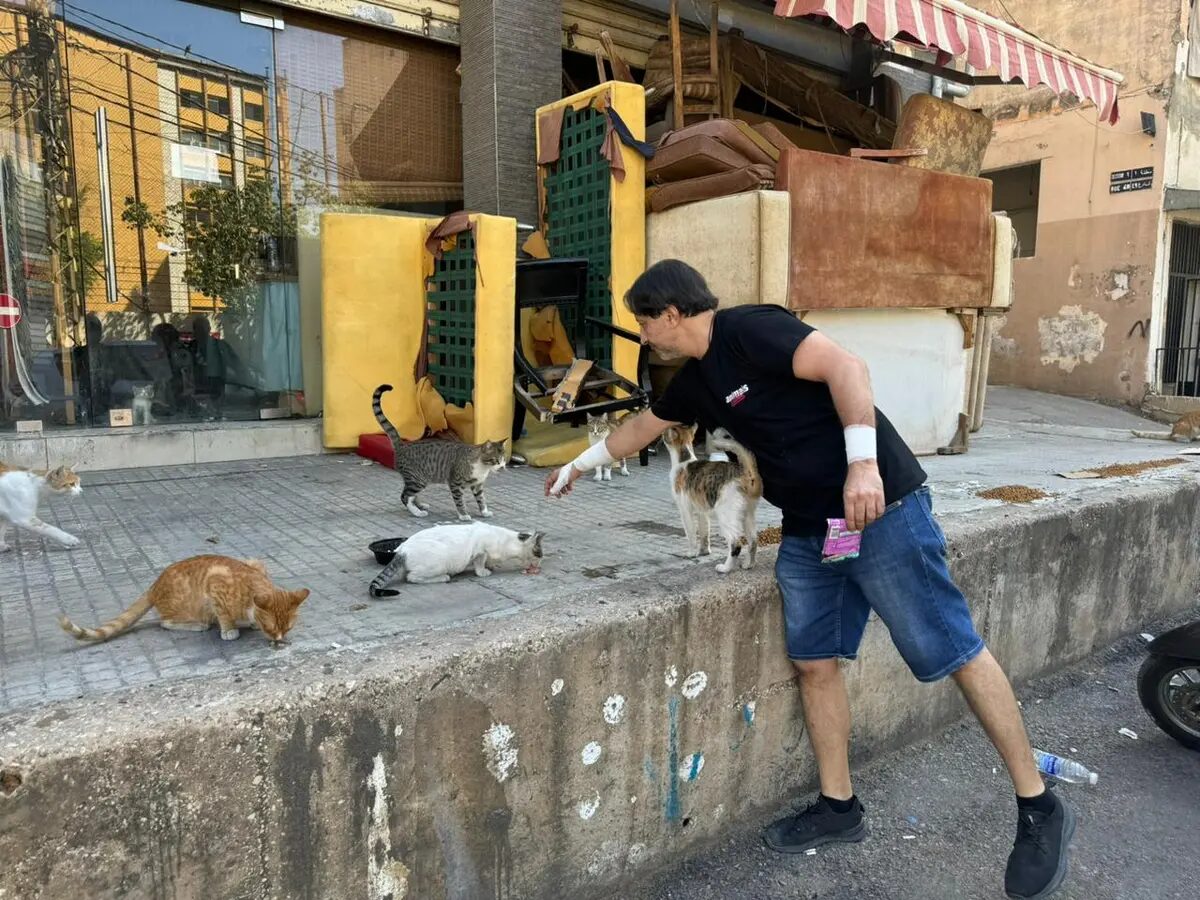
In southern Lebanon, a landscape ravaged by war and airstrikes, one man has become a lifeline for thousands of animals abandoned by their fleeing families. Houssein Hamze, founder of Mashala Shelter in Nabatieh, has refused to evacuate despite repeated warnings, choosing instead to care for more than 350 dogs and cats squeezed into a facility designed for just 150 animals.
When the fighting intensified in 2024 and again in early 2026, families across southern Lebanon faced impossible choices. The sudden escalations meant evacuation windows lasted only minutes. Transportation was scarce, shelters didn’t accept pets, and landlords prohibited animals at relocation sites. Millions fled with whatever they could carry, leaving behind countless dogs, cats, and livestock to fend for themselves in bombed neighborhoods and abandoned villages.
Hamze’s journey reflects the broader landscape of animal rescue across Lebanon. Since he founded his shelter in 2006, he has dedicated his life to caring for strays with nothing. But the war has transformed his modest operation into an emergency refuge. His shelter’s capacity doubled within weeks of the fighting, and he continues venturing daily into war-ravaged areas to feed displaced animals and rescue injured ones despite the danger. He has even refused evacuation orders to stay with his animals.
Hamze is not alone in this mission. Across Lebanon, organizations like Animals Lebanon, Give Me A Paw, and BETA—Beirut for the Ethical Treatment of Animals—have mobilized hundreds of volunteers to conduct complex rescue operations in active conflict zones. These rescue teams navigate through crushed concrete and debris-filled streets on motorcycles and mopeds, vehicles nimble enough to move quickly through impassable roads and evacuate rapidly if shelling intensifies. Each mission is extraordinarily dangerous, with rescuers operating under the constant threat of airstrikes while retrieving terrified, traumatized animals from collapsed buildings.
Families desperate to reach trapped pets have contacted rescue organizations with apartment keys sent remotely, detailed building diagrams, feeding instructions, and photos of hidden access points. Some requests arrive from refugees who have already crossed international borders, watching helplessly as the animals they love remain stranded. Operations coordinators report receiving more than 100 calls and messages daily from families pleading for help.
By the tenth day of fighting in March 2026, Animals Lebanon alone had rescued 144 animals from heavily bombed areas and assisted 265 families with displaced pets. Volunteers were injured during these operations. The organization reported that during one rescue, team members lost contact with their crew while inside a bombed building and refused to leave without extracting the cats. Two volunteers were injured during that mission, with one requiring hospitalization.
The rescue efforts extend far beyond pets. International organizations like the International Fund for Animal Welfare, FOUR PAWS, and local groups have mobilized to distribute tons of pet food and veterinary supplies to shelters and displaced families. These organizations have moved hundreds of animals to safety, reunited separated pets with their families, and placed others in temporary care while owners find stability.
Some rescues have captured worldwide attention. Animals Lebanon successfully evacuated Sara, a lion cub that had been kept as a social media prop by a Lebanese influencer and showed signs of abuse. After the organization rescued Sara and kept her safe in Beirut during months of intense bombing, they arranged an extraordinary evacuation. Unable to fly due to airstrikes near Lebanon’s airport, the group chartered a luxury yacht to transport Sara to Cyprus, from which she flew to the Drakenstein Lion Park sanctuary in South Africa. Sara became the fifth lion rescued and transported from Lebanon since the conflict escalated.
The challenges facing rescuers are immense. Traumatized animals often become unpredictable after surviving explosions and bombardment. Concussed, injured, and terrified cats and dogs frequently lash out blindly from panic, leaving rescuers with severe bites and deep scratches. Shelters are dangerously overcrowded and desperately underfunded. Supply chains have collapsed, making food and medicine increasingly expensive.
Houssein Hamze has absorbed the costs of caring for hundreds of animals with virtually no government support. Feeding the dogs at his house and shelter costs approximately $200 daily. His home was damaged during the bombing, destroying essential supplies and his rescue vehicle. Still, he continues. His determination has earned him widespread attention on social media, where thousands follow his daily feeding missions to surrounding villages.
For many of these animal rescuers, the work transcends compassion toward animals. As they navigate destruction and dodge airstrikes to deliver food and rescue pets, they embody something deeper. They are demonstrating that in war’s chaos, humanity persists. While countless people flee to save their own lives, these rescuers choose to stay, venturing into the most dangerous zones to preserve life in whatever form they can reach.
Their work continues in the rubble and ruins, one rescued animal at a time.